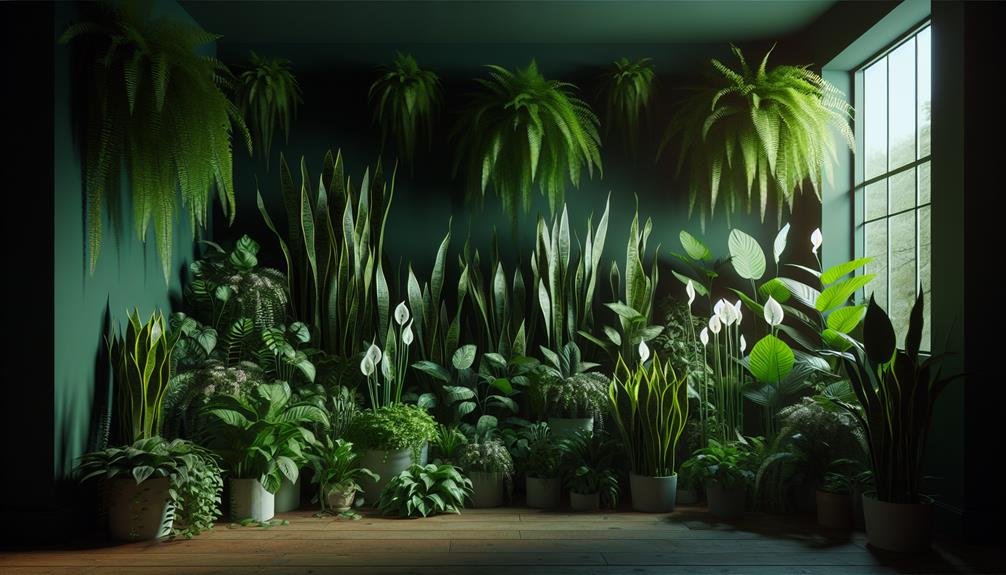
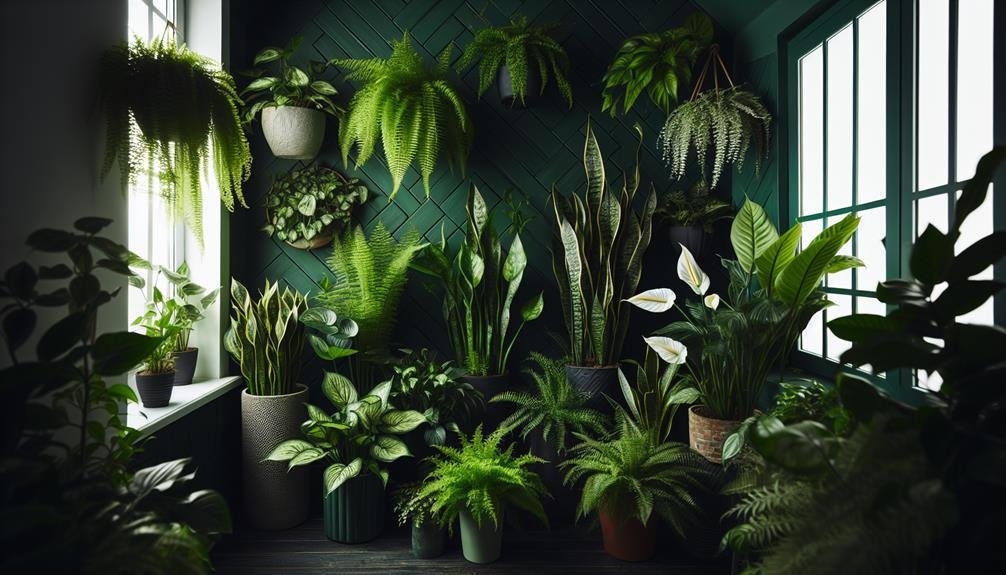
Looking to add a touch of green to your living space without the hassle of constant sunlight? Imagine a serene corner with lush foliage enhancing your surroundings, creating a peaceful ambiance.
These 10 low-light houseplants cater to beginners, offering not just ease of care but also beauty and health benefits. Each plant on this list brings unique qualities that can transform your indoor environment.
Discover which ones suit your style and space, bringing nature indoors effortlessly.
Snake Plant
When choosing a low-light houseplant, consider the hardy and low-maintenance Snake Plant. This plant is perfect for beginners due to its ability to thrive in various conditions with minimal care. The Snake Plant, also known as Sansevieria, features long, upright leaves that come in a variety of shades, adding a touch of elegance to any space. Its unique appearance can complement any home decor style, making it a versatile choice for your indoor garden.
One of the Snake Plant's key benefits is its ability to survive in low-light environments, making it ideal for rooms with little natural sunlight. This plant is also excellent at purifying the air by removing toxins like formaldehyde and benzene, promoting a healthier indoor environment for you and your family. With its low watering requirements and resilience to neglect, the Snake Plant is a reliable option for those new to houseplant care.
Pothos
Pothos, a versatile and popular low-light houseplant, is a great choice for beginners looking to add greenery to their indoor spaces. This plant is known for its heart-shaped leaves that come in various shades of green, making it a visually appealing addition to any room. One of the best features of Pothos is its ability to thrive in low-light conditions, making it perfect for spaces that don't receive a lot of natural sunlight.
Caring for Pothos is relatively easy, as it requires minimal maintenance. Water your Pothos when the top inch of soil is dry, but be careful not to overwater, as this can lead to root rot. Pothos also benefits from an occasional wipe-down of its leaves to keep them clean and free from dust, allowing the plant to photosynthesize more efficiently.
With its air-purifying qualities and low-light adaptability, Pothos is a fantastic starter plant for those new to indoor gardening. Its resilience and aesthetic appeal make it a wonderful choice for bringing a touch of nature into your home.
ZZ Plant
A resilient and low-maintenance option for indoor greenery, the ZZ Plant is an excellent choice for beginners seeking a hardy houseplant. With its waxy, dark green leaves that retain moisture, this plant thrives in low-light conditions, making it perfect for spaces with minimal natural light. ZZ Plants are known for their ability to survive occasional neglect, as they require minimal watering and can go for extended periods without attention.
When caring for your ZZ Plant, ensure it's placed in well-draining soil to prevent overwatering, which can lead to root rot. Water your ZZ Plant only when the top inch of the soil is dry, typically every 2-3 weeks depending on your home's conditions. This plant is also sensitive to direct sunlight, so it's best to place it in indirect light to prevent leaf scorching.

In addition to its low-light adaptability, the ZZ Plant is also known for its air-purifying qualities, making it a great addition to any indoor space. Enjoy the beauty of lush green foliage with minimal effort by choosing a ZZ Plant for your home.
Peace Lily
The Peace Lily, a popular choice for indoor spaces, is a beautiful and versatile houseplant that thrives in low-light conditions. This plant features dark green leaves and elegant white flowers, adding a touch of elegance to any room. Peace Lilies are relatively low-maintenance, making them ideal for beginners or those with busy schedules. They require watering only when the soil is dry to the touch, and they bounce back quickly if you forget a watering session.
One of the Peace Lily's most remarkable qualities is its ability to improve indoor air quality by reducing levels of air pollutants. This plant is known for filtering out harmful toxins like formaldehyde, benzene, and trichloroethylene. Additionally, the Peace Lily is a symbol of peace, making it a meaningful and thoughtful gift for loved ones. With its adaptability to low-light conditions and its air-purifying properties, the Peace Lily is a fantastic choice for anyone looking to brighten up their home while also enjoying the benefits of cleaner air.
Spider Plant
Another excellent low-light houseplant option to consider is the Spider Plant, known for its unique appearance and easy care requirements. With its long, slender leaves that arch outward like spider legs, this plant adds a touch of elegance to any indoor space. Spider Plants thrive in indirect light, making them perfect for rooms with minimal natural light.
One of the Spider Plant's most appealing features is its air-purifying qualities. This plant is excellent at removing toxins from the air, promoting a healthier indoor environment for you and your family. Maintenance is a breeze with the Spider Plant, as it only requires occasional watering when the soil is dry to the touch.
Propagation is also simple with Spider Plants, as they produce baby plantlets that can be easily rooted in water or soil. If you're looking for a low-maintenance, visually appealing houseplant that thrives in low-light conditions, the Spider Plant is an excellent choice for beginners.
Cast Iron Plant
Thriving effortlessly in low-light conditions, the Cast Iron Plant is a resilient and reliable choice for indoor greenery. If you're a beginner looking for a low-maintenance plant that can tolerate neglect, this is the perfect pick for you. The Cast Iron Plant's dark green, glossy leaves add a touch of elegance to any room while requiring minimal attention.
This plant is practically indestructible, able to withstand low light, infrequent watering, and fluctuating temperatures. Its ability to thrive in areas where other plants struggle makes it an ideal option for those who are just starting to build their indoor garden. You won't need to fuss over this plant; it can handle being ignored and still look lush and healthy.
Whether you place it in a dim corner or a room with only artificial light, the Cast Iron Plant will continue to flourish. Its adaptability and durability make it a fantastic choice for beginners or anyone seeking a low-light plant that can endure various conditions with ease.
Chinese Evergreen
With its striking foliage and low-light tolerance, Chinese Evergreen is a popular choice for beginner indoor gardeners. This plant boasts variegated leaves in shades of green, silver, and sometimes red, adding a touch of elegance to any indoor space. Chinese Evergreen thrives in low-light conditions, making it perfect for rooms with minimal natural sunlight.
Caring for a Chinese Evergreen is relatively easy. Water the plant when the top inch of soil feels dry to the touch, ensuring not to overwater as this can lead to root rot. This plant prefers higher humidity levels, so misting its leaves occasionally can help create a suitable environment. Chinese Evergreen is also known for its air-purifying qualities, helping to improve the air quality in your home.
When it comes to placement, Chinese Evergreen can adapt to various light conditions, from low light to indirect bright light. This versatility makes it a great option for beginners looking to add a touch of greenery to their homes without the hassle of demanding care requirements.
Parlor Palm
Moving on from the Chinese Evergreen, let's explore the Parlor Palm, a fantastic low-light houseplant option for beginners. The Parlor Palm, or Chamaedorea elegans, is a popular choice due to its elegant appearance and easy care requirements. This plant features delicate, arching fronds that can add a touch of tropical vibes to your indoor space.
One of the key advantages of the Parlor Palm is its ability to thrive in low-light conditions, making it perfect for rooms with minimal natural light. It can tolerate some neglect, so if you forget to water it occasionally, don't worry too much. However, it's essential to ensure the soil is well-draining to prevent root rot.
When caring for your Parlor Palm, keep it away from direct sunlight, as this can scorch its leaves. Water the plant when the top inch of soil feels dry, and mist the leaves occasionally to maintain the right level of humidity. With proper care, your Parlor Palm can be a beautiful and low-maintenance addition to your indoor garden.
Philodendron
An excellent addition to your low-light indoor garden is the Philodendron, known for its lush foliage and ease of care. This houseplant thrives in indirect light, making it perfect for spaces with limited sunlight. Philodendrons are great for beginners as they're low-maintenance and can tolerate occasional neglect.
One of the most popular varieties is the Heartleaf Philodendron, characterized by its heart-shaped leaves that cascade elegantly. This plant isn't only visually appealing but also helps purify the air in your home by removing toxins. Another common type is the Split-Leaf Philodendron, featuring large, deeply lobed leaves that add a tropical touch to any room.
To care for your Philodendron, water it when the top inch of soil feels dry and avoid overwatering, which can lead to root rot. Regularly dust the leaves to keep them free from dust and ensure proper photosynthesis. With minimal effort, your Philodendron will flourish and bring a touch of greenery to your low-light space.
Dracaena
For a new addition to your low-light indoor garden, consider exploring the Dracaena plant, a versatile and visually appealing option. Dracaenas are known for their ability to thrive in low-light conditions, making them perfect for spaces with minimal natural light. These plants come in various species, such as the Dracaena marginata with its striking red-edged leaves, or the Dracaena fragrans with its lush green foliage.
Dracaenas are relatively low-maintenance, requiring watering only when the top inch of soil is dry. They prefer indirect light but can adapt to low light environments, although their growth may slow down. These plants are excellent air purifiers, helping to improve the air quality in your home.
When caring for your Dracaena, be cautious not to overwater, as this can lead to root rot. Pruning any yellowing leaves will help the plant focus its energy on healthy growth. With their unique shapes and colors, Dracaenas can add a touch of elegance to any indoor space while being easy to care for, making them an ideal choice for beginners looking to brighten up their homes with low-light houseplants.
Frequently Asked Questions
Are There Any Low-Light Houseplants That Are Safe for Pets to Be Around?
When considering low-light houseplants safe for pets, make sure to research each plant's toxicity level.
Keep your furry friends safe by choosing non-toxic options like spider plants, Boston ferns, or African violets. These green beauties thrive in low-light conditions and won't harm your pets if they decide to take a nibble.
Always double-check the safety of any plant before bringing it into your home to keep both your plants and pets happy and healthy.
How Often Should I Water Low-Light Houseplants?
When caring for low-light houseplants, it's important to water them appropriately. Make sure to check the soil moisture level before watering.
Typically, you should water your low-light houseplants once every 1-2 weeks, but this can vary depending on factors like plant size, potting mix, and humidity levels.
Overwatering can harm your plants, so it's best to let the soil dry out slightly between waterings to prevent root rot.
Can Low-Light Houseplants Thrive in Rooms With No Windows?
In rooms with no windows, low-light houseplants can struggle to thrive as they need some natural light to photosynthesize. Consider supplementing with artificial grow lights to support their growth.
Without any source of light, these plants may not survive for long. Remember to check the specific light requirements of each plant to ensure they receive adequate light for their well-being.
Are There Any Low-Light Houseplants That Can Help Improve Indoor Air Quality?
When looking to improve indoor air quality, low-light houseplants can be a great addition. They've the ability to purify the air by absorbing toxins and releasing oxygen.
Some examples of low-light plants that can help include snake plants, peace lilies, and spider plants. These plants are easy to care for and can thrive in environments with minimal natural light.
Consider adding them to your space for a breath of fresh air.
Can Low-Light Houseplants Be Placed in Bathrooms With Limited Natural Light?
Yes, low-light houseplants can thrive in bathrooms with limited natural light. Consider plants like snake plants, pothos, or peace lilies that can adapt well to low-light conditions.
These plants can still grow and add a touch of greenery to your bathroom space even with minimal sunlight. Just be sure to monitor their water and care needs to keep them healthy in this environment.
Conclusion
So there you have it, 10 great low-light houseplants for beginners.
Whether you choose a Snake Plant, Pothos, ZZ Plant, Peace Lily, Spider Plant, Chinese Evergreen, Parlor Palm, Philodendron, or Dracaena, you can enjoy the benefits of having greenery in your home even in low-light conditions.
These plants are easy to care for and will thrive with minimal sunlight.
Happy planting!