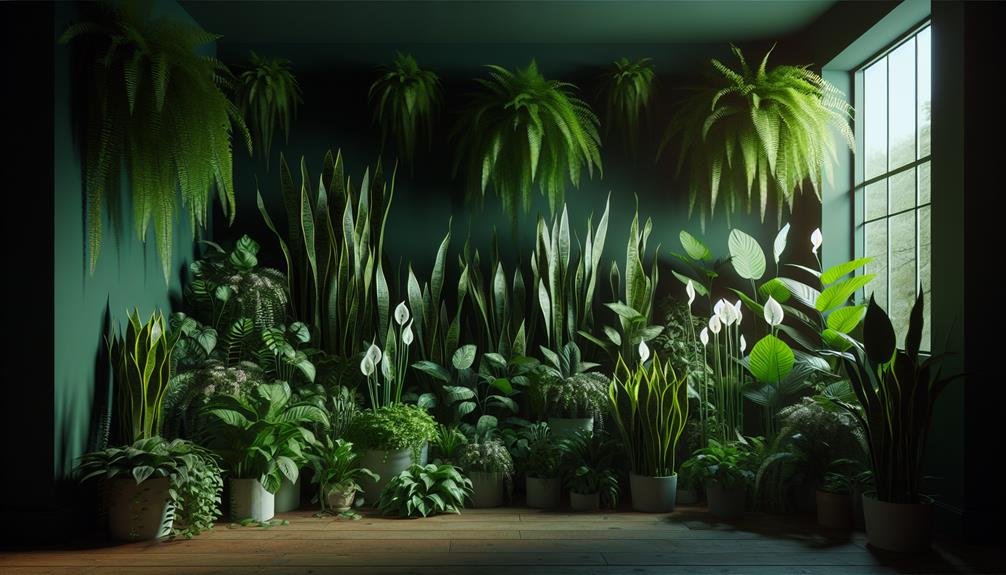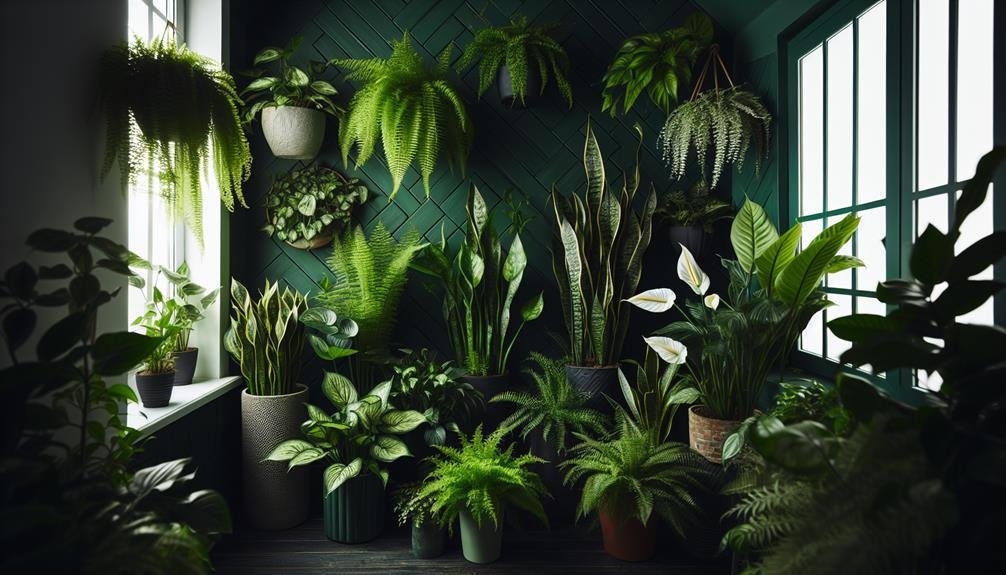
Coincidentally, you might be surprised to find out that some of the best low-light houseplants thrive indoors just as well as they do outdoors. From the elegant Snake Plant to the delicate Boston Fern, these plant options offer a variety of greenery that can brighten up any space.
But have you ever wondered which ones are more suited to indoor environments versus outdoor settings? Let’s explore the unique characteristics of these 10 best low-light houseplants and how they adapt to different environments.
Snake Plant
If you’re looking for a hardy plant that thrives in low-light conditions, the Snake Plant is an excellent choice. Also known as Sansevieria or Mother-in-Law’s Tongue, this plant is resilient and easy to care for. Its striking upright leaves come in various shades of green and yellow, adding a touch of elegance to any room.
Snake Plants are known for their air-purifying qualities, making them a great addition to your indoor space. These plants absorb toxins and release oxygen, promoting a healthier environment for you to enjoy.
Another benefit of the Snake Plant is its ability to thrive in neglect. If you tend to forget about your plants or have limited time for care, this plant will forgive occasional missed waterings.
In addition to their adaptability to low light, Snake Plants are also drought-tolerant, requiring minimal watering. This makes them ideal for busy individuals or those who are new to plant care. With the Snake Plant, you can enjoy a touch of nature indoors without the stress of high maintenance.
Peace Lily
The Peace Lily, also known as Spathiphyllum, is another excellent choice for low-light environments due to its adaptability and striking appearance. This plant thrives in indirect sunlight and can even bloom in low-light conditions, adding a touch of elegance to any room.
Peace Lilies aren’t only visually appealing with their glossy green leaves and white flowers, but they also act as natural air purifiers, removing toxins like formaldehyde and benzene from the air.
When caring for a Peace Lily, keep the soil consistently moist but not waterlogged, as overwatering can lead to root rot. These plants prefer higher humidity levels, so misting them occasionally can help maintain their health.
Peace Lilies are relatively low-maintenance and can tolerate some neglect, making them a perfect choice for busy individuals or those new to plant care. Remember to keep them out of direct sunlight to prevent leaf scorching, and your Peace Lily will continue to thrive in low-light indoor settings.

Spider Plant
Spider Plants, also known as Chlorophytum comosum, are a popular choice for low-light environments due to their resilience and unique appearance. These plants are characterized by their long, slender leaves that arch outward from the center, creating a cascading effect that looks beautiful in hanging planters or on elevated surfaces. Spider plants are relatively easy to care for and are known for their air-purifying qualities, making them a great addition to your indoor space.
One of the standout features of Spider Plants is their ability to produce baby plantlets, also known as spiderettes, that dangle down from the mother plant on thin stems. These spiderettes can be propagated to create new plants, adding to the charm and appeal of the Spider Plant. Additionally, Spider Plants thrive in indirect sunlight and can tolerate low-light conditions, making them an excellent choice for areas in your home that don’t receive much natural light.
Pothos
Pivot from the Spider Plant to Pothos by highlighting another low-light plant option that’s equally resilient and visually appealing. Pothos, also known as Devil’s Ivy, is a popular choice for indoor spaces due to its adaptability and low maintenance requirements. This plant features heart-shaped leaves in various shades of green, making it a charming addition to any room.
One of the key benefits of Pothos is its ability to thrive in low-light conditions, making it an ideal choice for areas with minimal natural light. Whether you place it on a shelf, hang it in a basket, or let it trail down from a high ledge, Pothos will continue to grow steadily with minimal care.
In addition to its aesthetic appeal and low-light tolerance, Pothos is known for its air-purifying qualities. This plant can help improve indoor air quality by filtering out common toxins, providing you with not only a visually pleasing addition to your space but also a breath of fresh air. Consider adding Pothos to your indoor garden for a touch of greenery that thrives in low-light environments.
ZZ Plant
A great option for low-light environments is the ZZ Plant, known for its hardy nature and striking appearance. If you’re looking for a houseplant that can thrive with minimal light, the ZZ Plant is an excellent choice. This plant can tolerate low light conditions that many other plants can’t handle, making it perfect for those dimly lit corners of your home. The ZZ Plant’s glossy, dark green leaves add a touch of elegance and modernity to any indoor space, making it a popular choice for interior decoration.
One of the key features of the ZZ Plant is its ability to survive with infrequent waterings, making it an ideal plant for busy individuals or those who may forget to water their plants regularly. This low-maintenance plant is also known for its air-purifying qualities, helping to improve the air quality in your home. With its resilience and aesthetic appeal, the ZZ Plant is a top contender for anyone seeking a low-light indoor plant that requires minimal care.
Cast Iron Plant
The Cast Iron Plant is a resilient and versatile houseplant that thrives in low-light conditions with minimal care requirements. If you’re looking for a plant that can withstand neglect and still look lush, this is the one for you.
Its dark green, glossy leaves add a touch of elegance to any indoor space. The Cast Iron Plant is perfect for those who tend to forget about watering since it prefers dry soil and can go extended periods without a drink. This plant is also great for beginners or those with busy schedules, as it can adapt to various lighting conditions, including low light.
Place it in a dim corner, and it will still flourish. The Cast Iron Plant is a slow grower, so you won’t need to worry about constantly repotting it. With its ability to purify the air and its low-maintenance nature, this plant is a fantastic choice for anyone wanting to add some greenery to their home without the hassle.
Philodendron
Thriving in various lighting conditions, the Philodendron is a popular choice for indoor gardeners seeking a versatile and easy-to-care-for houseplant. With its lush, heart-shaped leaves and air-purifying qualities, the Philodendron adds a touch of greenery to any space. This plant is particularly well-suited for low-light environments, making it an excellent option for rooms with minimal natural sunlight.
When caring for your Philodendron, ensure that the soil remains consistently moist but not waterlogged. Allow the top inch of soil to dry out between waterings to prevent root rot. Regularly dust the leaves to keep them free from debris and ensure they can efficiently absorb light. Fertilize the plant during the growing season to encourage healthy growth and vibrant foliage.
Propagation of the Philodendron is relatively simple, making it a great choice for beginner gardeners looking to expand their indoor plant collection. By taking stem cuttings and placing them in water or soil, you can easily propagate new plants to share with friends or expand your green oasis.
Chinese Evergreen
If you’re looking for a resilient and visually appealing houseplant that thrives in low-light conditions, consider the Chinese Evergreen. This plant is an excellent choice for indoor spaces with limited natural light. Chinese Evergreens come in various shades of green, silver, and even red, adding a pop of color to your home décor. These plants are known for their air-purifying qualities, making them not only aesthetically pleasing but also beneficial for your indoor air quality.
Chinese Evergreens are low-maintenance and can tolerate occasional neglect, making them perfect for busy individuals or those new to plant care. They prefer indirect light but can also survive in dimly lit areas, such as offices or bathrooms with small windows. When watering, make sure the soil is evenly moist but not waterlogged to prevent root rot. Additionally, Chinese Evergreens are pet-friendly, so you can enjoy their beauty without worrying about your furry friends.
Consider adding a Chinese Evergreen to your indoor plant collection for a touch of nature in low-light environments.
English Ivy
Consider adding English Ivy to your home for a touch of greenery in low-light settings. English Ivy (Hedera helix) is a versatile and easy-to-care-for houseplant that thrives in both indoor and outdoor environments. This plant features elegant trailing vines with lush, deep green leaves that can add a pop of color to any space.
English Ivy is an excellent choice for low-light conditions, making it ideal for rooms with minimal natural sunlight. It can tolerate shade and dimly lit areas, making it a perfect addition to your home or office where other plants might struggle to thrive. This plant also helps purify the air by removing toxins, creating a healthier indoor environment for you.
When caring for English Ivy, ensure the soil is well-drained and water the plant moderately, allowing the soil to dry out slightly between waterings. Regularly misting the leaves can help maintain the plant’s humidity needs. Trim the vines as needed to control growth and encourage a bushier appearance. With its resilience and aesthetic appeal, English Ivy is a fantastic choice for low-light indoor spaces.
Boston Fern
Adding to your collection of low-light houseplants, Boston Fern is a vibrant and dynamic option that can thrive in indoor environments with minimal natural sunlight. This lush and elegant plant is known for its feathery fronds that bring a touch of nature indoors. Boston Ferns prefer indirect light, making them ideal for brightening up those shady corners in your home where other plants struggle to grow.
One of the key benefits of having a Boston Fern is its air-purifying qualities. These ferns can help improve indoor air quality by removing toxins and adding moisture to the air, creating a healthier environment for you to breathe in. Additionally, their arching fronds create a stunning visual appeal, adding a pop of green to your indoor space.
To care for your Boston Fern, make sure to keep the soil consistently moist but not waterlogged. Provide them with occasional misting to maintain the humidity levels they thrive in. With proper care, your Boston Fern can grow lush and full, enhancing the beauty of your low-light indoor environment.
Frequently Asked Questions
Can I Use Grow Lights to Supplement the Low Light Conditions for These Houseplants?
You can definitely use grow lights to supplement the low light conditions for your houseplants. Position the lights close enough to provide adequate light without burning the plants.
Opt for full-spectrum LED grow lights for optimal growth. Remember to adjust the light duration based on the specific needs of your plants.
With proper placement and timing, grow lights can be a great solution for plants in low-light environments.
Are There Any Specific Watering Tips for Keeping These Houseplants Healthy in Low-Light Conditions?
To keep your low-light houseplants healthy, water them carefully. Check the soil moisture by sticking your finger in the dirt; water only when the top inch feels dry. Avoid overwatering, as it can lead to root rot.
Drain the excess water from the saucer beneath the pot to prevent waterlogging. Remember, in low light, the plants may not need as much water as those in brighter conditions.
How Often Should I Fertilize These Indoor Houseplants?
To keep your indoor houseplants thriving, fertilize them every 4-6 weeks during the growing season. Choose a balanced liquid fertilizer and dilute it to half the recommended strength to prevent overfeeding.
Remember to water the plants before fertilizing to avoid root burn. Consistent fertilization will provide essential nutrients for healthy growth and vibrant foliage. Adjust the frequency based on plant type and specific care requirements for optimal results.
Are There Any Common Pests or Diseases That These Houseplants Are Prone to in Low-Light Conditions?
In low-light conditions, common pests like spider mites and mealybugs can bother your houseplants. These critters thrive in the cozy environment and can quickly spread if not dealt with promptly.
Keep an eye out for any signs of infestation, such as webbing or white cottony spots on your plants. Regularly inspecting your plants and ensuring good air circulation can help prevent these pesky pests from taking over.
Can I Propagate These Houseplants Easily in a Low-Light Environment?
In a low-light environment, propagating houseplants can be a bit trickier compared to well-lit spaces. However, you can still propagate them successfully with a bit of extra care.
Make sure to choose healthy parent plants, use a rooting hormone to encourage growth, and keep the soil consistently moist but not waterlogged.
With patience and attention to detail, you can enjoy the satisfaction of propagating your houseplants even in low-light conditions.
Conclusion
Overall, when it comes to choosing low-light indoor vs outdoor houseplants, there are plenty of options to consider. Whether you opt for a Snake Plant or a Boston Fern, both types of plants can thrive in low-light conditions with the right care.
Remember to choose plants that suit your specific environment and preferences, and enjoy the beauty and benefits that these green companions can bring to your home or outdoor space.