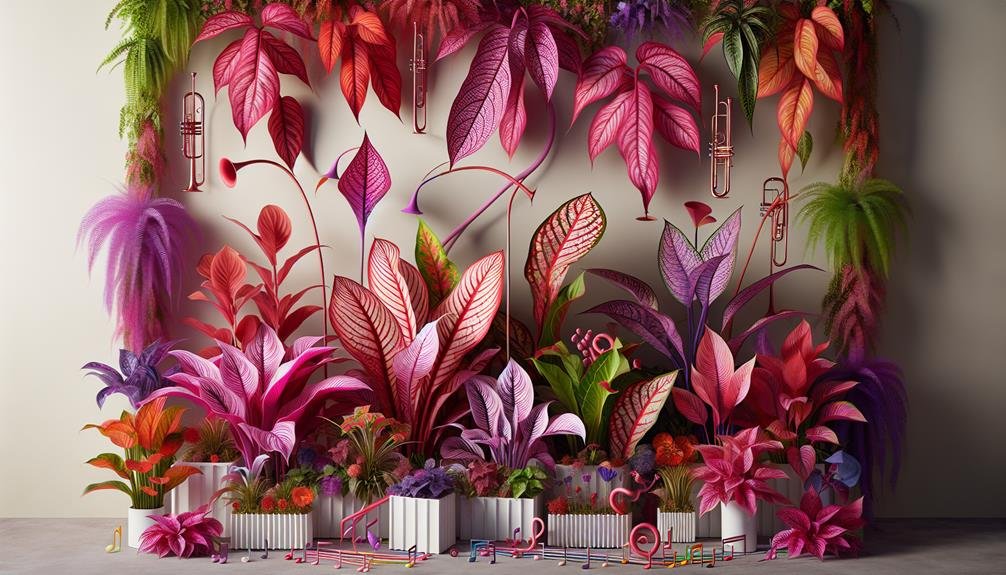
If you're looking to spruce up your living space with a pop of color that stands the test of time, then these vibrant foliage houseplants are just what the decorator ordered.
From the intricate patterns of the Calathea to the bold hues of the Croton, each plant on this list brings a unique touch to your home.
But what makes these houseplants not only visually appealing but also easy to care for? Stay tuned to discover how these ten plants can transform your space into a colorful oasis that's both stylish and low-maintenance.
Calathea
If you want a houseplant that adds a touch of elegance to your indoor space, consider the Calathea. This stunning plant, known for its vibrant foliage and unique patterns, can truly elevate the aesthetic of any room. The Calathea, with its striking leaves that boast shades of green, purple, pink, and white, brings a pop of color that's both refreshing and eye-catching.
Not only is the Calathea visually appealing, but it also offers a practical benefit – it's an excellent air purifier. This means that besides enhancing the beauty of your home, the Calathea also helps to improve air quality by removing toxins and impurities.
Caring for a Calathea is relatively simple. It thrives in indirect light and requires consistently moist soil. Remember to mist the leaves regularly to maintain the plant's humidity needs. With the right care, your Calathea will continue to dazzle with its vibrant foliage, making it a perfect choice for adding a splash of color to your decor.
Croton
Consider adding a touch of tropical flair to your indoor space with the vibrant Croton plant. Crotons are known for their stunning foliage that comes in a variety of colors, including vibrant shades of red, orange, yellow, and green. These plants can instantly brighten up any room with their bold and eye-catching leaves.
Crotons are relatively easy to care for, making them a great choice for both beginner and experienced plant enthusiasts. They thrive in bright, indirect light and require regular watering to keep the soil consistently moist. However, be cautious not to overwater, as this can lead to root rot.
In addition to their colorful leaves, Crotons are also excellent air purifiers, helping to improve the air quality in your home. With proper care, these plants can grow quite large and make a striking statement as a focal point in any room. So why not bring home a Croton plant today and add a pop of color to your indoor decor?
Rex Begonia
Brighten up your indoor space with the stunning foliage of the Rex Begonia plant, known for its vibrant and colorful leaves. Rex Begonias, also called Painted-Leaf Begonias, are prized for their striking patterns and hues, making them a perfect choice for adding a pop of color to your home. These plants come in various shades of green, silver, pink, purple, and red, often with intricate swirls, spots, or veins that create a mesmerizing visual display.

Rex Begonias thrive in bright, indirect light and require well-draining soil to prevent waterlogging, as they're sensitive to overwatering. To keep their foliage looking its best, mist the leaves regularly to maintain the humidity levels they prefer. These plants are best suited for indoor environments where temperatures are consistently warm, ideally between 65-75°F (18-24°C).
With their eye-catching foliage and relatively low maintenance requirements, Rex Begonias are an excellent choice for anyone looking to add a touch of vibrant color and elegance to their living space.
Prayer Plant
Admire the captivating foliage of the Prayer Plant, known for its unique patterns and vibrant colors that add a lively touch to any room. This houseplant, scientifically named Maranta leuconeura, features striking leaves with hues of green, red, and sometimes purple, creating a visually appealing display. The standout feature of the Prayer Plant is its ability to fold its leaves upward in the evening, resembling hands in prayer, hence its name.
Caring for your Prayer Plant is relatively easy. Place it in a well-lit area away from direct sunlight, as too much light can cause the colors to fade. Keep the soil consistently moist but not waterlogged, as this plant prefers slightly humid conditions. Regularly misting the leaves can help maintain the required humidity levels.
With its colorful foliage and interesting leaf movements, the Prayer Plant is a fantastic addition to your indoor garden. Whether placed on a shelf, desk, or hanging planter, this plant is sure to brighten up your living space with its vibrant presence.
Persian Shield
The Persian Shield plant, scientifically known as Strobilanthes dyerianus, showcases stunning purple and silver foliage that can complement the vibrant colors of your indoor garden. This plant is sure to add a pop of color and a touch of elegance to any room in your home. With its iridescent leaves that have a metallic sheen, the Persian Shield creates a striking visual impact that's hard to miss.
Native to Myanmar (Burma), this tropical plant thrives in warm and humid conditions, making it an ideal choice for indoor environments. It's relatively low-maintenance, requiring moderate watering and indirect sunlight to flourish. The Persian Shield can grow up to 3 feet tall, creating a lush and vibrant display with its long, lance-shaped leaves.
Whether placed in a hanging basket or as a centerpiece on a table, the Persian Shield is sure to attract attention and elevate the aesthetic of your living space with its unique and eye-catching foliage.
Polka Dot Plant
With its whimsical speckled leaves, the Polka Dot Plant adds a playful touch to any indoor space. This charming plant, scientifically known as Hypoestes phyllostachya, features leaves dotted with spots of various colors like pink, white, and red, resembling a confetti of colors. The Polka Dot Plant thrives in bright, indirect light and requires consistently moist soil to maintain its vibrant foliage. You can easily incorporate this plant into your home decor by placing it in hanging baskets, pots, or as part of a colorful arrangement.
To keep your Polka Dot Plant looking its best, make sure to trim any leggy growth and pinch back the stems regularly. This will encourage bushier and more compact growth, enhancing the visual appeal of the plant. Additionally, regular misting can help maintain the plant's humidity needs, preventing its leaves from drying out.
With its cheerful and lively appearance, the Polka Dot Plant is an excellent choice for adding a pop of color and a touch of whimsy to your indoor space.
Peperomia
To introduce the houseplant 'Peperomia' after exploring the charming Polka Dot Plant, consider adding a touch of sophistication and elegance to your indoor oasis with the unique foliage of Peperomia. Peperomia plants are known for their striking leaves that come in various shapes, sizes, and colors, making them a perfect choice for adding a pop of color to your home decor. These plants are relatively low-maintenance, thriving in indirect light and requiring only occasional watering.
One of the most attractive features of Peperomia is its diverse foliage patterns, including variegated leaves with stunning color combinations such as green, silver, red, and cream. The compact size of Peperomia plants makes them ideal for small spaces like desks, shelves, or windowsills, adding a touch of greenery without overwhelming the area.
Peperomia plants are also considered pet-friendly, making them a safe choice for households with furry friends. With their vibrant foliage and easy care requirements, Peperomia plants can elevate the aesthetic appeal of any room in your home, creating a stylish and colorful ambiance.
Chinese Evergreen
For a vibrant addition to your indoor space, consider incorporating Chinese Evergreen plants with their stunning foliage and easy care requirements. Chinese Evergreens, scientifically known as Aglaonema, are popular for their striking leaves that come in various shades of green, silver, red, and pink. These plants are perfect for adding a pop of color to your home decor without requiring too much maintenance.
Chinese Evergreens thrive in low to moderate light conditions, making them suitable for different areas of your home. They prefer well-draining soil and only need to be watered when the top layer of soil feels dry to the touch. Overwatering can lead to root rot, so it's essential to let the soil dry out between waterings. These plants are also known for their air-purifying qualities, helping to improve the air quality in your living space.
With their vibrant foliage and easy care routine, Chinese Evergreens are an excellent choice for adding color and life to your indoor environment effortlessly.
Coleus
Color your indoor space with the vibrant foliage of Coleus plants, known for their stunning array of colors and patterns. Coleus, with their striking leaves in shades of green, pink, red, yellow, and burgundy, add a pop of color to any room. These plants thrive in indirect light and moist soil, making them easy to care for and perfect for brightening up your living space.
One of the best features of Coleus is their versatility in design. Whether you prefer a monochromatic look or a mix of contrasting hues, Coleus plants can cater to your aesthetic preferences. You can choose from varieties with solid colors, intricate patterns, or even a combination of both to create a dynamic and visually appealing display.
To keep your Coleus plants looking their best, make sure to pinch off any flowers that appear, as they can take away from the plant's vibrant foliage. With proper care and maintenance, Coleus can continue to brighten up your home with their colorful leaves all year round.
Tradescantia
Adding a touch of elegance to your indoor space, Tradescantia plants boast vibrant foliage that can enhance the aesthetic appeal of any room. With their striking leaves that come in various shades of green, purple, and silver, Tradescantia plants are a popular choice for those looking to add a pop of color to their decor. These plants are relatively low maintenance, making them perfect for beginners or those with busy schedules.
Tradescantia plants thrive in bright, indirect light and require well-draining soil to prevent root rot. Water them when the top inch of soil feels dry, but be careful not to overwater as they're susceptible to root rot. These plants also benefit from regular pruning to encourage bushier growth and prevent legginess.
Whether you choose a traditional green variety or opt for a more colorful option like Tradescantia zebrina with its purple undersides, these plants are sure to brighten up your living space with their vibrant foliage. Consider adding a few Tradescantia plants to your home for a touch of nature's beauty indoors.
Frequently Asked Questions
How Often Should I Fertilize My Vibrant Foliage Houseplants?
To keep your vibrant foliage houseplants healthy and thriving, fertilize them regularly. It's important to provide your plants with essential nutrients for optimal growth.
Typically, fertilizing every 2-4 weeks during the growing season is recommended. Be sure to follow the instructions on the fertilizer packaging to avoid over-fertilizing, which can harm your plants.
Consistent fertilization will help your houseplants maintain their beautiful and colorful foliage.
Can I Place My Vibrant Foliage Houseplants Near a Window With Direct Sunlight?
You should be cautious about placing your vibrant foliage houseplants near a window with direct sunlight. While some plants thrive in bright light, too much direct sunlight can scorch the leaves of many houseplants.
It's best to monitor how your plants respond to the sunlight and adjust their placement accordingly. Remember, it's always better to start with indirect light and gradually introduce more sunlight to prevent any damage to your plants.
Are There Any Common Pests or Diseases That Affect These Types of Houseplants?
Common pests and diseases can affect these types of houseplants. Keep an eye out for spider mites, aphids, and mealybugs as common pests. Fungal diseases like powdery mildew can also be a concern.
Regularly inspect your plants for any signs of infestation or disease. Proper watering, good air circulation, and keeping your plants clean can help prevent these issues.
If needed, treat affected plants promptly to protect your vibrant foliage houseplants.
Do Vibrant Foliage Houseplants Require Any Special Pruning or Maintenance?
To keep vibrant foliage houseplants looking their best, regular pruning and maintenance are essential. Trim back any yellowing or damaged leaves to promote new growth.
Dust the leaves periodically to allow proper sunlight absorption. Check for pests like spider mites and treat promptly if needed.
Water and fertilize according to each plant's specific needs to maintain their colorful decor impact.
Can I Propagate These Houseplants to Create More Plants for My Home Decor?
Sure, propagating vibrant foliage houseplants is a great way to expand your indoor garden. You can create more plants for your home decor by using methods like stem cuttings or division.
It's a fun and rewarding process that allows you to increase your plant collection while adding a personal touch to your living space. Just follow the proper techniques and care instructions to ensure successful propagation.
Conclusion
So there you have it! These vibrant foliage houseplants are sure to add a pop of color to your home decor.
Whether you choose a Calathea for its striking patterns or a Croton for its bold hues, there's a plant for every style.
With their eye-catching leaves and easy care requirements, these plants are a perfect way to brighten up any room in your home.
Happy decorating!