
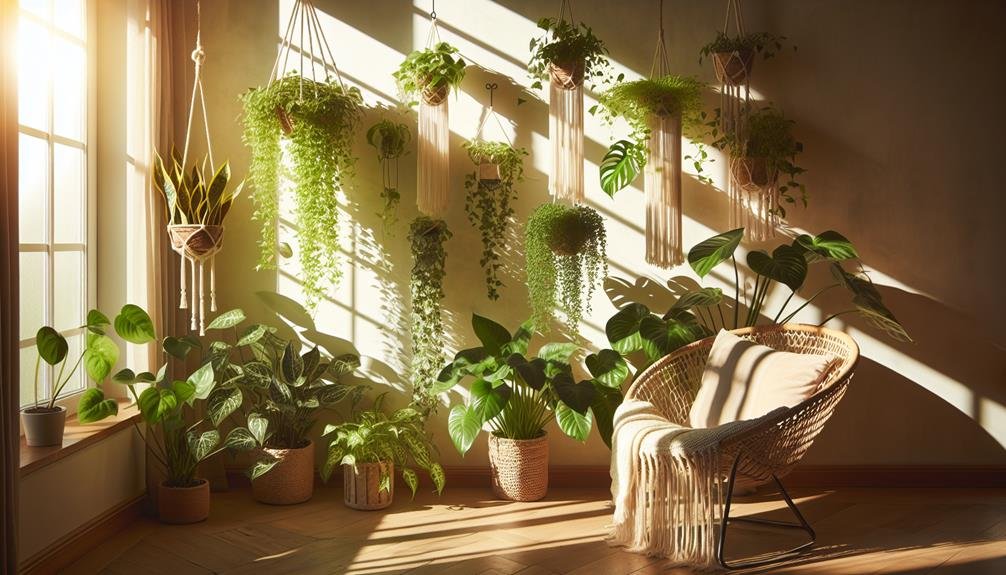
When it comes to adding greenery to your compact living quarters, remember the old saying, 'Good things come in small packages.'
You're probably wondering which plants can thrive in your limited space while enhancing your decor. Well, imagine lush cascading foliage, a touch of elegance, and a breath of fresh air all in one. These top 5 houseplants not only elevate your space but also require minimal maintenance.
So, which green companions made the cut for small spaces? Keep scrolling to discover the perfect hanging houseplants that will transform your home environment.
Pothos
If you're looking for a low-maintenance hanging houseplant that thrives in various lighting conditions, Pothos is an excellent choice. This plant, also known as Devil's Ivy, features heart-shaped leaves that come in various shades of green, making it a versatile and aesthetically pleasing addition to your space.
Pothos is incredibly resilient and can adapt to different light levels, from low light to bright, indirect sunlight, making it perfect for those harder-to-fill spots in your home.
One of the best qualities of Pothos is its ability to purify the air by removing toxins like formaldehyde and benzene, promoting a healthier indoor environment. This plant is also easy to care for, requiring only occasional watering when the soil feels dry and tolerating some neglect.
To maintain its lush appearance, simply trim any leggy stems occasionally and provide it with a trellis or pole for support as it grows. With its air-purifying qualities, adaptability to various light conditions, and minimal care requirements, Pothos is an ideal choice for a hassle-free hanging houseplant in your small space.
String of Pearls
String of Pearls, a unique trailing succulent with spherical leaves resembling tiny peas, adds a touch of whimsy to any space. This charming plant is perfect for small areas as it cascades elegantly, making it an ideal choice for hanging planters or shelves. String of Pearls thrives in bright, indirect light and requires well-draining soil to prevent root rot.
When caring for String of Pearls, be mindful not to overwater. Allow the soil to dry out between waterings, as this plant is drought-tolerant and is susceptible to rot if left in soggy conditions. Fertilize sparingly during the growing season to encourage healthy growth and vibrant foliage.
Propagating String of Pearls is relatively simple – you can propagate this succulent by planting cuttings in soil, allowing them to root and grow into new plants. With proper care and attention, String of Pearls will reward you with its unique beauty and whimsical charm, making it a delightful addition to your small space.

Spider Plant
With its easy care and air-purifying qualities, the Spider Plant is a popular choice for small spaces and makes a great addition to your hanging plant collection. This plant, known scientifically as Chlorophytum comosum, features long, arched leaves that cascade elegantly, adding a touch of greenery to your home while requiring minimal maintenance.
Spider Plants thrive in indirect light but can also adapt to low light conditions, making them versatile for various living spaces. They're resilient and forgiving, able to withstand occasional missed waterings. A well-draining potting mix is ideal to prevent overwatering, as Spider Plants prefer slightly moist soil.
One of the Spider Plant's most appealing characteristics is its ability to produce offsets called 'spiderettes,' which dangle down from the mother plant like tiny spiders on a web. These spiderettes can be propagated easily by placing them in water or soil, allowing you to expand your collection or share them with friends.
Boston Fern
The Boston Fern, a classic choice for hanging plant enthusiasts, thrives in humid environments and adds a lush, green touch to any small space. Its delicate fronds cascade gracefully, making it an elegant addition to your home decor. This plant is relatively low-maintenance, requiring regular watering to keep the soil moist. Hanging the Boston Fern near a window where it can receive indirect sunlight will help it flourish.
One of the benefits of the Boston Fern is its air-purifying qualities. It can help improve indoor air quality by removing toxins and adding oxygen. This makes it not only a visually appealing choice but also a functional one. The fern's feathery leaves create a soft, calming atmosphere, perfect for creating a relaxing oasis in your small living space.
When caring for your Boston Fern, be sure to mist its leaves regularly to maintain the humidity levels it craves. Additionally, consider fertilizing it occasionally during the growing season to keep it healthy and vibrant. With its beauty and air-purifying properties, the Boston Fern is a fantastic hanging plant option for small spaces.
Air Plants
To continue exploring best hanging houseplants for small spaces, let's now turn our attention to Air Plants, which offer a unique and modern touch to your indoor decor. Air Plants, also known as Tillandsia, are low-maintenance plants that don't require soil to grow. These versatile plants come in various shapes and sizes, making them perfect for hanging displays in small spaces. You can place them in glass terrariums, hang them in geometric holders, or simply let them dangle from macramé hangers.
One of the great advantages of Air Plants is their ability to thrive in various lighting conditions, from bright, indirect light to artificial light sources. They absorb water and nutrients through their leaves, so occasional misting or soaking is all they need to stay healthy. Their unique appearance and effortless care make them a popular choice for busy plant lovers or those looking to add a modern aesthetic to their homes without much hassle.
Consider adding Air Plants to your small space to bring a touch of greenery and contemporary flair to your living environment.
Frequently Asked Questions
How Often Should I Water My Hanging Houseplants?
Water your hanging houseplants by checking the soil moisture regularly. Stick your finger about an inch into the soil; if it feels dry, it's time to water.
Ensure water drains properly by choosing pots with drainage holes. Adjust watering frequency based on your plant's specific needs, considering factors like light levels, temperature, and humidity in your space.
Consistent monitoring and adjusting will help you keep your hanging houseplants healthy and thriving.
Can Hanging Houseplants Be Placed in Direct Sunlight?
Yes, hanging houseplants can thrive in direct sunlight, but be cautious. Some houseplants prefer indirect light to prevent scorching. Assess the needs of your specific plant species before placing them in direct sunlight.
Monitor their health and adjust their location accordingly. With proper care and attention, your hanging houseplants can bask in the sun and enhance your small space beautifully.
Are There Any Specific Pests I Should Watch Out for With These Hanging Houseplants?
When caring for hanging houseplants, be on the lookout for common pests like spider mites, aphids, and mealybugs. Regularly inspect the leaves and stems for any signs of infestation.
If you notice pests, promptly take action to prevent them from spreading to other plants. Consider using natural remedies or insecticidal soap to keep your hanging houseplants healthy and pest-free.
Regular maintenance and vigilance are key to ensuring your plants thrive.
Can I Hang Multiple Types of Hanging Houseplants Together in the Same Space?
Yes, you can hang multiple types of hanging houseplants together in the same space. This allows you to create a diverse and visually appealing display. Ensure that the plants have similar care requirements to make maintenance easier.
Consider the lighting and watering needs of each plant to ensure they thrive when grouped together. Mixing different textures and colors can also add depth and interest to your indoor garden.
What Are Some Creative Ways to Display Hanging Houseplants in Small Spaces?
When looking to display hanging houseplants in small spaces, get inventive! Utilize wall-mounted planters, macramé hangers, and tiered hooks to maximize vertical space. Consider grouping plants with varying lengths to create a dynamic display.
Adding a mix of plant types can also enhance visual interest. Remember to position your plant near natural light sources for optimal growth. These strategies will help you make the most of your limited space while adding greenery to your home.
Conclusion
Overall, when it comes to finding the perfect hanging houseplants for small spaces, there are many great options to choose from. Whether you prefer the classic beauty of a Pothos, the unique look of String of Pearls, the air-cleaning benefits of a Spider Plant, the lush foliage of a Boston Fern, or the low-maintenance appeal of Air Plants, there's a hanging houseplant out there for everyone.
So go ahead, add some greenery to your space and enjoy the benefits of these beautiful plants!



