
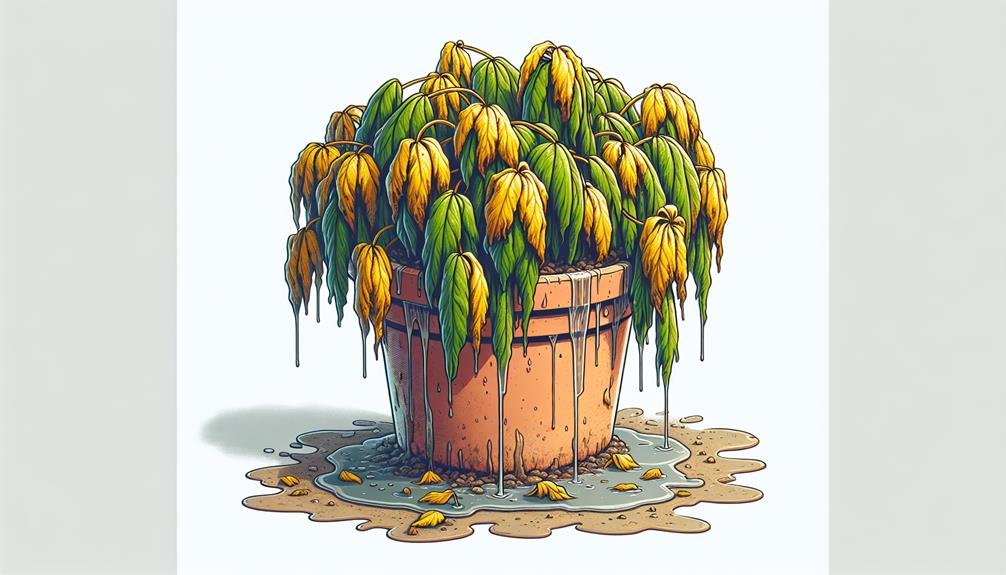
When it comes to caring for your houseplants, walking the fine line between too much and too little water can be like navigating a maze blindfolded. Picture this: your plants are trying to send you cryptic messages, but are you decoding them correctly? Yellowing leaves, wilting stems, and moldy soil are just a few clues they're dropping.
But what about root rot and stunted growth? Curious to uncover the full story behind these signs?
Yellowing Leaves
If your houseplant's leaves are turning yellow, it could be a sign of overwatering. Overly damp soil can lead to root rot, preventing the roots from properly absorbing nutrients, causing the leaves to yellow. When you notice yellowing leaves, check the soil moisture level by inserting your finger about an inch deep into the soil. If it feels wet or soggy, hold off on watering until the top inch of soil is dry to the touch.
To help your overwatered plant recover, adjust your watering schedule. Allow the soil to dry out more between waterings to prevent further stress on the roots. Consider repotting your plant into a container with drainage holes to improve aeration and drainage. Trim away any yellow or rotting leaves to promote new growth.
Wilting Stems
Check the stems of your houseplants for wilting, as this could indicate potential issues with watering. Wilting stems are a common sign of overwatering in plants. When the roots of your houseplant sit in soggy soil for too long, they can't access the oxygen they need, leading to wilting stems. The excess water in the soil essentially suffocates the roots, causing them to become waterlogged and unable to provide proper support to the plant's stems. As a result, the stems start to wilt and may appear limp or droopy.
To address wilting stems caused by overwatering, it's essential to adjust your watering routine. Allow the soil to dry out between waterings to prevent waterlogging the roots. Consider repotting your plant in well-draining soil to improve aeration and water flow. Trim off any severely wilted stems to encourage new growth and recovery. By taking these steps, you can help your houseplants regain their health and vitality.
Moldy Soil
Inspect the soil of your overwatered houseplants for any signs of mold, as this could signal excessive moisture levels that may be harming your plants. Moldy soil is a common issue in overwatered plants and can be identified by the presence of fuzzy, green, black, or white patches on the surface. This mold is often a type of fungus that thrives in damp conditions, indicating that your plant's soil is retaining too much water.
When you notice mold on the soil, it's essential to take action promptly. Mold not only competes with your plant for nutrients but also indicates that the soil is too wet, potentially leading to root rot. To address moldy soil, first, allow the soil to dry out by reducing watering frequency. You can also gently scrape off the moldy patches and aerate the soil to improve drainage. Ensure proper air circulation around the plant to prevent mold from reoccurring, helping your houseplant thrive once again.
Root Rot
Root rot can severely damage your houseplants if left untreated. This condition occurs when the roots of your plants are consistently submerged in water, leading to decay and eventual death of the roots. One of the primary causes of root rot is overwatering your plants, as excess water limits the amount of oxygen that reaches the roots, creating a perfect environment for root-rotting fungi to thrive.
To identify root rot in your houseplants, look for symptoms such as wilting leaves, yellowing or browning of foliage, and a foul smell emanating from the soil. When you gently tug on the affected plant, the roots may appear mushy, discolored, or even blackened. If left unaddressed, root rot can spread quickly and kill your plant.

To prevent root rot, ensure proper drainage in your plant's pot, use well-draining soil, and water your plants only when necessary. If you suspect root rot, remove the affected plant from its pot, trim away the infected roots, and repot it in fresh soil. Taking prompt action is crucial to save your houseplant from the perils of root rot.
Stunted Growth
Excessive watering can lead to stunted growth in your houseplants, hindering their overall development and vitality. When you overwater, the roots struggle to absorb oxygen, leading to root suffocation. As a result, the plant's ability to take up essential nutrients is compromised, affecting its growth rate. The excess moisture also creates a prime environment for harmful pathogens like fungi to thrive, further impeding the plant's growth.
Stunted growth is often noticeable when your houseplant's leaves are smaller than expected, or when the stems seem underdeveloped in comparison to the rest of the plant. The overall size of the plant may also be smaller than what's typical for its species. If you notice these signs, it's crucial to reassess your watering routine and allow the soil to dry out properly between waterings.
To prevent stunted growth caused by overwatering, make sure to water your houseplants only when the topsoil is dry to the touch and always provide adequate drainage to avoid waterlogging the roots. By adjusting your watering habits, you can promote healthy growth and ensure your houseplants thrive.
Frequently Asked Questions
How Often Should I Water My Houseplants to Prevent Overwatering?
To prevent overwatering your houseplants, water them only when the top inch of soil feels dry. Stick your finger in the soil to check. Different plants have varying water needs, so tailor your watering schedule accordingly.
Can Using a Moisture Meter Help Prevent Overwatering?
Using a moisture meter can definitely help prevent overwatering your houseplants. It gives you a precise reading of the soil moisture, so you can water only when needed.
Stick the meter into the soil and check the levels to see if it's time to water. This tool takes the guesswork out of watering, ensuring your plants get just the right amount of moisture to thrive.
Are Certain Types of Houseplants More Prone to Overwatering Than Others?
Certain types of houseplants are indeed more prone to overwatering than others. Some plants, like succulents and cacti, prefer drier conditions and can suffer if overwatered.
On the other hand, plants that thrive in moist environments, such as ferns or peace lilies, may be more forgiving of excess water. Understanding the specific watering needs of your houseplants is crucial to prevent overwatering and keep them healthy.
What Are Some Signs of Underwatering That May Be Mistaken for Overwatering?
If you're wondering about signs of underwatering that might be mistaken for overwatering, it's essential to look for wilting, dry soil, yellowing leaves, and leaf drop. These symptoms could indicate a lack of water rather than too much.
Make sure to assess the moisture levels in the soil before adjusting your watering routine to ensure your plants are getting the right amount of hydration.
How Can I Adjust My Watering Schedule Based on the Season or Humidity Levels in My Home?
Adjust your watering schedule by considering the season and humidity levels in your home. During warmer months, plants may need more frequent watering due to increased evaporation. In contrast, in winter or when humidity is high, plants may require less water.
Monitor your plant's soil moisture regularly and adjust your watering routine accordingly to ensure your houseplants thrive in changing environmental conditions.
Conclusion
If you notice any of these signs in your houseplants, it's likely that you're overwatering them. Remember to adjust your watering schedule, allow the soil to dry out between waterings, and ensure proper drainage to prevent further damage.
By paying attention to these indicators, you can help your plants thrive and avoid the negative effects of overwatering. Your green friends will thank you for it!



