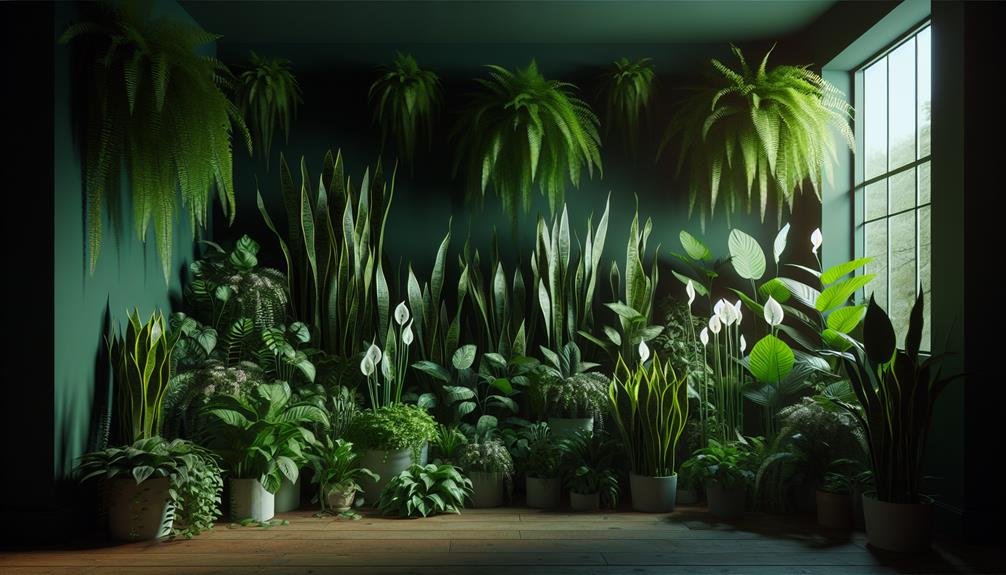
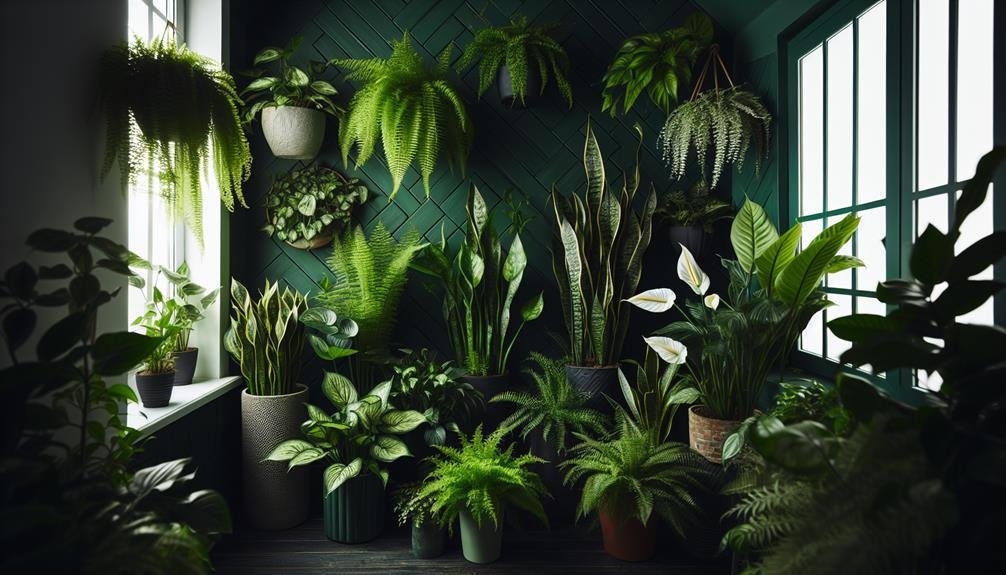
In the realm of dimly lit spaces, finding plants that not only survive but thrive can seem like an insurmountable task. However, fear not, for there are seven green companions that might just be the perfect fit for your light-deprived abode.
From the resilient Snake Plant to the elegant Peace Lily, these botanical wonders bring life and vibrancy to even the darkest corners of your home.
Stay tuned to discover which plant could be the ideal match for your dimly lit sanctuary.
Snake Plant
The Snake Plant thrives in low light conditions, making it an ideal choice for dimly lit spaces. Its ability to tolerate neglect and survive with minimal sunlight makes it a perfect plant for those looking to add some greenery to their home or office without strong natural light. This hardy plant is a great option for beginners or those with busy schedules since it requires minimal maintenance.
When caring for a Snake Plant in a low light environment, be sure to water it sparingly as it's susceptible to root rot. Allow the soil to dry out between waterings to prevent overwatering, which can harm the plant. Additionally, consider using a well-draining potting mix to ensure proper drainage and avoid waterlogged soil.
Snake Plants not only thrive in low light but also have air-purifying qualities, making them a practical and aesthetically pleasing choice for indoor spaces. With their striking upright leaves and easy care routine, Snake Plants can effortlessly brighten up any dimly lit room.
ZZ Plant
Thriving in low light conditions, the ZZ Plant is a popular choice for indoor spaces seeking a touch of greenery. This hardy plant, with its shiny, waxy leaves, adds a modern and elegant look to any room. One of the reasons why the ZZ Plant is beloved by many is its ability to survive with minimal care, making it perfect for those with busy schedules or who may not have a green thumb.
When it comes to watering, the ZZ Plant prefers to dry out between waterings, so be sure not to overwater it. This plant can also tolerate a bit of neglect, so if you forget to water it occasionally, don't fret. The ZZ Plant is known for being relatively pest-resistant, making it a hassle-free addition to your home or office.
Whether placed in a bright spot or a dimly lit corner, the ZZ Plant will adapt and continue to thrive. Its unique aesthetic and ease of care make it a fantastic choice for anyone looking to incorporate some greenery into their space without much maintenance.
Peace Lily
In low light conditions, consider the Peace Lily for a touch of elegance and tranquility in your indoor space. The Peace Lily, with its dark green leaves and delicate white flowers, thrives in low light environments, making it an ideal choice for rooms with limited natural light. This plant not only adds a pop of beauty to your space but also helps purify the air by removing toxins like formaldehyde and benzene.

Caring for a Peace Lily is relatively straightforward. Keep the soil consistently moist but not waterlogged, and mist the leaves occasionally to maintain humidity. The plant prefers temperatures between 65-80°F (18-27°C) and can tolerate slightly cooler conditions at night. Fertilize your Peace Lily every 6-8 weeks during the growing season to encourage healthy growth and blooming.
Position your Peace Lily away from direct sunlight to prevent leaf burn, and enjoy the calming presence it brings to your dimly lit room. With minimal effort, you can relish in the beauty and serenity this plant offers.
Pothos
Consider introducing a vibrant touch of greenery into your dimly lit space with the versatile Pothos plant. Pothos, also known as Devil's Ivy, is a hardy and low-maintenance plant that thrives in low light conditions, making it an ideal choice for spaces with limited natural light. This plant features heart-shaped leaves in various shades of green, adding a pop of color to any room.
Pothos isn't only aesthetically pleasing but also offers air-purifying qualities, helping to improve the air quality in your home or office. Its trailing vines make it perfect for hanging baskets or letting them cascade down from shelves, adding a touch of nature to vertical spaces.
To care for your Pothos plant, simply place it in indirect sunlight and water it when the top inch of soil feels dry. Avoid overwatering, as Pothos prefers slightly drier conditions. With minimal effort, you can enjoy the beauty and benefits of Pothos in your dimly lit space.
Spider Plant
For a touch of natural charm in your dimly lit space, the Spider Plant is a resilient and visually appealing choice. With its long, arching leaves that resemble spider legs, this plant adds a unique flair to any room. Spider Plants thrive in low light conditions, making them perfect for brightening up those darker corners of your home or office.
One of the Spider Plant's most attractive features is its air-purifying abilities. This plant is excellent at removing toxins from the air, creating a healthier environment for you to breathe in. Additionally, Spider Plants are easy to care for, requiring minimal attention to flourish. Just water them occasionally and place them in indirect sunlight, and they'll continue to thrive.
Another benefit of the Spider Plant is its ability to produce baby spider plants, also known as spiderettes, which dangle down from the main plant on thin stems. These baby plants can be propagated to grow new Spider Plants, allowing you to expand your greenery effortlessly. Consider adding a Spider Plant to your low-light space for a touch of nature's beauty.
Cast Iron Plant
With its sturdy and resilient nature, the Cast Iron Plant is a perfect choice for dimly lit spaces. This plant thrives in low light conditions, making it an excellent option for areas in your home where other plants may struggle to survive. The Cast Iron Plant's dark green leaves are leathery and tough, adding a touch of elegance to any room without requiring much maintenance.
One of the key benefits of the Cast Iron Plant is its ability to tolerate neglect, making it ideal for those who may not have a green thumb or tend to forget about their plants. It can go for long periods without water and still maintain its attractive appearance, making it a low-maintenance and forgiving plant for beginners or busy individuals.
If you're looking to add a touch of greenery to a dimly lit corner or a room with minimal natural light, the Cast Iron Plant is a reliable and attractive choice that will bring life to your space effortlessly.
Philodendron
The Philodendron plant is a versatile and popular choice for dimly lit spaces due to its adaptability and attractive foliage. It thrives in low light conditions, making it ideal for offices, bathrooms, or any room with limited natural light. Philodendrons come in various species, with heart-shaped leaves or deep green foliage, adding a touch of elegance to your indoor space.
One of the key reasons why Philodendrons are favored for low light environments is their ability to tolerate neglect. These plants are forgiving if you forget to water them occasionally, making them low-maintenance and perfect for busy individuals. Additionally, Philodendrons are known for their air-purifying qualities, helping to improve the air quality in your home while adding a decorative element.
Whether you opt for a trailing variety to hang in a basket or a more upright species to place on a shelf, the Philodendron is sure to brighten up any dimly lit corner with its lush green leaves.
Frequently Asked Questions
Can These Plants Survive in a Completely Dark Room With No Natural Light at All?
In a completely dark room with no natural light, plants will struggle to survive. Light is essential for photosynthesis, the process by which plants convert light energy into food. Without light, plants can't produce energy and will eventually die.
It's important to provide some form of light, even if minimal, for plants to thrive. Consider using grow lights or finding a spot with indirect sunlight to help your plants survive and grow.
Do Any of These Plants Have Any Special Requirements When It Comes to Temperature or Humidity Levels?
When it comes to temperature and humidity levels for these plants, some may have specific needs. Checking individual care instructions is key to keep them thriving.
Make sure to monitor the environment to ensure it meets their requirements. Adjustments may be necessary to create an ideal setting for your plants.
Are There Any Common Pests or Diseases That These Plants Are Particularly Susceptible To?
Common pests or diseases can affect indoor plants, regardless of their lighting requirements. Keep an eye out for spider mites, aphids, and mealybugs. These critters can quickly infest your plants if not caught early.
Preventative measures like regular inspections and proper watering can help keep these pesky intruders at bay. Remember, early detection and swift action are key to maintaining healthy indoor plants.
How Often Should These Plants Be Watered and Fertilized in a Dimly Lit Space?
For plants in dimly lit spaces, water frequency is crucial. Keep soil lightly moist, but not soggy. Check the soil's top inch for dryness before watering.
In low light, plants may not require as much fertilizer. Use a balanced liquid fertilizer every 4-6 weeks during the growing season. Over-fertilizing can harm plants, so follow instructions carefully.
Always adjust watering and feeding based on individual plant needs and environmental conditions.
Are There Any Potential Toxic Effects of These Plants if Ingested by Pets or Children?
If you're considering the potential toxic effects of plants if ingested by pets or children, it's crucial to research each plant's specific characteristics.
Some plants commonly grown in dimly lit spaces can be toxic if consumed. Keep an eye out for symptoms like vomiting, diarrhea, or skin irritation after contact.
It's always best to place these plants out of reach to prevent accidental ingestion and ensure the safety of your loved ones.
Conclusion
So, there you have it – if you have a dimly lit space in your home or office, don't worry! These 7 plants are perfect for those low-light conditions and will thrive with minimal sunlight.
From the Snake Plant to the Philodendron, there's a plant for every preference and style. Bring some greenery into your space and enjoy the benefits of these hardy, low-light plants.
Happy planting!