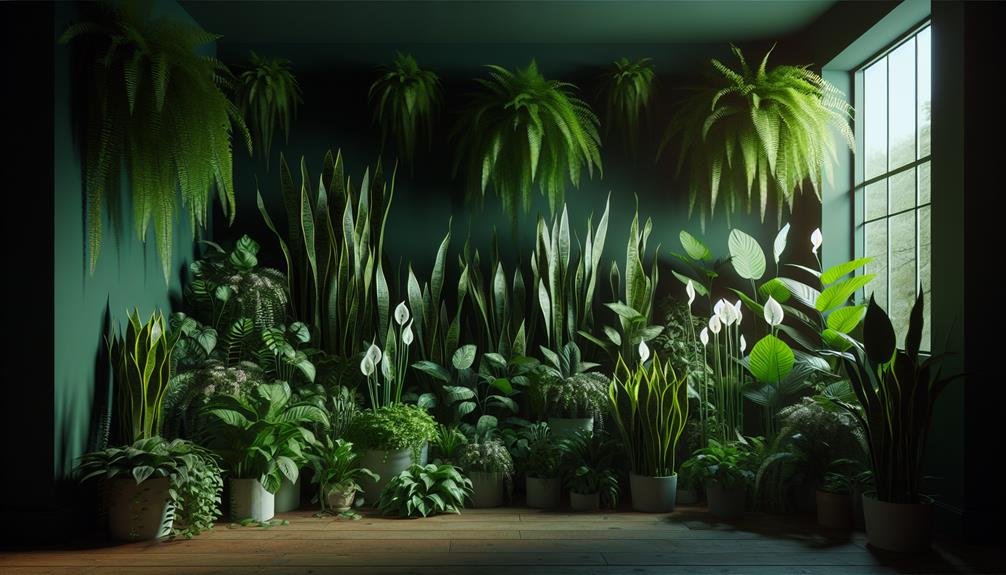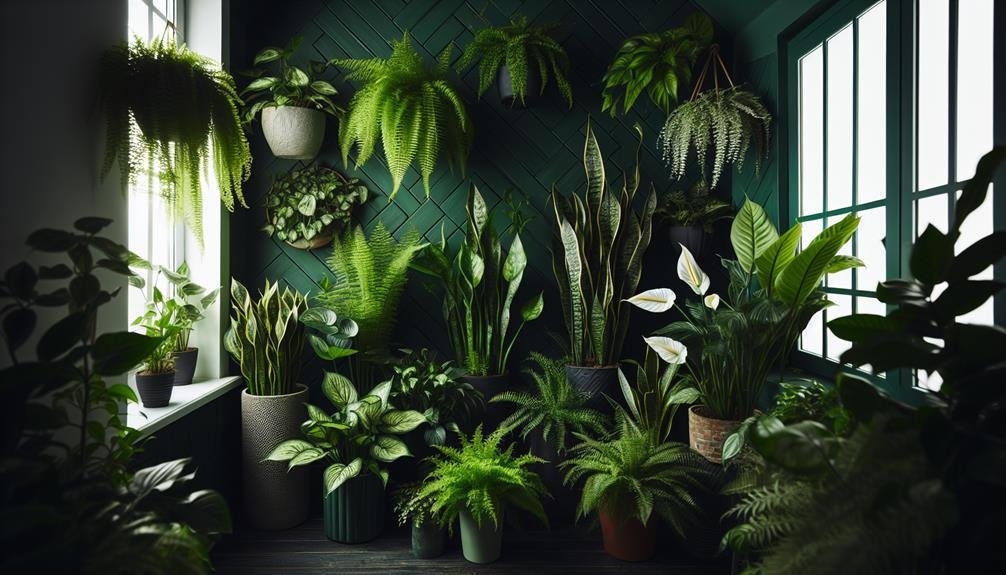
In the dim corners of your living space, where light struggles to reach, there exists a silent beauty waiting to be nurtured. Picture how a touch of green can transform these forgotten areas into soothing sanctuaries of nature within your home.
But which low-light houseplants are best suited for beginners? Let's explore a curated list that not only thrives in shadows but also requires minimal attention, making them perfect companions for those starting their indoor gardening journey.
Benefits of Low-Light Houseplants
Discover the many benefits of low-light houseplants for your indoor space. Low-light houseplants are perfect for those areas in your home that don't receive direct sunlight. These plants are resilient and adaptable, making them ideal for beginners or those with busy schedules. Not only do low-light houseplants enhance the aesthetic appeal of your living environment, but they also purify the air by removing toxins and releasing oxygen, creating a healthier indoor atmosphere for you and your family.
In addition to their air-purifying qualities, low-light houseplants can boost your mood and reduce stress. Studies have shown that having plants indoors can improve mental well-being and productivity. By caring for these plants, you establish a routine that promotes mindfulness and relaxation. Furthermore, low-light houseplants require minimal maintenance, making them an excellent choice for individuals who are new to gardening or have limited time to devote to plant care.
Introducing low-light houseplants into your home can bring nature closer to you, providing a sense of tranquility and connection with the natural world. So why wait? Add some low-light houseplants to your indoor space today and reap the numerous benefits they've to offer.
Top 5 Low-Light Houseplants
When selecting low-light houseplants, consider their specific lighting requirements to ensure they thrive in your indoor environment. Here are the top 5 low-light houseplants that are perfect for beginners:
- Snake Plant: Known for its durability and air-purifying qualities, the snake plant can thrive in low light conditions, requiring minimal care.
- Peace Lily: With its elegant white blooms, the peace lily can brighten up any space while thriving in low to moderate light settings.
- Spider Plant: Easy to care for and adaptable, the spider plant can tolerate various light conditions, making it ideal for low-light environments.
- ZZ Plant: The ZZ plant is virtually indestructible, thriving in low light and requiring minimal watering, perfect for those new to plant care.
- Pothos: A popular choice for beginners, pothos plants are versatile and can thrive in low light, adding a touch of greenery to any room.
These low-light houseplants aren't only beautiful but also easy to care for, making them perfect for beginners looking to bring some greenery into their indoor spaces.
Care Tips for Low-Light Plants
To ensure the health and vitality of your low-light plants, it's essential to implement proper care tips tailored to their specific lighting needs. When caring for low-light plants, remember that they thrive in indirect sunlight or artificial light sources.
Watering is crucial; make sure the soil remains slightly damp but not waterlogged. It's better to underwater than overwater these plants.
Fertilize sparingly, as low-light plants generally have slower growth rates and may not need frequent feeding. Dust the leaves regularly to help the plants absorb more light.

Prune any yellow or dead leaves to promote new growth. Keep an eye out for pests, as low-light conditions can make plants more susceptible to infestations. Rotate your plants occasionally to ensure even growth on all sides.
Lastly, monitor the plant's health and adjust care routines as needed. By following these care tips, you can enjoy green and thriving low-light plants in your home.
Propagating Low-Light Houseplants
As you care for your low-light plants, understanding how to propagate them will help you expand your green oasis effortlessly. Propagating low-light houseplants is a simple and rewarding way to grow your plant collection.
One common method is propagation through stem cuttings. To do this, choose a healthy stem with several leaves and make a clean cut just below a leaf node. Remove the lower leaves to expose a node where roots will grow. Place the cutting in water or a moist potting mix, ensuring the node is submerged or buried. Keep the cutting in a warm, indirect light location and mist it occasionally to maintain humidity. Roots should start to develop in a few weeks.
Another propagation technique is division, which involves separating a mature plant into smaller sections with roots. Gently divide the plant, ensuring each section has roots and leaves. Repot the divisions in suitable soil and care for them as usual.
With these propagation methods, you can easily multiply your low-light houseplant collection and share the green joy with others.
Common Issues and Solutions
Encountering issues with your low-light houseplants can be frustrating, but with the right solutions, you can easily overcome them and keep your green oasis thriving. One common problem is overwatering, which can lead to root rot. To fix this, ensure proper drainage in your pots and allow the soil to dry out between waterings. On the flip side, if you notice wilting or dry leaves, your plant might be underwatered. Increase your watering frequency, but always check the moisture level of the soil first.
Another issue you may face is pest infestations such as spider mites or mealybugs. Combat these pests by wiping the leaves with a soapy water solution or using neem oil. If your plant's leaves start turning yellow, it could indicate a nutrient deficiency. Consider using a balanced fertilizer to provide the necessary nutrients.
Lastly, if your plant isn't growing as expected, it might be due to inadequate light. Consider moving it to a brighter spot or supplementing with artificial grow lights. By addressing these common issues promptly, you can ensure your low-light houseplants stay healthy and beautiful.
Frequently Asked Questions
Can Low-Light Houseplants Survive in Rooms With No Natural Light at All?
Yes, low-light houseplants can survive in rooms with no natural light at all. Even though they prefer some light, they can still thrive in low-light conditions.
To ensure their health, consider rotating them to receive indirect sunlight occasionally and using artificial grow lights if needed.
With proper care and attention, your low-light houseplants can adapt and grow beautifully even in rooms with minimal natural light.
Do Low-Light Houseplants Require Any Special Fertilizers or Nutrients?
Low-light houseplants generally require less fertilizer than other plants due to their lower growth rates. However, they still need some nutrients to thrive.
Look for a balanced, water-soluble fertilizer and dilute it to half strength. Feed your plants every 2-4 weeks during the growing season, then reduce to once a month in the winter.
Avoid over-fertilizing, as it can harm your low-light plants.
Are There Any Low-Light Houseplants That Are Safe for Pets to Be Around?
When choosing low-light houseplants safe for pets, consider options like spider plants, African violets, and Boston ferns. These plants are non-toxic to cats and dogs, making them a pet-friendly choice for your home.
Remember to always research specific plant toxicity levels and keep any potentially harmful varieties out of reach of curious pets.
With these options, you can enjoy a green home without worrying about your furry friends' safety.
How Often Should I Repot My Low-Light Houseplants?
When repotting your low-light houseplants, consider doing so every 1-2 years. Look for signs like roots growing out of the drainage holes or the plant becoming root-bound.
Choose a pot that's slightly larger than the current one, with good drainage. Gently remove the plant, loosen the roots, add fresh soil, and place it in the new pot.
Water thoroughly and place in a suitable spot for its light requirements.
Can Low-Light Houseplants Help Improve Indoor Air Quality?
Sure thing!
Low-light houseplants can indeed help improve indoor air quality. They're champions at filtering out toxins, releasing oxygen, and adding moisture to the air.
By having these plants in your space, you can enjoy cleaner and fresher indoor air.
Conclusion
In conclusion, low-light houseplants are a great option for beginners looking to add some greenery to their indoor space. With the right care and attention, these plants can thrive even in areas with minimal sunlight.
Remember to water your plants regularly, provide them with the right amount of light, and watch out for any common issues that may arise. By following these tips, you'll be on your way to enjoying a beautiful and healthy indoor garden in no time.