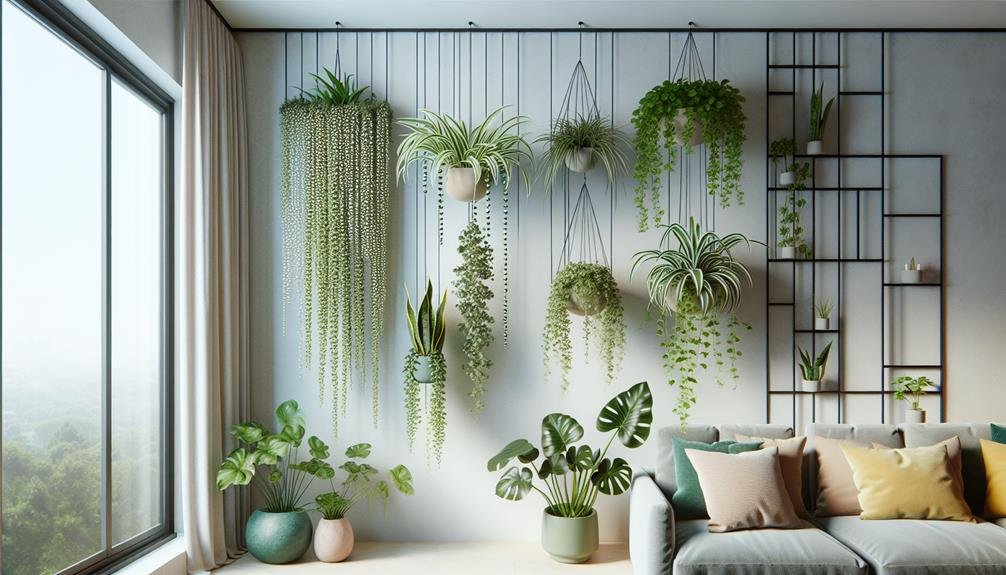
Imagine walking into your cozy living space and being greeted by a lush cascade of greenery, adding a touch of nature's beauty to your small abode.
Curious about how to achieve this serene atmosphere? Unique hanging houseplants might just be the solution you're looking for. From the unconventional air plants to the eye-catching Burro's Tail, each plant brings its own charm and benefits to your space.
But which one will best suit your aesthetic preferences and care routine? Let's explore together the world of hanging houseplants designed for small spaces, and discover which one will be your perfect match.
Air Plants: Unconventional and Minimalistic
If you're seeking a low-maintenance and stylish addition to your small space, consider incorporating air plants for a touch of unconventional charm. Air plants, also known as Tillandsia, are unique in that they don't require soil to grow, making them perfect for hanging planters or terrariums. These plants absorb nutrients and water through their leaves, thriving in indirect light and occasional misting.
To showcase air plants in your small space, you can get creative with hanging displays. Consider using geometric wire holders or glass orbs to suspend your air plants in the air, adding a modern and artistic element to your decor. These plants come in various shapes and sizes, allowing you to mix and match to create a visually appealing arrangement.
Air plants are excellent for those looking to add a touch of greenery without the hassle of traditional potted plants. With their minimalistic and unconventional appeal, they can bring a breath of fresh air to your small space effortlessly.
String of Pearls: Elegant and Delicate
The String of Pearls plant adds an elegant and delicate touch to any space with its cascading strands of small, bead-like leaves. This trailing succulent is perfect for hanging planters or high shelves where its unique foliage can dangle gracefully. The round, pea-shaped leaves grow along slender stems, resembling a string of green pearls, hence the name.
Caring for String of Pearls is relatively easy, making it a great choice for busy plant lovers. Place it in a bright location with indirect sunlight and allow the soil to dry out between waterings to prevent root rot. This plant is drought-tolerant, so occasional missed waterings won't harm it.
To propagate String of Pearls, simply snip a healthy stem and place it in soil to develop roots. With proper care, this delicate plant can thrive and bring a touch of sophistication to your living space. Consider adding a String of Pearls to your plant collection for a unique and beautiful addition.
Spider Plant: Low-Maintenance and Air-Purifying
Wondering how you can easily enhance your indoor air quality while keeping plant care simple? Enter the Spider Plant: Low-Maintenance and Air-Purifying. This resilient plant features long, arching leaves with a striking green and white coloration, adding a fresh and clean look to your space. Spider plants aren't only aesthetically pleasing but also act as natural air purifiers, removing toxins like formaldehyde and xylene from the air. They're perfect for small spaces as they thrive in indirect light and only require occasional watering.

Spider plants are known for their adaptability and can be grown in hanging baskets, making them ideal for those looking to add greenery to their homes without taking up floor space. These plants are also safe for pets, so you can enjoy their air-purifying benefits worry-free. With minimal effort, you can enjoy the beauty and health benefits that the Spider Plant brings to your indoor environment.
Burro's Tail: Unique and Eye-Catching
Looking to add another visually captivating plant to your indoor space? Consider the unique and eye-catching Burro's Tail for a touch of greenery that stands out. This plant, also known as Sedum morganianum, features long trailing stems adorned with plump, tear-dropped shaped leaves that resemble a donkey's tail, hence its name. The succulent nature of the Burro's Tail makes it a low-maintenance choice, perfect for those looking to add a touch of nature without too much effort.
Burro's Tail thrives in bright indirect light and prefers well-draining soil to prevent root rot. This plant is ideal for hanging baskets, allowing its stems to cascade gracefully downwards. Watering should be done sparingly, as overwatering can lead to issues; let the soil dry out between watering sessions to keep your Burro's Tail happy and healthy. With its unique appearance and easy care requirements, the Burro's Tail is sure to be a conversation starter and a beautiful addition to your small space.
Pothos: Versatile and Lush
Consider adding Pothos to your indoor space for a versatile and lush touch of greenery. Pothos, also known as Devil's Ivy, is a popular choice for hanging planters due to its low maintenance and air purifying qualities. This plant features heart-shaped leaves that come in various shades of green, making it a visually appealing addition to any room.
Pothos is incredibly versatile and can thrive in a range of lighting conditions, including low light. This makes it perfect for those small spaces in your home that don't receive a lot of natural light. With minimal care requirements, Pothos is an ideal plant for beginners or those with a busy schedule.
To care for your Pothos, simply water it when the top inch of soil feels dry and watch it thrive. You can also trim the vines to keep the plant looking full and encourage new growth. Whether you hang it in a macramé holder or let it trail down a bookshelf, Pothos will bring a vibrant and elegant touch to your living space.
Frequently Asked Questions
Can Hanging Houseplants Attract Pests or Insects Into My Small Space?
Hanging houseplants can attract pests or insects into your small space if not properly cared for. Overwatering and lack of sunlight can create conditions that draw bugs.
Regularly inspect your plants for any signs of pests and take action promptly if you notice any. Proper maintenance, such as pruning dead leaves and using natural pest repellents, can help prevent infestations and keep your small space bug-free.
How Often Should I Water Hanging Houseplants in Small Spaces, and Is It Different From Potted Plants?
When caring for hanging houseplants in small spaces, water frequency is key. Check the soil moisture regularly by sticking your finger in; if it feels dry an inch down, it's time to water.
Unlike potted plants, hanging ones may dry out faster due to increased airflow around them. Adjust your watering schedule accordingly, typically every 1-2 weeks, but always consider each plant's specific needs to keep them thriving.
Are There Any Special Considerations I Should Keep in Mind When Hanging Houseplants Near Windows or in Direct Sunlight?
When hanging houseplants near windows or in direct sunlight, it's important to watch out for potential issues. Too much direct sunlight can scorch leaves, while strong drafts from windows might stress plants.
Consider rotating your plants regularly for balanced growth. Ensure they receive adequate water and monitor for signs of overexposure to sunlight.
With a little attention, your hanging houseplants can thrive in sunny spots without any problems.
Can Hanging Houseplants Be Harmful to Pets or Children if Ingested?
Hanging houseplants can pose risks to pets or children if ingested. Some plants are toxic when consumed, causing potential harm. It's essential to research specific types of houseplants for their safety around pets and kids.
Keep these plants out of reach or opt for non-toxic varieties. As a responsible pet or parent, prioritize the well-being of your loved ones by choosing plants that are safe if accidentally ingested.
Are There Any Specific Types of Pots or Hangers That Work Best for Hanging Houseplants in Small Spaces?
When looking for pots or hangers for hanging houseplants in small spaces, consider options that maximize vertical space like macrame plant hangers or wall-mounted planters.
These solutions can help you make the most of your limited space while adding a touch of greenery to your home. Remember to choose lightweight options that can be securely mounted to avoid any accidents.
Measure your space carefully to ensure a snug fit for your plants.
Conclusion
In conclusion, adding unique hanging houseplants to your small space can bring life and personality to your home.
Whether you opt for air plants, string of pearls, spider plants, burro's tail, or pothos, each plant offers its own charm and benefits.
With a little creativity and care, you can transform your space into a green oasis that's sure to impress both guests and yourself.
Happy planting!