
If you're a frequent traveler, did you know that over 50% of houseplants die due to neglect while their owners are away? Finding hardy houseplants that can withstand your time away is essential.
But fear not, because in this guide, we'll introduce you to a selection of resilient plants that can thrive even if you're often on the move. Stay tuned to discover how you can enjoy greenery in your home without constantly worrying about plant care.
Best Hardy Houseplants for Travelers
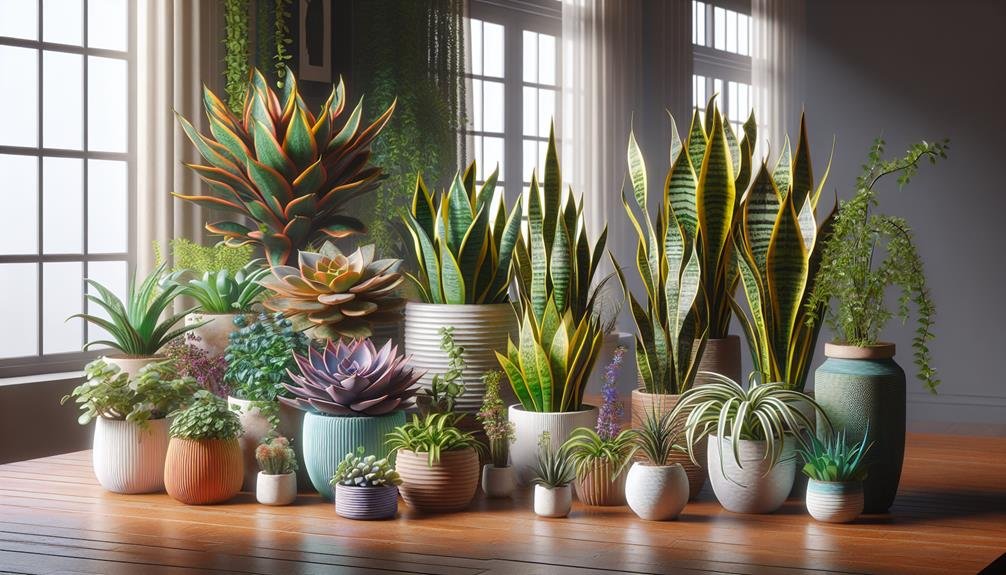
When traveling frequently, opt for hardy houseplants like snake plants and spider plants that can withstand periods of neglect. These plants are resilient and can thrive even if you forget to water them occasionally. Snake plants, also known as mother-in-law's tongue, are great choices for busy travelers. They've striking long, upright leaves that come in various shades of green. Snake plants are low maintenance and can survive in low light conditions, making them perfect for dimly lit rooms or spaces.
Spider plants are another excellent option for those always on the go. Their long, arching leaves and delicate white flowers make them a lovely addition to any space. Spider plants are adaptable and can tolerate different light conditions, but they prefer bright, indirect light. These plants are known for their air-purifying qualities, making them not only visually appealing but also beneficial for your indoor air quality.
Both snake plants and spider plants are ideal choices for travelers looking to add some greenery to their homes without worrying about constant care.
Light and Water Requirements
If you want your hardy houseplants to thrive, it's essential to understand their specific light and water requirements. Different houseplants have varying needs when it comes to light exposure. For example, succulents thrive in bright, direct sunlight, while ferns prefer indirect light. It's crucial to place your plants in locations that match their specific light preferences to ensure they remain healthy and vibrant.
When it comes to watering your hardy houseplants, consistency is key. Overwatering can lead to root rot, while underwatering can cause wilting and stunted growth. Check the soil moisture regularly by inserting your finger into the soil – if it feels dry, it's time to water your plants. However, make sure not to let them sit in standing water, as this can also harm their roots.
Tips for Plant Care While Traveling
To ensure your hardy houseplants remain healthy while you're away, consider implementing practical tips for plant care during your travels. Before leaving, give your plants a thorough watering to ensure they've enough moisture while you're gone. If you'll be away for an extended period, consider using self-watering globes or stakes to provide a slow release of water.
Place your plants in a location with adequate light exposure based on their specific needs. If you're going to be away for a while, it's a good idea to move light-sensitive plants away from direct sunlight to prevent them from getting scorched. Grouping plants together can also help create a microclimate with higher humidity, which is beneficial for most indoor plants.
Avoid repotting or fertilizing your plants right before you leave, as they may not respond well to changes in their environment without your regular care. Lastly, consider asking a friend or neighbor to check in on your plants periodically to ensure they're doing well in your absence. By following these simple tips, you can enjoy your travels knowing your plants are being well taken care of.

Choosing the Right Planters
Consider selecting planters that match the size and drainage needs of your houseplants to ensure their optimal growth and health. Choosing the right planters is crucial for the well-being of your plants. Different plants have varying root structures and water requirements, so it's essential to pick planters that accommodate these specific needs.
Opt for planters with drainage holes to prevent water from accumulating at the bottom, which can lead to root rot. If your plant requires well-draining soil, a planter with good drainage is a must. On the other hand, if your plant prefers consistently moist soil, a self-watering planter might be a better option.
Additionally, consider the size of the planter. A planter that's too small can restrict root growth and lead to stunted plants, while a planter that's too large can hold excess water, causing root issues. Choose a planter that allows your plant's roots to spread comfortably but without drowning in water.
Troubleshooting Common Plant Issues
Identify and address common plant issues promptly to ensure the health and vitality of your indoor greenery. Yellowing leaves may indicate overwatering, while dry and crispy leaves suggest underwatering. Adjust your watering schedule accordingly.
If you notice pests like spider mites or aphids, gently wipe the leaves with a damp cloth or treat with insecticidal soap. Brown leaf tips can result from low humidity levels; consider misting the plant or using a humidifier.
If your plant isn't thriving, check for root rot by gently inspecting the roots and repotting if necessary. Ensure your plant receives adequate light; yellowing or leggy growth may signal insufficient light.
Fertilize your plant sparingly to avoid nutrient buildup, which can harm the plant. Monitor for signs of disease such as mold, mildew, or unusual spots on leaves, and promptly address with appropriate treatments.
Frequently Asked Questions
What Are Some Recommended Houseplant Varieties That Are Pet-Friendly for Travelers With Animals?
When traveling with pets, it's essential to choose houseplants that are safe for your furry companions. Opt for pet-friendly varieties like spider plants, Boston ferns, or African violets. These plants are hardy and can withstand some neglect while you're away.
Remember to place them in areas that are out of reach for your pets to prevent any mishaps. Enjoy your travels knowing your houseplants and pets are safe and sound!
Are There Any Specific Houseplants That Can Help Improve Air Quality in a Home While Also Being Low Maintenance for Travelers?
For improving air quality in your home with low-maintenance houseplants, consider options like spider plants, snake plants, or pothos. These plants are known for their air-purifying properties and require minimal care, making them ideal for travelers.
Can Houseplants Be Placed in a Car During Travel, or Should They Always Be Left at Home?
When traveling by car, it's generally best to leave houseplants at home. The constant movement and varying temperatures in a car can stress plants. They may not get proper light or water, affecting their health.
To keep your plants happy and thriving, it's recommended to leave them in a stable environment at home where they can receive the care they need.
Are There Any Houseplants That Are Known to Be More Resilient to Changes in Temperature and Humidity Levels for Frequent Travelers?
When you're always on the go, there are hardy houseplants that can handle the fluctuations in temperature and humidity that come with travel. Look for options like snake plants, pothos, or spider plants.
These resilient plants can endure different conditions and require minimal care, making them ideal companions for frequent travelers.
Consider adding these sturdy houseplants to your collection for a touch of green that can withstand your busy lifestyle.
How Can Travelers Safely Bring Houseplants Back From a Trip Abroad Without Risking Plant Health or Introducing Pests?
When bringing houseplants back from a trip abroad, ensure plant health by checking for any signs of pests or diseases. Inspect leaves, stems, and soil carefully.
To prevent introducing pests, isolate the plant for a few days before placing it near other houseplants. Gently clean the leaves with a damp cloth and repot the plant if needed.
This precaution will help protect your other plants from potential infestations.
Conclusion
So, next time you're planning a trip, don't stress about your houseplants. With the right selection of hardy plants, proper care tips, and the right planters, you can enjoy your travels without worrying about your green friends back home.
Just remember to give them a little extra love before you leave and they'll be waiting for you when you return.
Happy travels!



