
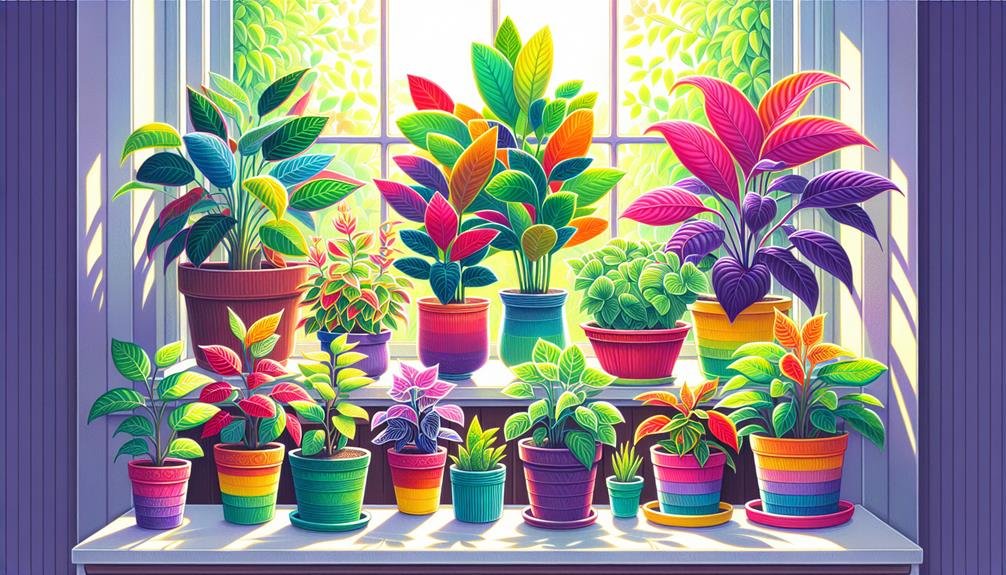
Step into a world where your living space transforms into a vibrant tapestry of colors with the help of colorful foliage houseplants. Imagine the soothing green hues interspersed with striking reds, purples, and yellows, creating a picturesque oasis within your home.
But how can you ensure these plants not only survive but thrive in your care? There are secrets to unlocking the full potential of these botanical gems, waiting for you to discover and bring a touch of nature’s palette indoors.
Types of Colorful Foliage Houseplants
When looking to add vibrancy to your indoor space, consider incorporating various types of colorful foliage houseplants. One popular choice is the Calathea plant, known for its striking patterns on the leaves, ranging from deep greens to vibrant purples.
The Peperomia plant is another fantastic option, with its thick, waxy leaves that come in shades of red, green, and silver. If you prefer larger plants, the Croton plant features broad, multicolored leaves in hues of yellow, orange, and red, adding a bold touch to any room.
For a more delicate look, the Fittonia plant, also known as the nerve plant, boasts intricate white or pink veins on its leaves against a backdrop of rich green. The Tradescantia zebrina, or Wandering Jew plant, showcases deep purple hues on its leaves with silver stripes, creating a unique and eye-catching display.
Lastly, the Rex Begonia plant offers leaves in various shapes and colors, including silver, purple, and pink, perfect for adding a touch of elegance to your space. Consider these diverse options to bring a burst of color and life to your home.
Care Tips for Vibrant Plants
To ensure your vibrant houseplants thrive, it’s important to provide them with the right care and attention. First and foremost, watering is crucial. Different plants have different watering needs, so make sure to research each plant’s requirements. Overwatering can lead to root rot, while underwatering can cause wilting. Check the soil moisture regularly by sticking your finger into the soil; if it’s dry an inch below the surface, it’s time to water.
In addition to watering, proper lighting is essential. Most colorful foliage plants thrive in bright, indirect light. Too much direct sunlight can scorch the leaves, while too little light may result in dull foliage. Rotate your plants regularly to ensure all sides receive adequate light for even growth.
Regularly dusting the leaves with a damp cloth helps the plants photosynthesize efficiently. This simple task prevents dust buildup, allowing the leaves to absorb more light. Lastly, consider fertilizing your plants every few weeks during the growing season to provide them with essential nutrients for vibrant foliage.
Ideal Placement for Colorful Foliage
For optimal growth and vibrant colors, position your colorful foliage houseplants in areas with bright, indirect light. Bright, indirect light is key to keeping your plants healthy and thriving. Place them near east or west-facing windows where they can benefit from gentle sunlight without being exposed to direct rays. Rooms with sheer curtains or blinds can help filter the light and prevent any potential sun damage to the delicate leaves. Avoid placing your colorful foliage houseplants in dark corners or areas with minimal natural light, as this can cause them to become leggy or lose their vibrant colors.

Keep an eye on the intensity of the light throughout the day, as too much direct sunlight can scorch the leaves, while too little light can result in dull, faded foliage. Rotating your plants periodically can help ensure all sides receive adequate light for even growth and color distribution. By choosing the right placement for your colorful foliage houseplants, you can create a beautiful and vibrant indoor garden that brightens up any space.
Propagation Methods for Lush Foliage
To propagate lush foliage successfully, consider exploring various methods that suit the specific needs of your colorful houseplants. One common method is propagation through stem cuttings. To do this, select a healthy stem with several leaves and make a clean cut just below a node. Place the cutting in water until roots develop, then transfer it to a pot with soil.
Another effective way to propagate lush foliage is by dividing the plant. Carefully remove the plant from its pot and gently separate the root ball into smaller sections, each with stems and roots. Replant these sections in individual pots with fresh soil.
Additionally, some colorful houseplants can be propagated by leaf cuttings. Simply cut a healthy leaf, let it dry for a day, then place it in soil to root. Remember to keep the soil moist and provide adequate light during the propagation process. Experiment with these methods to expand your collection of vibrant foliage houseplants.
Troubleshooting Common Foliage Issues
Identifying and addressing common foliage issues is essential for maintaining the health and vibrancy of your colorful houseplants. One prevalent problem is yellowing leaves, which could indicate overwatering, underwatering, nutrient deficiencies, or pests. To remedy this, adjust your watering schedule, ensure proper drainage, fertilize as needed, and inspect for any pests.
Brown tips on the leaves are often a sign of low humidity or over-fertilization. Increase humidity levels by misting the plant or using a humidifier, and reduce fertilization frequency. If you notice mold or mildew on the foliage, improve air circulation and avoid overhead watering.
Wilting or drooping leaves may result from underwatering, overwatering, or root rot. Check the moisture levels in the soil and adjust your watering habits accordingly. Lastly, if you see holes in the leaves or discover pests like spider mites or aphids, treat your plant with an appropriate insecticidal soap or neem oil to eliminate the infestation and prevent further damage.
Regularly inspecting your plants and addressing any foliage issues promptly will help ensure they thrive in your home.
Frequently Asked Questions
Can Colorful Foliage Houseplants Help Improve Indoor Air Quality?
Colorful foliage houseplants can indeed help improve indoor air quality. They absorb carbon dioxide and release oxygen, creating a healthier environment for you.
These plants also act as natural air purifiers, filtering out toxins and pollutants. By incorporating them into your home, you can enjoy both the aesthetic appeal of their vibrant foliage and the benefits they bring to your overall well-being.
Are There Any Colorful Foliage Houseplants That Are Pet-Friendly and Safe for Cats and Dogs?
When looking for pet-friendly houseplants safe for cats and dogs, consider options like spider plants, Boston ferns, and parlor palms.
These colorful foliage plants can brighten up your space without posing a risk to your furry friends. Remember to place them in areas that are out of reach to prevent any unwanted nibbling.
Enjoy the beauty of these plants while keeping your pets safe and your home vibrant.
How Can I Incorporate Colorful Foliage Houseplants Into My Existing Home Decor Style?
To incorporate colorful foliage houseplants into your existing home decor style, consider placing them strategically in empty corners or on shelves to add pops of color.
Mix and match different plant sizes and leaf shapes to create visual interest. Use decorative pots or planters that complement your home’s color scheme.
Don’t forget to regularly rotate the plants to ensure they receive adequate sunlight and water.
Are There Any Specific Fertilizers or Nutrients That Are Best for Maintaining the Vibrant Colors of Foliage Houseplants?
To maintain the vibrant colors of foliage houseplants, opt for fertilizers rich in micronutrients like iron and magnesium. These nutrients support healthy chlorophyll production, enhancing the plants’ colors.
Look for specialized fertilizers designed for foliage plants to ensure they receive the right balance of nutrients. Regularly feeding your plants with these fertilizers will help them thrive and keep their colors vibrant all year round.
Can Colorful Foliage Houseplants Be Used in Outdoor Gardens or Are They Strictly for Indoor Use?
Yes, colorful foliage houseplants can be used in outdoor gardens as well as indoors. They add a vibrant pop of color to any garden space.
Just make sure they’re suited to the outdoor conditions like sunlight and temperature. Some varieties may need protection from extreme weather.
With proper care, these plants can thrive both indoors and outdoors, enhancing the beauty of your living space or garden.
Conclusion
Brighten up your home with vibrant foliage houseplants that add a pop of color and life to any room.
By following proper care tips and placement suggestions, you can easily maintain these colorful plants and enjoy their beauty year-round.
Don’t be afraid to experiment with different types of foliage and propagation methods to create a lush and inviting indoor garden.
With a little bit of love and attention, your home will be transformed into a tropical oasis.



