When it comes to houseplants, you've probably heard the saying, 'Bloom where you are planted.' But have you ever wondered if your houseplants are truly thriving in their current environment?
The debate between growing plants indoors versus outdoors is not just about personal preference; it's a balance of factors that can significantly impact your plant's health and growth.
Let's explore the key considerations that can help you make informed decisions for your green companions.
Light Requirements
When caring for houseplants, understanding their specific light requirements is crucial for their growth and health. Different plants have varying needs when it comes to light exposure. Some plants thrive in bright, direct sunlight, while others prefer indirect or low light conditions. It's essential to place your houseplants in areas that provide the right amount of light they need to flourish.
To determine the light requirements of your plants, observe their natural habitat. Plants that originate from tropical regions usually require more sunlight, while those from forest floors can thrive in low-light environments. Keep in mind that too much direct sunlight can scorch leaves, while insufficient light can result in leggy growth or poor flowering.
Regularly rotating your plants can help ensure they receive uniform light exposure on all sides. Additionally, consider supplementing natural light with artificial grow lights for plants that require more intense light conditions. By meeting your houseplants' specific light requirements, you can promote healthy growth and vibrant foliage.
Temperature Considerations
To ensure optimal growth and health for your houseplants, it's important to consider the temperature conditions they're exposed to. Different houseplants have varying temperature preferences, so it's crucial to match them to the right environment. Indoor plants generally thrive in temperatures between 60-75°F (15-24°C) during the day and can tolerate slightly cooler temperatures at night. Sudden temperature fluctuations can stress your plants, so try to keep their environment stable.
If you're placing plants near windows or doors, be mindful of drafts that can expose them to chilly air. In contrast, outdoor plants may require different temperature ranges depending on the species. Some plants prefer warmer temperatures, while others can withstand cooler climates. Make sure to research the specific temperature requirements of each plant to provide the best care.
Remember that extreme temperatures, whether hot or cold, can harm your plants. During heatwaves, shield them from direct sunlight, and in winter, protect them from frost. By being attentive to temperature considerations, you can help your houseplants thrive and flourish.
Humidity Levels
Maintain appropriate humidity levels to support the optimal growth of your houseplants. Consistent humidity is crucial for indoor plants as it affects their ability to absorb water and nutrients. Most houseplants thrive in humidity levels between 40% and 60%.

To achieve this, consider using a humidifier, grouping plants together, or placing a tray of water near your plants to increase moisture in the air. On the other hand, if the air is too humid, ensure proper ventilation to prevent mold and mildew from developing on your plants' leaves.
Low humidity can lead to issues like brown leaf tips, wilting, and overall poor growth. To combat low humidity, mist your plants regularly, use a pebble tray filled with water, or invest in a room humidifier. Additionally, avoid placing your plants near heating or cooling vents that can further dry out the air.
Pests and Diseases
To prevent pests and diseases that can harm your houseplants, it's important to be vigilant and proactive in your care routine. Inspect your plants regularly for any signs of pests such as spider mites, aphids, or mealybugs. These tiny invaders can quickly multiply and damage your plants if left unchecked. If you notice any pests, isolate the affected plant to prevent the infestation from spreading to others.
In addition to pests, diseases can also pose a threat to your houseplants. Overwatering, poor air circulation, and high humidity levels can create conditions that are favorable for diseases like powdery mildew or root rot to develop. To prevent these issues, make sure your plants aren't sitting in water, provide good air circulation around them, and avoid overcrowding plants.
Using organic pest control methods such as neem oil or insecticidal soap can help manage pest problems without harming your plants. For diseases, it's essential to remove affected plant parts promptly and adjust your watering and ventilation practices to create a healthier environment for your houseplants. By staying proactive and attentive, you can help your plants thrive indoors or outdoors.
Seasonal Care
Keeping a close eye on seasonal changes will ensure your houseplants receive the care they need to thrive year-round. As the seasons shift, your plants' needs will also change.
During the warmer months, make sure to increase watering frequency, as plants tend to dry out faster in higher temperatures. Consider moving your plants to areas with more sunlight as the days grow longer.
In contrast, as winter approaches, decrease watering to prevent root rot caused by excess moisture. Indoor plants may benefit from being placed near a humidifier to combat dry indoor air during colder seasons.
Additionally, consider rotating your plants regularly to ensure even growth as they receive sunlight from different angles. Keep an eye out for pests that may become more prevalent during certain times of the year, and adjust your care routine accordingly.
Frequently Asked Questions
Can Houseplants Be Placed Near Electronic Devices or Appliances Without Affecting Their Growth?
You can place houseplants near electronic devices or appliances without affecting their growth. However, be cautious of extreme heat or cold from these devices, as it can harm your plants.
Ensure your plants receive proper sunlight and moisture levels to thrive in their environment. Regularly dust off leaves to prevent dust build-up that could hinder photosynthesis.
How Often Should I Rotate My Indoor Plants to Ensure Even Growth?
To ensure even growth of your indoor plants, rotate them every 1-2 weeks. This helps all sides receive adequate sunlight and prevents leaning toward the light source. Remember, consistent rotation promotes balanced development and healthier plants overall.
Keep an eye on each plant's specific light requirements and adjust as needed. Enjoy watching your indoor greenery thrive with this simple care routine.
Is It Necessary to Repot My Houseplants if They Start Outgrowing Their Containers?
If your houseplants begin outgrowing their containers, it's essential to repot them. As they grow, their root systems need more space to thrive. Repotting allows for better nutrient absorption and prevents root-bound issues. Remember, healthy roots equal healthy plants!
Look for signs like roots circling the pot or water quickly running through the soil. When you notice these cues, give your plants a new home with more room to spread out and grow.
Are There Any Specific Household Products That Can Be Used to Control Pests on Indoor Plants?
To control pests on indoor plants, you can use household products like neem oil, insecticidal soap, or a mixture of water and dish soap.
Regularly inspect your plants for any signs of pests like webs, holes in leaves, or sticky residue.
Apply the chosen treatment according to the product instructions, ensuring you cover the plant thoroughly. Remember to isolate any infested plants to prevent the pests from spreading.
Can Houseplants Be Moved Frequently Between Indoors and Outdoors Without Causing Stress to the Plant?
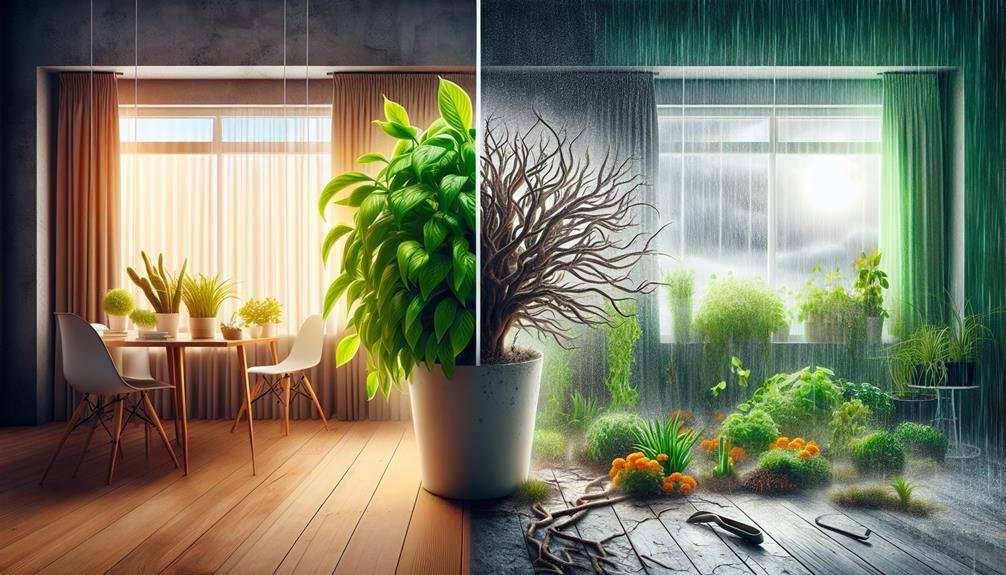
Moving houseplants between indoors and outdoors can stress the plant if done frequently. Sudden changes in temperature, sunlight exposure, and humidity levels can shock the plant, affecting its health and growth.
It's best to acclimate your plant gradually to outdoor conditions to minimize stress. Monitor the plant closely for signs of distress and adjust its care accordingly to help it thrive in both environments.
Conclusion
Overall, when choosing houseplants for your home, it's important to consider their specific needs in terms of light, temperature, humidity, and care.
Some plants may thrive better indoors while others prefer the great outdoors. By understanding these factors and providing the right conditions, you can ensure your houseplants stay healthy and happy year-round.
So, whether you're a seasoned plant parent or just starting out, remember to tailor your care routine to each plant's unique requirements for optimal growth and enjoyment.