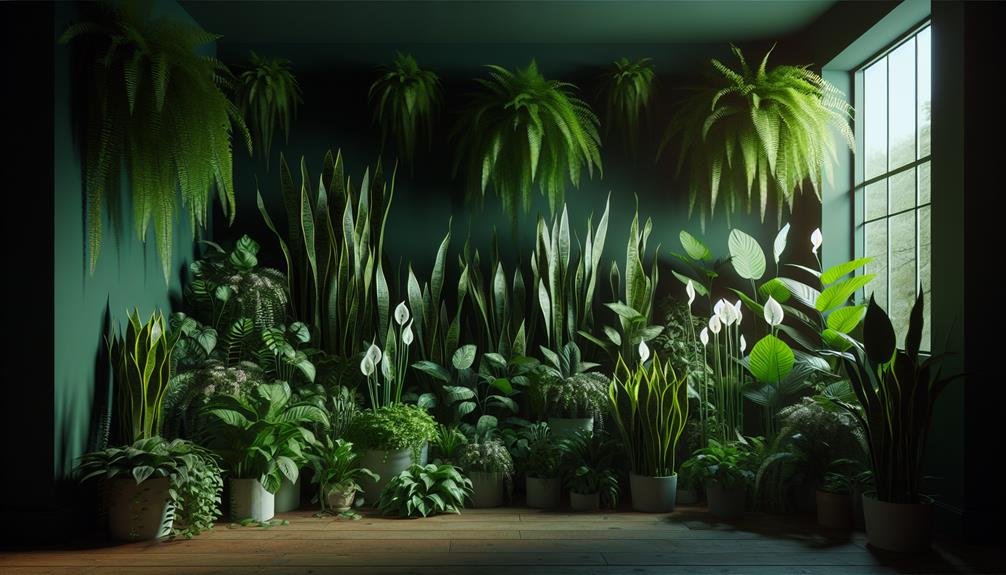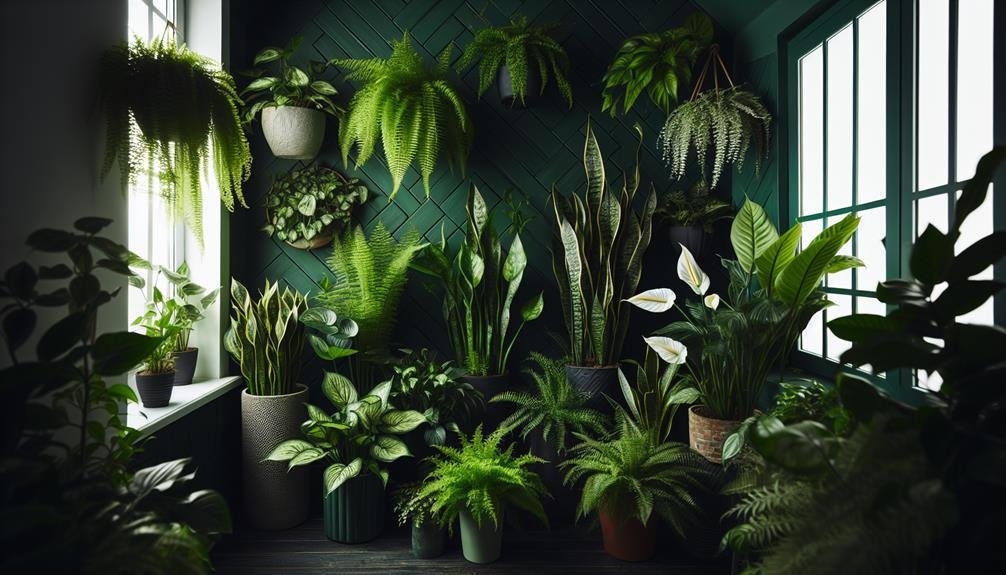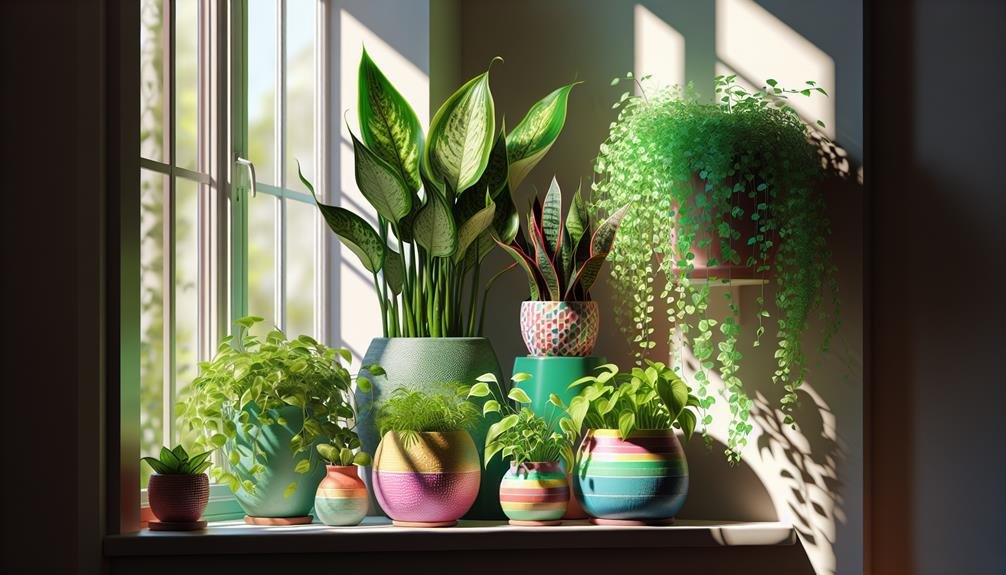
When it comes to sprucing up your living space with a touch of greenery, there's an array of houseplants that can effortlessly elevate your home gardening game.
However, before you start envisioning a jungle in your living room, it's vital to begin with a solid foundation of easy-to-care-for plants.
These plants not only thrive with minimal attention but also provide a great starting point for your indoor gardening journey.
So, which ten houseplants made the cut for beginners looking to add some green goodness to their homes?
Snake Plant
If you're new to houseplant care, the Snake Plant is a resilient choice that thrives with minimal attention. This hardy plant, also known as Sansevieria, features striking sword-shaped leaves that can tolerate low light conditions, making it perfect for beginners or those with busy schedules. Snake Plants are excellent air purifiers, removing toxins like formaldehyde and benzene from the air, promoting a healthier indoor environment.
To care for your Snake Plant, place it in indirect sunlight and water sparingly, allowing the soil to dry out between waterings to prevent root rot. These plants are forgiving if you forget to water them occasionally. Snake Plants prefer warmer temperatures between 60-80°F (15-27°C) and can adapt to various humidity levels, making them versatile for different home environments.
Propagation of Snake Plants is relatively easy, as they can be divided into separate plants from the root ball. With minimal effort, you can enjoy the beauty and air-purifying benefits of these low-maintenance plants in your home.
Pothos
Pothos, also known as Devil's Ivy, is a popular choice for beginner indoor gardeners due to its low maintenance and versatility. This plant can thrive in various light conditions, making it suitable for different areas of your home. Pothos has heart-shaped leaves that come in different shades of green, adding a touch of natural beauty to your living space.
One of the reasons Pothos is favored by beginners is its forgiving nature when it comes to watering. You don't need to worry about sticking to a strict watering schedule; simply water the plant when the top inch of the soil feels dry. Pothos is also an excellent air purifier, helping to remove toxins from the air and creating a healthier environment for you to enjoy.
When it comes to propagation, Pothos is incredibly easy to multiply. You can snip a vine and place it in water until roots develop, then transfer it to soil. This simple process allows you to expand your plant collection without much effort.

Spider Plant
Spider plants, also known as Chlorophytum comosum, are another excellent choice for beginner indoor gardeners seeking a resilient and visually appealing plant option. These plants are characterized by their arching leaves, which can add a touch of elegance to any room. Spider plants are relatively low-maintenance and can thrive in various conditions, making them a perfect choice for those new to gardening.
One of the most appealing features of spider plants is their ability to purify the air by removing toxins such as formaldehyde and xylene. This makes them not only aesthetically pleasing but also beneficial for your overall well-being.
When caring for spider plants, ensure they receive indirect sunlight and water them regularly, allowing the soil to dry out between waterings. These plants also produce 'babies' or offshoots called spiderettes, which can be propagated to grow new plants. With proper care, your spider plant can flourish and become a beautiful addition to your indoor garden.
Succulents
Succulents, with their unique ability to store water in their fleshy leaves or stems, are popular choices for beginner gardeners due to their resilience and striking appearance. These low-maintenance plants come in various shapes, sizes, and colors, making them versatile additions to any indoor space.
One of the key factors that make succulents ideal for beginners is their drought tolerance. Their water-storing capacity allows them to thrive in arid conditions, making them forgiving for those who may forget to water them regularly. Additionally, succulents can adapt to different light conditions, although most varieties prefer bright, indirect light.
When it comes to caring for succulents, it's essential to plant them in well-draining soil to prevent root rot. Watering should be done sparingly, allowing the soil to dry out completely between waterings. Overwatering is a common mistake that can harm these plants, so it's crucial to strike a balance.
With their unique appearance and easy care requirements, succulents are excellent starter plants for those looking to bring a touch of nature into their homes.
Peace Lily
Known for its elegant white flowers and lush green leaves, the Peace Lily is a popular choice for indoor gardeners seeking a low-maintenance and visually appealing plant. This plant thrives in low light conditions, making it perfect for spaces with limited sunlight. Peace Lilies are also known for their air-purifying qualities, helping to improve indoor air quality by removing harmful toxins.
When caring for a Peace Lily, ensure the soil is kept consistently moist but not waterlogged. These plants will droop when they need water, making it easy to tell when it's time for a drink. Additionally, Peace Lilies benefit from occasional misting to maintain humidity levels.
One of the reasons why Peace Lilies are great for beginners is their resilience to occasional neglect. Even if you forget to water them from time to time, they're forgiving and will bounce back with proper care. With its beautiful blooms and easy care requirements, the Peace Lily is a fantastic choice for anyone looking to add a touch of greenery to their indoor space.
Aloe Vera
With its soothing gel-filled leaves and multiple health benefits, Aloe Vera is a versatile and popular houseplant choice for indoor gardening enthusiasts.
Aloe Vera is well-known for its easy care requirements, making it an excellent option for beginners. This plant thrives in bright, indirect light and only needs watering when the top inch of soil is dry. Overwatering can harm your Aloe Vera, so it's best to let the soil dry out between waterings.
Aloe Vera plants aren't only aesthetically pleasing but also serve practical purposes. The gel inside the leaves can be used to soothe sunburns, minor cuts, and skin irritations. To propagate your Aloe Vera, simply remove offsets from the base of the plant and replant them in a well-draining soil mix.
With a little care and attention, your Aloe Vera plant can thrive and provide you with both beauty and practical benefits in your indoor space.
ZZ Plant
If you're looking to expand your collection of beginner-friendly houseplants, the ZZ Plant is a great choice to consider.
The ZZ Plant, scientifically known as Zamioculcas zamiifolia, is a hardy and low-maintenance plant that thrives in various indoor conditions. This plant has attractive glossy, dark green leaves that add a touch of elegance to any room. One of the best features of the ZZ Plant is its ability to tolerate low light levels, making it perfect for those areas in your home that don't receive much sunlight.
When it comes to care, the ZZ Plant is forgiving and requires minimal attention. Watering once every two to three weeks is usually sufficient, as overwatering can lead to root rot. Additionally, this plant is tolerant of occasional neglect, making it ideal for beginners or those with busy schedules. The ZZ Plant is also known for its air-purifying qualities, helping to improve the air quality in your home.
Chinese Evergreen
Looking for another easy-to-care-for houseplant to add to your collection? Consider the Chinese Evergreen. This popular houseplant is a great choice for beginners due to its ability to thrive in low light conditions and its low maintenance requirements. Chinese Evergreens have attractive variegated leaves that come in various shades of green, making them a stylish addition to any indoor space.
One of the best features of the Chinese Evergreen is its resilience to neglect – it can tolerate irregular watering and survive in a variety of indoor environments. This plant is also known for its air-purifying qualities, helping to improve the air quality in your home.
To care for your Chinese Evergreen, place it in indirect sunlight and water it when the top inch of soil feels dry. Avoid overwatering, as this can lead to root rot. With minimal effort, you can enjoy the beauty of the Chinese Evergreen in your home while reaping the benefits of a cleaner indoor environment.
Rubber Plant
The Rubber Plant, a popular choice for indoor gardening enthusiasts, is known for its striking glossy leaves and easy care requirements. This plant can add a touch of elegance to your living space with its dark green foliage. Place your Rubber Plant in a spot with bright, indirect light to help it thrive. Water the plant when the top inch of soil feels dry to the touch, ensuring not to overwater as it can lead to root rot. Fertilize the Rubber Plant once a month during the growing season to promote healthy growth.
One of the benefits of having a Rubber Plant is its ability to purify the air by removing toxins, making it a great addition to your home. These plants can grow quite tall, so occasional pruning may be needed to maintain the desired shape. Overall, the Rubber Plant is a low-maintenance houseplant that can bring beauty and freshness to your indoor garden effortlessly.
Philodendron
Consider adding a Philodendron to your indoor garden for its vibrant foliage and easy maintenance. Philodendrons are excellent beginner plants due to their resilience and ability to thrive in various conditions. These tropical plants come in a variety of species, with common ones like the Heartleaf Philodendron being popular for their heart-shaped leaves.
Philodendrons are known for their air-purifying qualities, making them a great addition to any room in your home. These plants are low-maintenance and require watering only when the soil is dry to the touch. They can adapt to low light conditions, but they thrive in medium to bright, indirect light. Regular pruning helps control their growth and keeps them looking full and healthy.
When caring for a Philodendron, be cautious, as the plant is toxic if ingested and can cause skin irritation. Keep them out of reach of children and pets. With proper care, your Philodendron can grow lush and beautiful, adding a touch of greenery to your living space.
Frequently Asked Questions
Can These Beginner Houseplants Be Kept in Low Light Conditions?
Yes, these beginner houseplants can thrive in low light conditions. They're resilient and adaptable, making them perfect for spaces with limited sunlight. Some may even prefer low light environments, requiring less maintenance and attention.
With proper care and occasional watering, these plants can brighten up any room, even without direct sunlight. Just be sure to monitor their growth and adjust care as needed to keep them healthy and happy.
How Often Should These Houseplants Be Watered?
Water your beginner houseplants based on their individual needs. Some may require watering once a week, while others might need it every two weeks.
Check the soil moisture before watering to ensure you're not overwatering, as this can harm the plants. Observation is key; monitor your plants regularly to determine their specific watering schedule.
Adjust as needed to keep them healthy and thriving in your home garden.
Do These Houseplants Require Any Special Soil or Fertilizers?
For these houseplants, it's essential to provide proper soil and fertilizers. Using a well-draining potting mix designed for indoor plants will help prevent root rot.
Fertilize monthly during the growing season with a balanced liquid fertilizer. Too much fertilizer can harm your plants, so follow the instructions carefully.
Keep an eye out for signs of nutrient deficiency and adjust your fertilizing routine accordingly to keep your plants healthy and thriving.
Are These Houseplants Safe for Pets and Children?
When choosing houseplants, always check if they're safe for pets and children. Some plants can be toxic if ingested, causing harm to your loved ones. Research each plant's safety before bringing them home.
Look for non-toxic options that won't pose a risk to your furry friends or curious kids. Prioritize the well-being of your family by selecting safe houseplants that can thrive in your home environment.
What Are Some Common Pests and Diseases That These Houseplants Are Susceptible To?
When caring for houseplants, keep an eye out for common pests like spider mites, aphids, and mealybugs. These critters can wreak havoc on your plants if left unchecked.
Also, watch for diseases such as powdery mildew and root rot, which can harm your green friends. Regularly inspect your plants, and if you spot any issues, take quick action to keep them healthy and thriving.
Conclusion
Overall, starting your home gardening journey with any of these beginner houseplants is a great choice. They're easy to care for, resilient, and can thrive in various environments.
Whether you have a green thumb or are just getting started, these plants will bring life and beauty to your home.
So go ahead, pick one that speaks to you and start your indoor garden today!