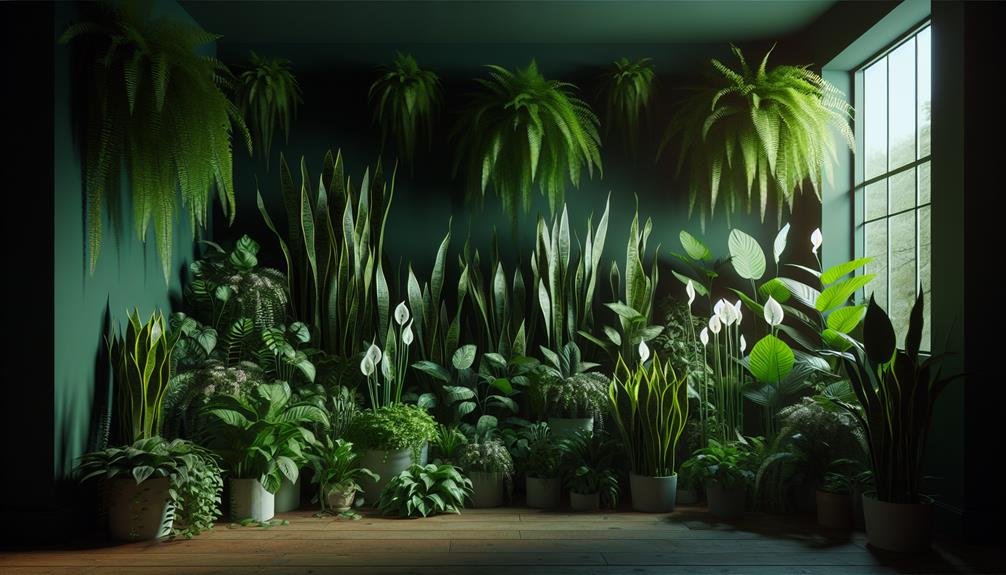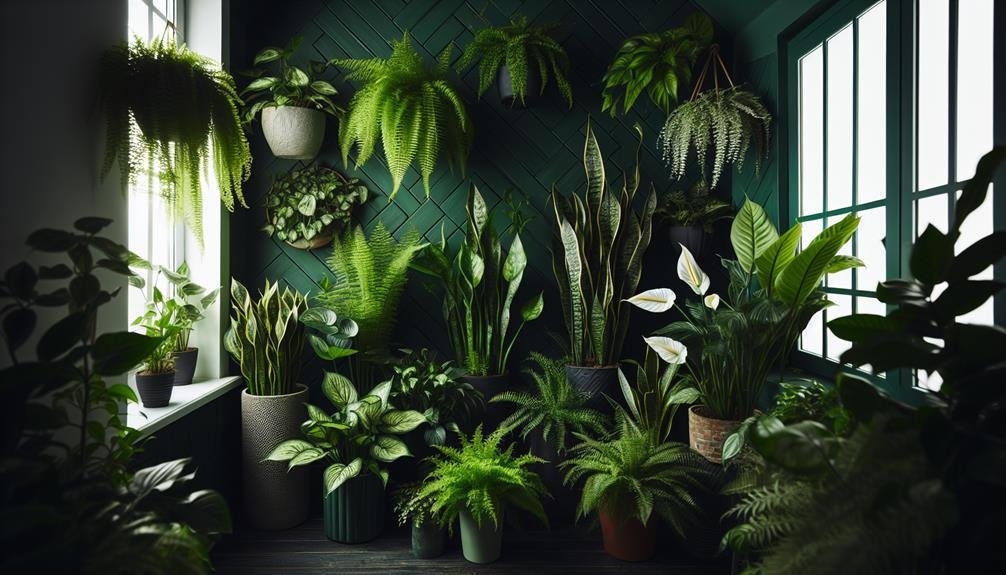
Have you ever wondered why some indoor houseplants are touted as air purifiers while others are not?
Take the Peace Lily, for instance. It not only adds a touch of green to your living space but also helps improve indoor air quality.
But what sets these air-purifying houseplants apart from regular plants, and how do they actually clean the air? Let's explore the unique features and mechanisms that make these plants stand out in enhancing your home environment.
Unique Features of Air-Purifying Houseplants
When selecting air-purifying houseplants, focus on their unique features that actively clean the indoor air. Some plants have specialized mechanisms that set them apart in their ability to purify the air. For example, certain plants like the Peace Lily not only remove common indoor toxins but also thrive in low light conditions, making them ideal for various indoor environments. The Spider Plant is another excellent choice due to its effectiveness in removing formaldehyde and xylene from the air. Its easy-care nature and adaptability make it a popular option for those new to plant parenthood.
Additionally, the Aloe Vera plant not only serves as a natural remedy for skin conditions but also purifies the air by releasing oxygen at night, making it a great bedroom companion. The Boston Fern stands out for its high transpiration rate, effectively adding moisture to the air while removing pollutants. Understanding these unique features of air-purifying houseplants can help you select the best options to improve your indoor air quality.
Mechanism of Air Purification
To understand how air purification occurs within houseplants, it's crucial to delve into their unique biological processes. Houseplants purify air through a fascinating mechanism known as phytoremediation. This process involves plants absorbing contaminants through tiny openings on their leaves called stomata. Once inside the plant, these contaminants are broken down and transformed into harmless byproducts through various biochemical reactions within the plant's tissues.
One key player in this process is chlorophyll, the pigment responsible for the green color of plants. Chlorophyll not only aids in photosynthesis but also plays a vital role in capturing pollutants such as formaldehyde, benzene, and xylene from the air. Additionally, houseplants release oxygen during photosynthesis, which further improves indoor air quality.
Furthermore, the plant roots also contribute to air purification by absorbing volatile organic compounds (VOCs) from the soil. This holistic approach to air purification sets houseplants apart from other methods by providing a natural and aesthetically pleasing solution to indoor air quality concerns.
Factors Affecting Plant Efficiency
Factors that influence plant efficiency include environmental conditions, plant species, and maintenance practices. Environmental conditions such as light, temperature, and humidity play a crucial role in determining how well a houseplant can purify indoor air.
Different plant species have varying capabilities in removing pollutants; some are more efficient at filtering certain toxins than others. Choosing the right plant species based on your indoor air quality needs is essential for optimal air purification.

Maintenance practices also significantly impact a plant's efficiency in cleaning the air. Regular watering, proper pruning, and cleaning the plant's leaves help ensure that it can effectively remove pollutants from the air. Neglecting plant care can decrease its air-purifying abilities, so it's essential to stay consistent with maintenance routines.
Most Effective Air-Purifying Plants
Enhance your indoor air quality with these top-performing air-purifying houseplants. When it comes to effective air purification, certain plants stand out for their ability to filter out toxins and improve the air you breathe.
The peace lily is a popular choice known for removing common indoor pollutants such as formaldehyde, benzene, and trichloroethylene. Another excellent option is the spider plant, which is easy to care for and adept at combating carbon monoxide and xylene.
If you're looking to add a touch of green to your space while purifying the air, consider getting a snake plant, which releases oxygen at night while removing toxins like formaldehyde and benzene. The pothos plant is also a great choice for air purification and is particularly effective at removing formaldehyde.
Lastly, the rubber plant not only adds a decorative element to your home but also helps eliminate airborne toxins like formaldehyde.
Incorporating these air-purifying plants into your indoor environment can significantly enhance the air quality, promoting a healthier and more pleasant living space.
Tips for Caring for Houseplants
When caring for houseplants, remember to adjust your routine based on the specific needs of each plant to ensure they thrive in your indoor environment. Start by understanding the light requirements of your plants. Some may need direct sunlight, while others thrive in low light conditions. Place plants accordingly, ensuring they receive adequate light without being exposed to harsh rays that could damage them.
Watering is crucial but can vary between plant species. Overwatering can lead to root rot, so check the soil moisture before watering. Generally, it's better to underwater than overwater. Fertilize your plants occasionally to provide them with essential nutrients, but be careful not to over-fertilize, as this can harm them.
Regularly dust the leaves of your houseplants to allow them to breathe properly and absorb light efficiently. Prune any dead or yellowing leaves to promote healthy growth. Lastly, keep an eye out for pests and promptly address any infestations to prevent them from spreading to other plants. With these tips, your indoor plants will flourish and contribute to a healthier indoor environment.
Frequently Asked Questions
Are There Any Risks or Side Effects Associated With Having Air-Purifying Houseplants Indoors?
Indoor air-purifying houseplants can come with minimal risks. Some people may experience allergies or sensitivities to certain plants. Also, overwatering can lead to mold growth in the soil. However, these risks can be easily managed by choosing non-toxic plants, ensuring proper drainage, and monitoring plant care.
Can Air-Purifying Houseplants Help Reduce Symptoms of Allergies or Asthma?
Houseplants can indeed help reduce symptoms of allergies or asthma. They purify the air by removing harmful toxins and releasing oxygen, creating a healthier indoor environment. Some plants like aloe vera and spider plants can even absorb allergens and improve air quality.
Placing these air-purifying plants strategically in your home can potentially alleviate allergy and asthma symptoms, allowing you to breathe easier and feel better overall.
Do Air-Purifying Houseplants Require Any Special Maintenance or Care Compared to Regular Houseplants?
Air-purifying houseplants generally don't need any special care compared to regular plants. They require the same basic maintenance like watering, proper lighting, and occasional pruning. Just ensure you follow specific care instructions for each type of plant.
Regularly dusting their leaves can also help them function effectively in cleaning the air. Overall, with a little attention and care, air-purifying houseplants can thrive and continue to benefit your indoor environment.
How Long Do Air-Purifying Houseplants Typically Last Before Needing to Be Replaced?
Air-purifying houseplants can last for several years before needing replacement. Regularly check the health of your plants by inspecting the leaves for discoloration or pest infestations. Ensure they receive proper sunlight, water, and occasional pruning to prolong their lifespan.
If a plant starts to decline despite your efforts, it may be time to replace it with a new one to maintain optimal air purification in your space.
Can Air-Purifying Houseplants Effectively Remove All Indoor Pollutants, or Are There Limitations to Their Capabilities?
Air-purifying houseplants can effectively remove many indoor pollutants. They can improve air quality by filtering out certain toxins. However, they may not be able to eliminate all pollutants on their own. Factors like plant type, size, and maintenance can impact their effectiveness.
To maximize their benefits, consider using air purifiers in conjunction with houseplants for comprehensive indoor air quality improvement.
Conclusion
So there you have it – indoor air-purifying houseplants are different because of their unique features, mechanism of air purification, and factors affecting their efficiency.
By choosing the most effective air-purifying plants and properly caring for them, you can improve the air quality in your home.
So go ahead, bring some greenery indoors and breathe in that fresh, purified air!