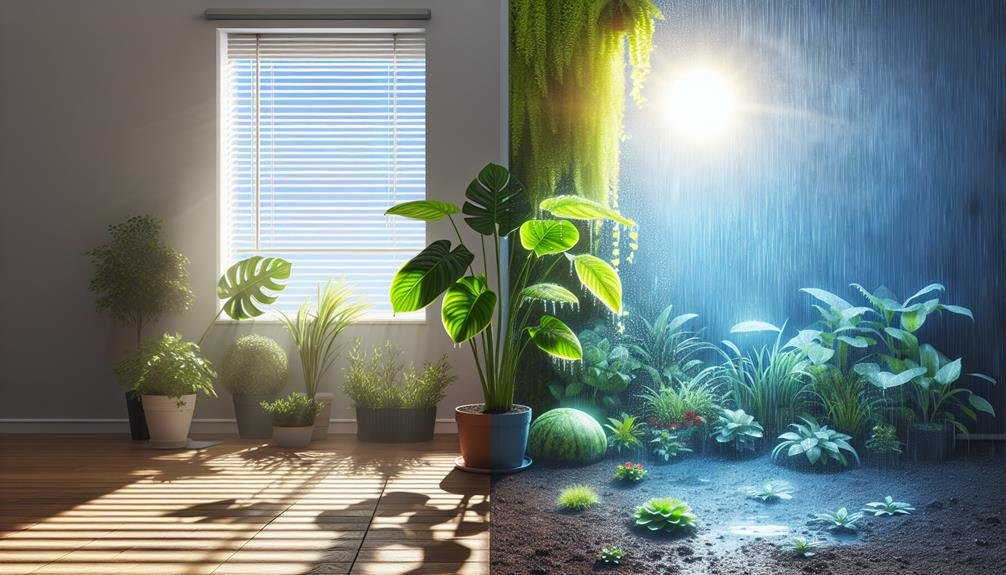
Indoor and outdoor houseplants require distinct care due to their differing environments. Light requirements, temperature variations, humidity levels, watering needs, and pest control all play crucial roles in the health of your plants.
Understanding these factors is essential to ensure your plants thrive. But why exactly do indoor and outdoor houseplants need different care? Let's explore the key differences that impact their well-being.
Light Requirements
When caring for houseplants, determining the light requirements is essential for their health and growth. Different plants have varying needs when it comes to light exposure. Some plants thrive in bright, direct sunlight, while others prefer indirect light or even shade. Understanding the specific light requirements of your houseplants is crucial to ensuring they flourish indoors or outdoors.
Indoor plants generally fall into categories based on their light needs. High light plants, such as succulents and cacti, require at least six hours of direct sunlight each day. Medium light plants, like pothos and spider plants, prefer bright, indirect light but can also tolerate lower light conditions. Low light plants, including peace lilies and snake plants, can thrive in areas with minimal natural light.
To meet your houseplants' light requirements, consider the direction of your windows and the intensity of sunlight they receive throughout the day. Rotating your plants periodically can also help ensure they receive balanced light exposure for even growth and development. Remember, proper light conditions are fundamental to keeping your indoor and outdoor plants healthy and vibrant.
Temperature Variations
Maintaining consistent temperature levels is crucial for the health and growth of your houseplants, both indoors and outdoors. Indoor houseplants generally prefer temperatures between 60-75°F during the day and slightly cooler at night. Sudden temperature fluctuations can stress indoor plants, leading to wilting or yellowing leaves. To prevent this, avoid placing indoor plants near drafty windows or heating vents.
On the other hand, outdoor houseplants are more tolerant of temperature variations, but extreme conditions can still harm them. During hot summer days, outdoor plants may benefit from some shade or misting to cool them down. In colder climates, it's important to bring outdoor plants indoors or provide adequate insulation to protect them from frost.
Monitoring the temperature around your plants, both indoors and outdoors, is crucial for their well-being. Consider using a thermometer to track fluctuations and make adjustments as needed to ensure your houseplants thrive in their environment.
Humidity Levels
Maintain optimal humidity levels to support the health and growth of your houseplants, whether they're indoors or outdoors. Humidity plays a crucial role in the well-being of your plants by affecting their ability to absorb water and essential nutrients.
For indoor plants, especially in centrally heated or air-conditioned environments, humidity levels can drop significantly, leading to issues like dry leaf tips or edges. To combat this, consider using a humidifier or placing a tray with water near your indoor plants.

Outdoor plants may face challenges during periods of low humidity, such as in arid climates, which can result in wilting or stunted growth. In such cases, regular misting or grouping plants together can help create a more humid microclimate.
On the other hand, excessive humidity can lead to problems like fungal diseases or root rot, so it's essential to strike a balance and monitor humidity levels to keep your houseplants thriving.
Watering Needs
To ensure the health and vitality of your houseplants, pay close attention to their watering needs after addressing humidity levels. Indoor and outdoor houseplants have different watering requirements due to factors like sunlight exposure, pot size, and airflow. Indoor plants typically require less frequent watering than outdoor plants because they aren't exposed to direct sunlight and don't dry out as quickly.
For indoor houseplants, it's essential to check the soil moisture levels before watering. Stick your finger about an inch into the soil – if it feels dry, it's time to water. Overwatering can lead to root rot, so ensure proper drainage in your pots to prevent water from accumulating at the bottom.
On the other hand, outdoor plants may need more frequent watering, especially during hot summer months. Keep an eye on outdoor plants for signs of wilting or dry soil, which indicate that they need water. Consider using a soaker hose or drip irrigation system for efficient watering that reaches the plant's roots directly.
Pest Control
Regularly inspecting your houseplants for pests is crucial in ensuring their health and longevity. Pests like spider mites, aphids, and mealybugs can quickly infest indoor and outdoor plants, causing damage if left unchecked.
To control pests, start by isolating any infected plants to prevent the infestation from spreading. For minor infestations, wipe the leaves with a damp cloth to physically remove the pests. In cases of more severe pest problems, consider using insecticidal soap or neem oil, which are effective and safe options for pest control on houseplants.
Ensure you follow the instructions carefully when applying these treatments to avoid harming your plant. Additionally, maintaining good airflow around your plants, avoiding overcrowding, and regularly cleaning up fallen leaves or debris can help prevent pest infestations.
Frequently Asked Questions
Can Indoor and Outdoor Houseplants Be Interchangeably Placed in Different Locations?
Yes, indoor and outdoor houseplants shouldn't be interchangeably placed in different locations. Indoor plants usually require less sunlight and water, thriving in controlled indoor environments.
Outdoor plants need more sunlight and water to grow properly in outdoor conditions. Exchanging their placement can lead to stress, wilting, or even death.
It's important to understand the unique care needs of each type of plant to ensure their health and growth.
Do Indoor and Outdoor Houseplants Require Different Types of Soil?
Indoor and outdoor houseplants do require different types of soil. Indoor plants often need a well-draining mix with good aeration, while outdoor plants may benefit from heavier soil with added nutrients.
Make sure to choose the right soil for each type of plant to help them thrive. Remember, the soil plays a crucial role in the health and growth of your houseplants, so it's essential to provide the appropriate type for their specific needs.
How Often Should Indoor and Outdoor Houseplants Be Fertilized?
Indoor and outdoor houseplants require different fertilizing schedules.
Indoor plants usually need fertilizer every 4-6 weeks during the growing season, while outdoor plants might need it more frequently due to the larger amount of water and nutrients they receive.
Remember to always follow the instructions on the fertilizer package and adjust based on your plant's specific needs.
Over-fertilizing can harm your plants, so it's better to start with less and increase if needed.
Are There Specific Pruning Techniques for Indoor and Outdoor Houseplants?
When it comes to pruning indoor and outdoor houseplants, specific techniques are essential. For indoor plants, focus on removing dead or damaged leaves using clean shears. Trim back leggy growth to encourage bushiness.
Outdoor plants may require more vigorous pruning to control size and encourage flowering. Always research the specific needs of each plant type before pruning to ensure healthy growth and a thriving garden.
Can Indoor and Outdoor Houseplants Be Propagated in the Same Way?
Yes, indoor and outdoor houseplants can be propagated in similar ways. Both types can often be propagated through methods like stem cuttings, leaf cuttings, division, or layering.
However, it's important to consider their individual needs for light, humidity, and temperature during the propagation process to ensure successful growth. By adjusting these factors accordingly, you can increase the chances of successful propagation for both indoor and outdoor houseplants.
Conclusion
In conclusion, taking care of indoor and outdoor houseplants requires different approaches due to their varying light, temperature, humidity, watering needs, and pest control. By understanding these differences and providing the appropriate care, you can help your plants thrive in their specific environments.
Remember to tailor your care routine to suit the individual needs of each plant to ensure they stay healthy and vibrant. So keep those green thumbs working and watch your plants flourish!