Did you know that using organic fertilizers can increase houseplant growth by up to 30% compared to synthetic alternatives?
With a variety of natural options available, it's essential to choose the right fertilizer to ensure your plants thrive.
From compost tea to fish emulsion, each type offers unique benefits that cater to different plant needs.
By understanding the benefits and application methods of organic fertilizers, you can create a healthy environment for your houseplants to flourish.
Want to unlock the secrets to boosting your houseplants' growth naturally?
Benefits of Organic Fertilizers
Organic fertilizers provide essential nutrients to houseplants, promoting healthy growth and vibrant foliage. By opting for organic options, you're choosing a natural and sustainable way to nourish your plants. Unlike synthetic fertilizers, organic fertilizers release nutrients slowly, ensuring a consistent and steady supply for your houseplants. This gradual nutrient release helps prevent nutrient leaching, reducing the risk of over-fertilization and environmental harm.
Using organic fertilizers also promotes a healthier ecosystem within the soil of your houseplants. These fertilizers encourage beneficial microbial activity, improving soil structure and enhancing nutrient availability to the plants. This symbiotic relationship between organic fertilizers, soil microbes, and plants fosters a balanced and thriving environment for your houseplants.
Furthermore, organic fertilizers contribute to long-term soil health. They help build soil fertility over time, creating a sustainable and resilient growing medium for your houseplants. This means that by choosing organic fertilizers, you aren't just nourishing your plants today but also investing in the future health and vitality of your indoor garden.
Types of Organic Fertilizers
When considering types of fertilizers for your houseplants, you have a variety of options to choose from that can cater to different plant needs and growth stages.
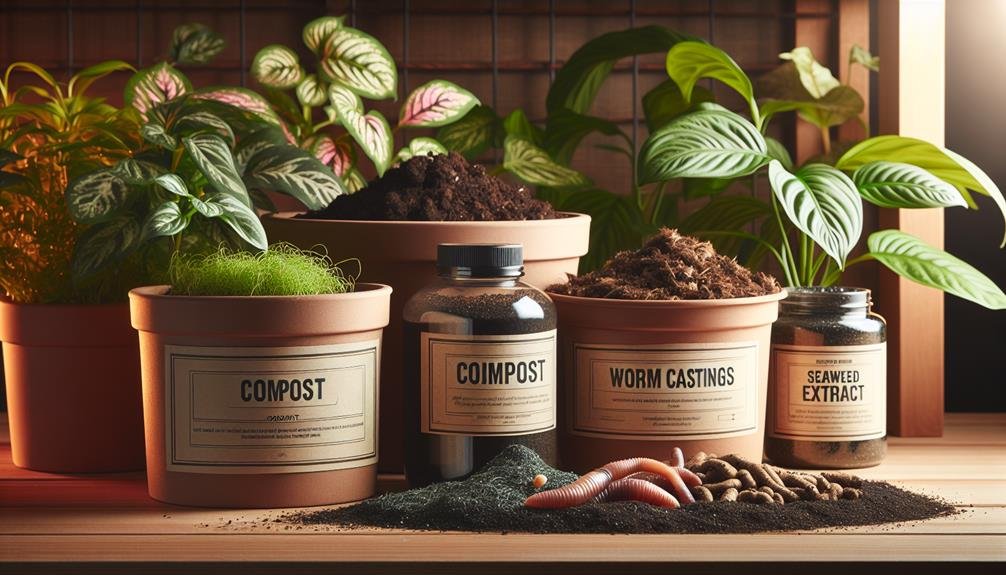
One common type is compost, which is rich in nutrients and improves soil structure. It provides a slow release of essential elements for steady plant growth.

Another option is seaweed-based fertilizers, which are packed with micronutrients and growth hormones that enhance plant resilience and root development.
Additionally, fish emulsion fertilizers offer a quick nutrient boost due to their high nitrogen content, promoting lush foliage.
For flowering plants, bat guano fertilizer is ideal as it's high in phosphorus, essential for blooming.
Worm castings are also beneficial, containing a plethora of nutrients that support overall plant health.
Lastly, liquid kelp fertilizers stimulate growth and help plants withstand environmental stressors.
Each type of organic fertilizer has unique benefits, so consider your plant's specific needs when choosing the right one.
Application Tips for Houseplants
To effectively apply fertilizers to your houseplants, ensure you follow recommended dosages and schedules for optimal growth. Over-fertilizing can harm your plants, so it's crucial to measure accurately and avoid exceeding the specified amounts.
Before applying any fertilizer, make sure your plant is well-watered to prevent root burn. It's best to fertilize during the growing season, typically in spring and summer, when plants are actively growing and can make the most of the nutrients. Remember to dilute the fertilizer to avoid overwhelming the plant with concentrated nutrients.
For liquid fertilizers, mix them with water according to the instructions provided. Solid fertilizers can be sprinkled on top of the soil, but be sure to gently work them into the top layer to prevent nutrient buildup.
Always wash your hands after handling fertilizers and store them in a safe place, away from children and pets. By following these application tips, you can promote healthy growth and vibrant houseplants.
Best Practices for Fertilizing
Ensure precise application of fertilizers by following these best practices to maintain the health and vitality of your houseplants.
First, always dilute the fertilizer according to the manufacturer's instructions to prevent over-fertilization, which can harm your plants.
It's crucial to fertilize your houseplants during their active growing season, typically in spring and summer, as this is when they require the most nutrients to thrive.
Remember to water your plants before fertilizing to avoid burning the roots with concentrated fertilizer.
Additionally, rotate the type of organic fertilizer you use to provide a balanced mix of nutrients for your plants.
Test the soil occasionally to monitor nutrient levels and adjust your fertilizing schedule accordingly.
Lastly, avoid fertilizing dormant plants, as they don't require extra nutrients during this period.
Troubleshooting Common Fertilizer Issues
If experiencing issues with your houseplant's growth despite proper fertilization, troubleshooting common fertilizer problems can help identify and rectify the underlying causes efficiently.
One common issue is over-fertilization, which can lead to nutrient imbalances, root burn, and stunted growth. Check if you're using the correct dilution ratio and frequency recommended for your specific plant species.
Another frequent problem is under-fertilization, resulting in slow growth and yellowing leaves. Ensure you're providing enough nutrients based on your plant's needs.
Incorrect pH levels in the soil can also affect nutrient uptake. Test the soil pH and adjust it to the optimal range for your houseplant.
Lastly, using the wrong type of fertilizer for your plant can hinder its growth. Different plants require different nutrient ratios, so make sure you're using a fertilizer tailored to your plant's specific requirements.
Frequently Asked Questions
Can Organic Fertilizers Be Used on All Types of Houseplants, or Are There Specific Plants That Benefit More From Them?
Organic fertilizers can be beneficial for most houseplants, providing them with essential nutrients for healthy growth.
While all plants can benefit from organic fertilizers, some may respond better than others. Factors such as plant species, growth stage, and specific needs play a role in determining the effectiveness of organic fertilizers.
Experimenting with different types can help you find the best option for your houseplants to thrive and flourish.
How Often Should Organic Fertilizers Be Applied to Houseplants to Ensure Optimal Growth Without Risking Over-Fertilization?
To ensure your houseplants grow well without over-fertilizing, apply organic fertilizers following specific guidelines. Generally, fertilize every 4-6 weeks during the growing season. Check plant needs and adjust frequency as needed.
Are There Any Specific Environmental Factors to Consider When Using Organic Fertilizers for Houseplants, Such as Humidity Levels or Temperature Requirements?
When using organic fertilizers for houseplants, consider environmental factors like humidity and temperature. These can impact nutrient absorption and plant growth.
Maintain appropriate humidity levels to help plants take up nutrients effectively. Also, ensure the temperature is within the ideal range for your specific houseplant.
Can Organic Fertilizers Attract Pests or Insects to Houseplants, and if So, How Can This Be Prevented or Managed?
When using organic fertilizers for your houseplants, pests and insects may be attracted to the nutrients. To prevent this, ensure you're using high-quality organic products and avoid over-fertilizing.
Keep a close eye on your plants for any signs of pests and address them promptly. Regularly inspect your plants, maintain good hygiene practices, and consider using natural pest control methods like neem oil or insecticidal soaps to manage any infestations effectively.
Are There Any Potential Risks or Side Effects Associated With Using Organic Fertilizers on Houseplants, Such as Nutrient Imbalances or Plant Stress?
Using organic fertilizers on houseplants can come with potential risks. Nutrient imbalances may occur if not applied correctly, leading to plant stress or deficiencies. It's vital to follow instructions for proper dosage and frequency to avoid these issues.
Keep a close eye on your plants for any signs of nutrient imbalances and adjust your fertilizing routine accordingly. Monitoring your plants' health regularly can help prevent any negative side effects from using organic fertilizers.
Conclusion
So there you have it – organic fertilizers are a great way to boost the growth of your houseplants. By using natural ingredients, you can provide your plants with the nutrients they need to thrive.
Remember to follow the application tips and best practices to ensure your plants stay healthy and happy. If you encounter any issues, troubleshoot and adjust as needed.
Happy gardening!