
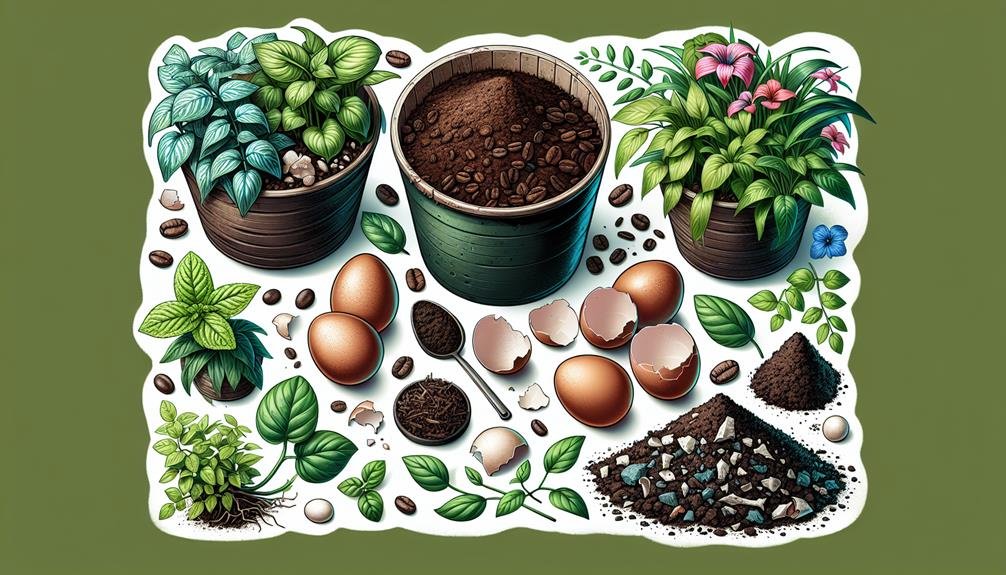
Did you know that houseplants fed with natural fertilizers tend to grow higher and healthier, increasing their overall lifespan?
When it comes to nourishing your indoor greenery, choosing the right natural fertilizers can make all the difference. From common household items like coffee grounds to unexpected sources like fish tank water, there are numerous options available for boosting your plant's vitality.
Stay tuned to discover the top natural fertilizers that can transform your houseplants into thriving botanical wonders.
Coffee Grounds
If you're a coffee drinker, you can repurpose your used coffee grounds as a natural fertilizer for your houseplants. Coffee grounds are rich in nitrogen, an essential nutrient for plant growth. Simply sprinkle the coffee grounds on top of the soil in your plant pots. As the coffee grounds break down, they release nitrogen into the soil, promoting healthy leafy growth in your plants.
Apart from providing nutrients, coffee grounds also improve the soil structure. They help aerate the soil, allowing better circulation of air, water, and nutrients to the plant roots. Additionally, coffee grounds act as a natural pest repellent. Some pests, like ants and slugs, are deterred by the strong scent of coffee, keeping your plants safe from potential harm.
Remember not to overdo it with the coffee grounds, as they can be acidic. A thin layer sprinkled on the soil every few weeks should be sufficient to give your houseplants a natural boost. So, next time you brew your morning cup of coffee, save those grounds for your leafy friends.
Banana Peels
Consider incorporating banana peels into your houseplant care routine for a natural fertilizer boost. Banana peels are rich in nutrients like potassium, phosphorus, and calcium, which are essential for the healthy growth of your plants. To use banana peels as a natural fertilizer, simply chop them into small pieces and bury them in the soil near the base of your houseplants. As the peels decompose, they release nutrients that enrich the soil and promote strong root development.
One of the great advantages of using banana peels as a fertilizer is that they're readily available and cost-effective. Instead of throwing away your banana peels, you can repurpose them to nourish your houseplants and reduce waste. Additionally, banana peels can help improve the soil's texture and water retention capacity, creating a more favorable environment for plant growth.
Incorporating banana peels into your houseplant care routine is a simple and eco-friendly way to provide your plants with the nutrients they need to thrive. Give it a try and watch your houseplants flourish with this natural fertilizer boost.
Eggshells
To enhance your houseplants' growth naturally, start saving and crushing eggshells for a nutrient-rich boost. Eggshells are a fantastic source of calcium, which is essential for the development and strength of plant cell walls. By adding crushed eggshells to the soil, you can help prevent issues like blossom end rot in tomatoes and peppers. The sharp edges of the crushed shells also act as a natural deterrent to pests like slugs and snails, keeping your plants safe and healthy.

To prepare eggshells for your houseplants, simply rinse them out and let them dry. Once dry, crush them into small pieces using a mortar and pestle or a blender. Sprinkle the crushed eggshells around the base of your plants or mix them directly into the soil. Over time, the eggshells will break down, releasing calcium and other minerals into the soil for your plants to absorb.
Incorporating eggshells into your houseplant care routine is a simple and effective way to provide natural nourishment for your plants, promoting strong growth and vibrant blooms.
Fish Tank Water
Enhance the growth of your houseplants naturally by utilizing fish tank water, a nutrient-rich resource that can benefit your plants' health and vitality. When you clean your fish tank, instead of discarding the water, consider using it to water your plants. Fish tank water is a fantastic source of nitrogen, potassium, and phosphorus, which are essential nutrients for plant growth. These nutrients are the remnants of fish waste and uneaten fish food that dissolve in the water, creating a potent fertilizer for your houseplants.
To use fish tank water as a fertilizer, simply water your plants as you usually would. Just ensure that the water isn't too concentrated; you can dilute it with regular water if needed. This natural fertilizer will help your plants thrive, promoting lush green foliage and vibrant blooms. Additionally, the beneficial bacteria present in fish tank water can also improve soil health by breaking down organic matter and making nutrients more accessible to your plants. So, next time you clean your fish tank, remember to save the water for your beloved houseplants.
Compost
When it comes to enriching your houseplants naturally, utilizing compost is a sustainable and effective way to provide essential nutrients for optimal growth. Compost is a nutrient-rich, dark, earthy material that's created from decomposed organic matter like kitchen scraps, yard waste, and other biodegradable materials.
Composting at home is a simple and eco-friendly practice that not only reduces waste but also produces a valuable resource for your houseplants. The nutrients found in compost, such as nitrogen, phosphorus, and potassium, help nourish your plants and improve soil structure, promoting healthy root development and overall plant growth.
To use compost as a natural fertilizer for your houseplants, you can mix it into the soil when repotting or sprinkle a layer on top of the existing soil. Compost also enhances soil moisture retention and encourages beneficial microbial activity, creating a thriving environment for your plants. By incorporating compost into your plant care routine, you can support vigorous growth and vibrant blooms without relying on synthetic fertilizers.
Frequently Asked Questions
Can Coffee Grounds Be Used as a Fertilizer for All Types of Houseplants?
Yes, coffee grounds can be used as a fertilizer for many types of houseplants. They're rich in nutrients like nitrogen, potassium, and phosphorus, which can help plants thrive.
However, it's essential to use them in moderation as they can alter the pH of the soil. Mix coffee grounds with other compost materials for a well-balanced fertilizer.
Are There Any Specific Houseplants That Should Not Be Fertilized With Banana Peels?
When it comes to fertilizing houseplants with banana peels, it's important to be cautious with certain plants. Some houseplants like succulents and cacti may not benefit from banana peels as they prefer a more arid environment.
The high potassium content in banana peels could potentially harm these types of plants if not used sparingly. It's best to research the specific needs of your houseplants before using banana peels as fertilizer.
How Should Eggshells Be Prepared Before Using Them as a Fertilizer for Houseplants?
Before using eggshells as a fertilizer for houseplants, crush them into small pieces. Rinse the crushed eggshells to remove any residue. Let them air dry completely before adding them to your plant's soil.
This process helps prevent any contamination and ensures that the eggshells are ready to provide calcium and other nutrients to your houseplants. Properly prepared eggshells can be a great natural fertilizer for your plants.
Can Fish Tank Water Be Used Directly on Houseplants Without Any Additional Treatment?
Yes, you can use fish tank water directly on houseplants without additional treatment. The water contains beneficial nutrients like nitrogen, phosphorus, and potassium, which can help nourish your plants.
Just ensure that the water isn't too high in ammonia due to fish waste. Diluting it with regular water may be necessary to prevent over-fertilization.
Enjoy the benefits of this natural fertilizer for your houseplants!
How Long Does It Take for Compost to Be Ready to Use as a Fertilizer for Houseplants?
When composting, it usually takes about 2 to 6 months for the material to break down completely and be ready to use as a fertilizer for your houseplants.
It's important to regularly turn the compost pile to speed up the process. Once the compost is dark, crumbly, and earthy-smelling, it's good to go.
Remember to check for any large pieces that may still need more time to decompose before using it in your plant pots.
Conclusion
Overall, incorporating natural fertilizers like coffee grounds, banana peels, eggshells, fish tank water, and compost can greatly benefit your houseplants. These organic materials provide essential nutrients that promote healthy growth and vibrant blooms.
By using these natural fertilizers, you can create a sustainable and eco-friendly environment for your indoor plants to thrive. So go ahead and give your houseplants the nutrient boost they deserve with these simple and effective fertilizers. Your plants will thank you!



