
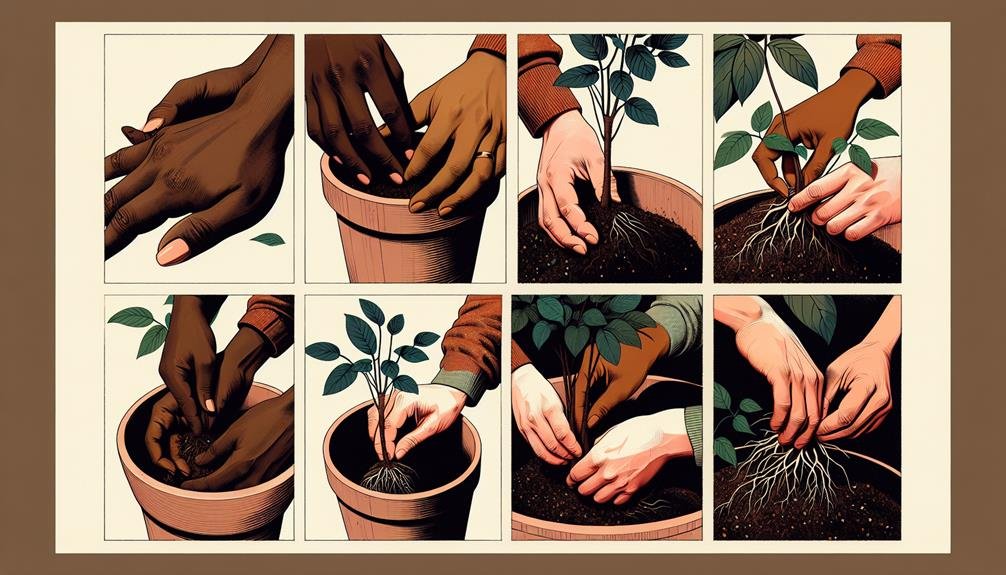
So, you've decided it's time to give your houseplant a new home, huh? Well, before you start digging into dirt, consider this: a poorly executed repotting can spell disaster for your green companion. But fear not, we're here to guide you through the process with precision and care.
From recognizing the subtle signs that your plant is crying out for a new pot to mastering the art of post-repotting pampering, we've got you covered.
Stay tuned to learn the secrets of successful houseplant repotting that will have your leafy friend thriving in its new abode.
Importance of Repotting
To keep your houseplant healthy and thriving, repotting is essential every few years. Over time, your plant's roots outgrow their current pot, leading to overcrowding and potential root-bound issues. Repotting provides your plant with fresh, nutrient-rich soil and ample space for root expansion, promoting overall growth and vitality.
When you repot your houseplant, you give it a fresh start, removing any compacted or depleted soil that may hinder its growth. This process allows you to inspect the roots for any signs of rot or disease, preventing potential health issues from spreading to the rest of the plant.
Furthermore, repotting provides an opportunity to upgrade your plant's living conditions. A larger pot not only accommodates the growing root system but also stabilizes the plant, reducing the risk of tipping over. Additionally, repotting allows you to adjust the soil composition, ensuring optimal drainage and aeration for your plant's well-being.
In essence, repotting your houseplant on a regular basis is crucial for maintaining its health, supporting growth, and prolonging its lifespan. By understanding the importance of repotting, you empower yourself to nurture your plant effectively and enjoy its beauty for years to come.
Signs Your Plant Needs Repotting
If your houseplant is visibly outgrowing its current pot or showing signs of root-bound stress, it's time to consider repotting. One clear indicator that your plant needs a new home is when you see roots emerging from the drainage holes at the bottom of the pot. This suggests that the roots have run out of space and are desperately seeking more room to grow.
Another sign is when the plant starts to look unsteady in its current container, possibly leaning to the side or even tipping over easily. Additionally, if you notice that your plant requires more frequent watering than usual, it could be a sign that the roots have taken up most of the space in the pot, leaving little room for water retention.
Lastly, if you see the plant becoming top-heavy or the soil drying out much quicker than before, these are all signals that your plant is in need of a larger pot to thrive and continue growing healthily.

Choosing the Right Pot Size
Wondering how to select the ideal pot size for your houseplant? Choosing the right pot size is crucial for the health and growth of your plant. When repotting, it's essential to choose a pot that's 1-2 inches larger in diameter than the current pot. This allows room for the roots to expand without drowning them in excess soil. A pot that's too large can lead to overwatering, as the soil will hold onto more moisture than the plant needs. On the other hand, a pot that's too small can restrict root growth and cause the plant to become root-bound.
Consider the size of your plant when selecting a pot – smaller plants generally do well in smaller pots, while larger plants require more space for their roots to spread out. Additionally, ensure that the pot has drainage holes to prevent water from pooling at the bottom, which can lead to root rot. By choosing the right pot size, you're setting your houseplant up for success in its new home.
Steps to Repotting Your Plant
When repotting your plant, start by gently tapping the sides of the current pot to loosen the plant's roots. Carefully turn the pot sideways and slide the plant out, supporting the base of the stem with your fingers.
Inspect the roots for any signs of rot or overcrowding, trimming away any damaged parts with clean shears. Choose a new pot that's only slightly larger than the current one to prevent overpotting. Add a layer of fresh potting mix to the bottom of the new pot, ensuring it's enough to lift the plant to its desired height.
Place the plant in the center of the new pot and fill the remaining space with additional potting mix, pressing it down gently. Water the plant thoroughly and allow excess water to drain out. Finally, place the plant in an appropriate spot with adequate light and proper temperature to help it adjust to its new home.
Aftercare for Repotted Plants
To ensure successful growth and acclimation, provide your repotted plant with proper care following the repotting process.
After repotting, place your plant in a location that receives adequate sunlight according to its specific light requirements.
Keep the soil consistently moist but not waterlogged; check the plant's moisture levels regularly by feeling the top layer of soil.
Avoid fertilizing your plant immediately after repotting to prevent root burn; wait at least a month before introducing any nutrients.
Monitor your plant for signs of stress such as wilting or yellowing leaves, and adjust care as needed.
It's crucial to maintain a stable environment by avoiding sudden temperature changes or drafts that could shock the plant.
Lastly, resist the urge to repot your plant again too soon; allow it time to adjust to its new home.
Frequently Asked Questions
Can I Reuse the Old Potting Soil When Repotting My Houseplant?
When repotting your houseplant, it's generally not recommended to reuse the old potting soil. Used soil can become compacted, lose nutrients, and potentially harbor pests or diseases.
To ensure your plant's health and growth, opt for fresh, high-quality potting mix when repotting. This will provide your plant with the necessary nutrients and aeration it needs to thrive in its new pot.
Is It Necessary to Wash the Roots of My Houseplant Before Repotting?
Before repotting your houseplant, it's not absolutely necessary to wash the roots. However, giving them a gentle rinse can help remove any excess dirt or old potting mix, making it easier for the plant to adjust to its new environment.
Be careful not to damage the roots during this process. Overall, it's a good practice but not mandatory for every repotting session. Just ensure you handle the roots with care.
How Often Should I Repot My Houseplant?
You should repot your houseplant every 1 to 2 years, depending on its growth rate and the size of its current container. Check if the roots are becoming root-bound or if the soil is depleted.
Repotting allows for fresh nutrients and space for growth. It's crucial to provide your plant with the right conditions to thrive.
Can I Use a Decorative Pot Without Drainage Holes When Repotting My Plant?
Yes, you can use a decorative pot without drainage holes when repotting your plant, but it's important to be cautious. Without proper drainage, excess water can accumulate, leading to root rot.
To prevent this, consider adding a layer of gravel or activated charcoal at the bottom of the pot before adding soil. Monitor your plant's watering needs closely to avoid overwatering.
It's always best to choose a pot with drainage holes if possible.
Should I Fertilize My Houseplant Immediately After Repotting?
After repotting your houseplant, you should hold off on fertilizing it right away. Give your plant some time to adjust to its new environment and recover from the repotting process.
Wait about a month before introducing fertilizer. This allows the plant to settle in and reduces the risk of overfeeding, which can stress the plant.
Conclusion
Now that you know the proper way to repot your houseplant, you can ensure its continued growth and health.
Remember to pay attention to the signs that your plant needs repotting, choose the right pot size, and follow the steps for a successful repotting process.
With proper aftercare, your plant will thrive in its new home and bring beauty to your space for years to come.
Happy planting!



