'You've probably heard the saying, 'The grass is always greener on the other side.' Well, when it comes to houseplants, the grass – or rather, the leaves – can indeed be greener with the right lighting. Proper lighting is crucial for your indoor plants to thrive, but have you ever wondered why?
Let's shed some light on this topic and uncover the secrets behind why your houseplants crave the sun's touch.'
Importance of Proper Lighting for Houseplants
Proper lighting is crucial for the health and growth of your houseplants. Just like we need sunlight to thrive, plants also rely on light for photosynthesis, the process that allows them to produce food. Without adequate light, your houseplants may become weak, leggy, or fail to bloom. Insufficient light can lead to stunted growth and leaves that are pale or discolored.
On the other hand, too much direct sunlight can scorch the leaves of your plants, causing irreversible damage.
When positioning your houseplants, consider the natural light sources in your home. Place light-loving plants near windows with bright, indirect sunlight. Shade-tolerant plants can thrive in corners or areas with lower light levels. Regularly rotate your plants to ensure they receive light evenly on all sides. Remember, each plant has its own light requirements, so it's essential to research the specific needs of your houseplants to provide them with the optimal lighting conditions for healthy growth.
Different Types of Light for Plants
Consider the different types of light that are beneficial for the growth of your houseplants to ensure they thrive and remain healthy. When it comes to indoor plants, there are primarily three types of light: bright light, indirect light, and low light.
Bright light is ideal for plants that need direct sunlight exposure. These plants thrive near a south-facing window where they can receive ample sunlight throughout the day. Examples of plants that require bright light include cacti, succulents, and flowering plants.
Indirect light is suitable for plants that prefer filtered light or partial shade. These plants do well in areas where sunlight isn't as intense, such as near an east or west-facing window. Plants like ferns, spider plants, and African violets fall into this category.
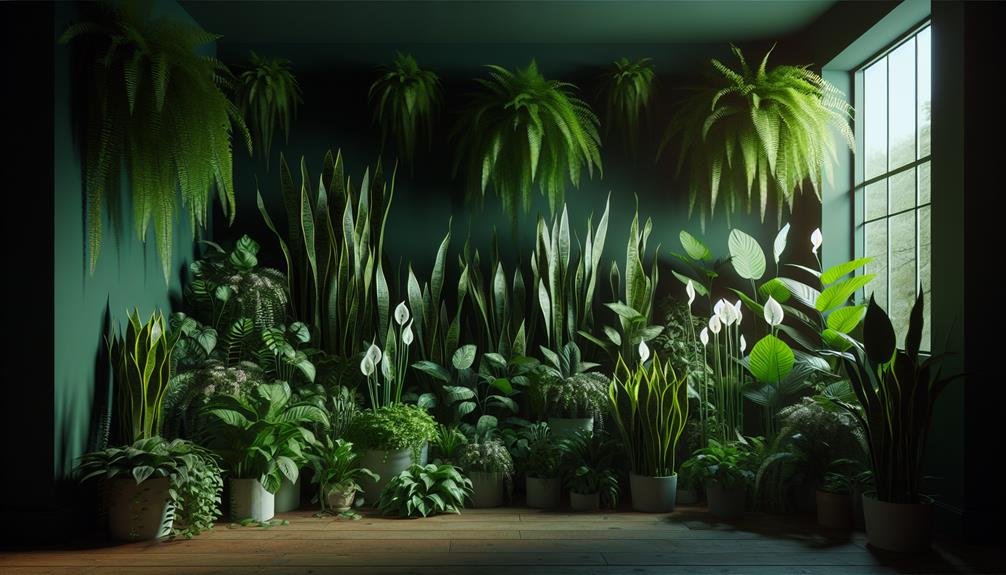
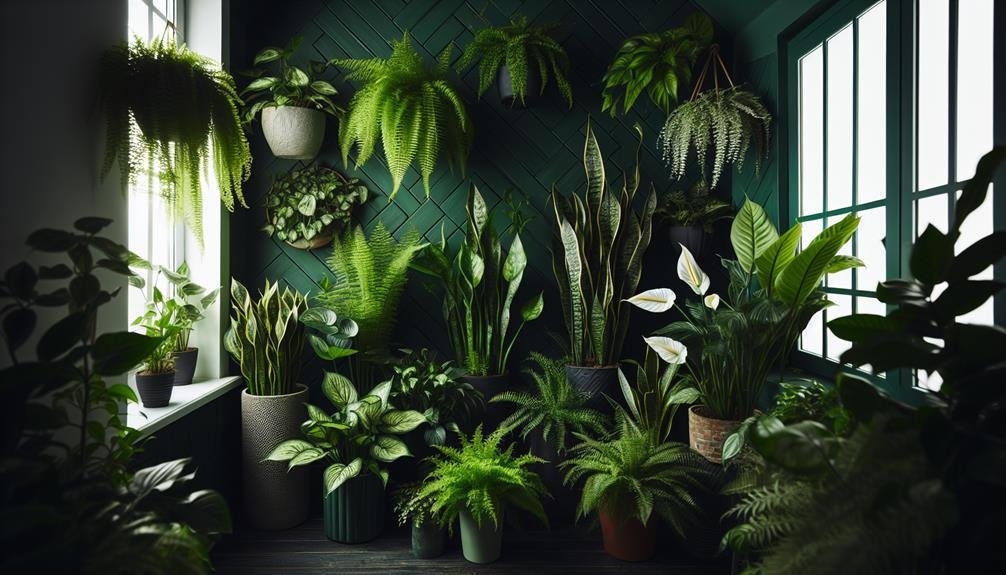
Low light plants are best suited for areas with minimal natural light, like a north-facing window or a room with artificial lighting. Plants such as peace lilies, snake plants, and pothos can thrive in these conditions. Understanding the light requirements of your houseplants is crucial for their overall health and growth.
Best Placement for Indoor Plants
To ensure your indoor plants thrive, place them in locations that meet their specific light requirements. Different plants have varying needs when it comes to light intensity and duration.

For example, high-light plants like succulents and cacti thrive in bright, direct sunlight and should be placed near south or west-facing windows. On the other hand, low-light plants such as pothos and snake plants can survive in areas with minimal natural light, making them suitable for rooms with north-facing windows or corners with limited sunlight.
Consider the direction and intensity of light that each plant needs before deciding on its placement. Rotating your plants occasionally can also help ensure they receive light evenly on all sides, promoting balanced growth. Additionally, be mindful of any obstructions that may block light, such as curtains or furniture.
Effects of Inadequate Lighting on Plants
Insufficient lighting can stunt plant growth and lead to yellowing leaves. When plants don't receive an adequate amount of light, they struggle to photosynthesize efficiently. This can result in slowed growth rates and weakened overall health. Without enough light, plants may also become leggy as they stretch towards the nearest light source in an attempt to capture more energy. As a consequence, the plant's leaves may turn yellow and drop off prematurely, further hindering its ability to thrive.
Inadequate lighting not only impacts a plant's physical appearance but also its ability to produce flowers or fruits. Without sufficient light, flowering plants may fail to bloom, and fruit-bearing plants may not produce as much fruit or produce fruit that's smaller in size. Additionally, plants that are deprived of proper lighting may become more susceptible to pests and diseases, as their weakened state makes them less able to defend themselves. Providing adequate light is crucial for ensuring your houseplants remain healthy and vibrant.
Tips for Providing Adequate Light
When ensuring your houseplants receive adequate light, it's important to position them in locations where they can access the required amount of sunlight for optimal growth and health. Place light-loving plants near south or west-facing windows to provide them with bright, indirect sunlight. East-facing windows are ideal for plants that require moderate light levels, while north-facing windows are best suited for low-light plants.
Rotate your plants regularly to ensure all sides receive equal light exposure and prevent them from leaning towards the light source. If natural light is insufficient, consider supplementing with artificial grow lights. LED grow lights are energy-efficient and emit the right light spectrum for plant growth.
Remember that different plants have varying light requirements, so it's essential to research the specific needs of each plant in your care. Monitor your plants for any signs of light deficiency, such as yellowing leaves or stunted growth, and adjust their light exposure accordingly. By providing adequate light, you can help your houseplants thrive and beautify your living space.
Frequently Asked Questions
Can Artificial Light Be as Effective as Natural Light for Houseplants?
Artificial light can be as effective as natural light for houseplants. When choosing artificial lighting, opt for full-spectrum grow lights to mimic natural sunlight.
Position the lights close to the plants for optimal growth. Ensure the plants receive around 12-16 hours of light daily to promote photosynthesis.
Monitor the light intensity and adjust as needed to prevent burning or stunted growth. With proper care, your houseplants can thrive under artificial lighting conditions.
Are There Any Houseplants That Can Thrive in Low Light Conditions?
In low light conditions, some houseplants can thrive despite the lack of sunlight. While not all plants prefer low light, some like peace lilies, snake plants, and ZZ plants can adapt well to such environments.
These plants have evolved to efficiently use available light and require less sunlight for photosynthesis. By selecting the right plants for low light, you can still enjoy the beauty of indoor greenery without worrying about inadequate lighting.
How Can I Measure the Amount of Light My Houseplants Are Receiving?
To measure the amount of light your houseplants get, place a light meter near them for accurate readings. Move the meter around different spots to check for variations.
Consider factors like intensity, duration, and quality of light. Monitor and adjust placement accordingly to ensure your plants receive the right amount of light for optimal growth.
Regularly checking light levels is crucial for maintaining healthy houseplants.
Can Too Much Light Harm My Houseplants?
Yes, too much light can harm your houseplants. Excessive light can lead to sunburn, leaf scorching, and even the death of your plants.
It's important to find a balance and place your houseplants where they receive the right amount of light for their specific needs. Monitor their exposure and adjust as necessary to keep them healthy and thriving.
Are There Any Houseplants That Require Specific Types of Light to Thrive?
Certain houseplants thrive under specific light conditions. For example, ferns prefer indirect light, while succulents thrive in bright, direct sunlight. Knowing the light requirements of your plants is crucial for their health and growth.
Be sure to place them in the right spot to ensure they receive the appropriate amount of light. It's essential to understand each plant's unique needs to help them thrive in your home.
Conclusion
In conclusion, proper lighting is crucial for the health and growth of your houseplants.
By understanding the different types of light needed, placing your plants in the best location, and avoiding inadequate lighting, you can ensure your plants thrive.
Remember to provide adequate light for your indoor plants to help them flourish and brighten up your living space.