
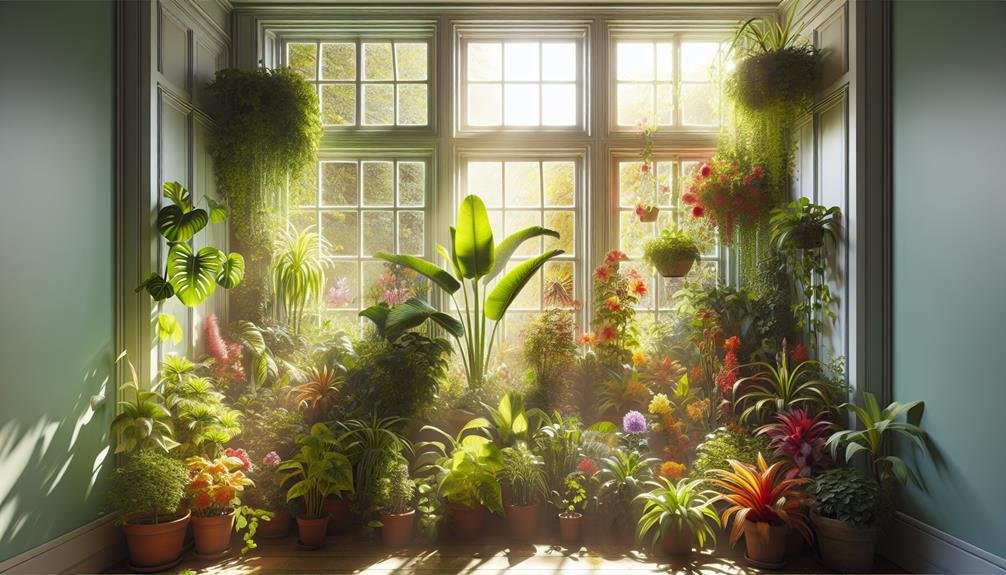
To ensure your houseplants thrive, remember the age-old saying, 'The early bird catches the worm.' When it comes to optimizing lighting for your green companions, getting ahead of the game is key.
But how do you strike the perfect balance between light and shade to promote their health and growth? Stay tuned as we explore the intricate dance between plant lighting needs and your home environment, shedding light on effective strategies to create an optimal growing environment for your beloved houseplants.
Understanding Plant Lighting Needs
Understanding your houseplants' lighting needs is crucial for ensuring their health and growth. Different plants have varying requirements when it comes to light exposure. Some plants thrive in bright, direct sunlight, while others prefer indirect or low-light conditions. Assessing the natural light available in your home is the first step in determining the best placement for your plants.
When evaluating your houseplants' lighting needs, consider factors such as the direction your windows face and any potential obstructions that may block sunlight. South-facing windows typically receive the most intense sunlight, making them ideal for sun-loving plants. East and west-facing windows provide moderate light levels, suitable for a wide range of houseplants. North-facing windows tend to offer the lowest light levels, making them suitable for plants that thrive in low-light conditions.
Types of Indoor Light Sources
When choosing indoor light sources for your houseplants, consider the intensity and quality of light each type provides. Natural light from windows is a great source, with east-facing windows offering gentle morning light, west-facing windows providing bright afternoon light, and south-facing windows offering the strongest light intensity. However, if natural light is limited, you can supplement it with artificial light sources.
LED (Light Emitting Diode) lights are energy-efficient and come in various spectrums suitable for different growth stages of plants. Fluorescent lights, such as T5 and T8 bulbs, are also popular for their cost-effectiveness and ability to promote plant growth. Incandescent bulbs, while less efficient, can still be used for specific plants that require warmer light.
Grow lights, specifically designed for plant growth, provide a full spectrum of light that mimics natural sunlight. These can be a great option for indoor gardening enthusiasts. Whichever type of light source you choose, ensure it meets the specific light requirements of your houseplants to help them thrive.
Determining Ideal Light Intensity
To ensure optimal growth for your houseplants, it's important to accurately assess and adjust the light intensity they receive. Light intensity refers to the brightness of the light that reaches your plants. Different houseplants have varying light intensity requirements, so it's crucial to match the light levels to each plant's specific needs.
One way to determine if your houseplants are receiving the right amount of light is by observing their behavior. If your plants have elongated stems, small leaves, or are leaning towards the light source, they may not be getting enough light. On the other hand, if you notice leaf scorching, yellowing, or stunted growth, it could be a sign of excessive light exposure.
Using a light meter can also help you measure the light intensity your plants are receiving accurately. Place the light meter at plant level in the area where your plants are situated for an accurate reading. By regularly monitoring and adjusting the light intensity, you can help your houseplants thrive and remain healthy.

Managing Light Duration and Exposure
In order to optimize the health of your houseplants, it's essential to carefully manage the duration and exposure of light they receive. Different plants have varying needs when it comes to light exposure. Some may require direct sunlight for several hours a day, while others thrive in indirect light. It's crucial to research the specific light requirements of each plant species you own.
During the day, position your plants where they can receive the right amount of light. Rotate them periodically to ensure all sides receive equal exposure, promoting balanced growth. Be cautious of placing plants too close to windows, as the glass can intensify sunlight and potentially scorch leaves.
Consider the duration of light exposure your plants receive. Most houseplants require around 12-16 hours of light each day. To manage this, you can use timers for your grow lights or adjust the placement of your plants accordingly. Monitoring and adjusting light exposure will contribute significantly to the overall health and vitality of your indoor plants.
Troubleshooting Common Lighting Issues
Addressing common lighting issues in your indoor garden can enhance the health and growth of your houseplants. If you notice your plants are leaning towards the light source, they mightn't be getting enough light. Try rotating them regularly to promote even growth. On the other hand, if you see yellowing leaves or stunted growth, your plants might be getting too much light. Consider moving them to a spot with slightly less intense light.
Another common issue is inconsistent lighting across all your plants. You could solve this by rearranging their positions or investing in additional light sources. If you're using artificial lighting, check the distance between the light and your plants. Being too close can cause burning, while being too far can lead to weak growth.
Lastly, if you're struggling with multiple plants requiring different light levels, consider grouping them based on their needs. This way, you can provide tailored lighting solutions and ensure each plant thrives in its environment. By troubleshooting these common lighting issues, you'll create an optimal growing environment for your indoor garden.
Frequently Asked Questions
Can I Use LED Grow Lights for My Houseplants, and if So, What Are the Advantages and Disadvantages Compared to Other Light Sources?
You can definitely use LED grow lights for your houseplants. They've the advantage of being energy-efficient and providing specific light spectrums that plants need for photosynthesis. Compared to other light sources, LEDs emit less heat, reducing the risk of burning your plants.
However, LED grow lights can be more expensive upfront. Overall, they're a great option for ensuring your houseplants receive the right amount of light for healthy growth.
How Can I Tell if My Houseplants Are Getting Enough Light, and What Are the Signs of Light Deficiency or Excess?
To know if your houseplants get enough light, watch for signs like leggy growth or yellowing leaves. If plants receive too little light, they might stretch towards the light source or develop small, pale leaves.
On the other hand, too much light can cause scorched or dried leaves. Keep an eye on your plants' appearance to adjust their lighting needs accordingly for optimal growth and health.
Are There Specific Houseplants That Require Less Light Than Others, and How Can I Accommodate Their Lighting Needs in a Mixed Indoor Garden?
Some houseplants need less light than others. To accommodate their lighting needs in a mixed indoor garden, consider grouping low-light plants together in areas with less direct sunlight.
Spider plants, peace lilies, and snake plants are examples of low-light tolerant plants. Be mindful of rotating your plants occasionally to ensure even light exposure.
Is It Necessary to Provide Additional Artificial Light for Houseplants During the Winter Months When Natural Light Is Limited?
During the winter months when natural light is scarce, providing additional artificial light for houseplants may be necessary to help them thrive. Without sufficient light, plants may not receive the energy they need for growth and may become leggy or lose their vibrant colors.
How Do I Adjust the Light Intensity and Duration for My Houseplants as They Grow and Change Throughout the Year?
As your houseplants grow and change throughout the year, adjusting light intensity and duration is crucial for their health. Monitor their growth and observe any signs of stress or stretching towards light sources.
Increase light exposure by moving them closer to windows or adjusting artificial light fixtures. Remember to maintain a balance and avoid overexposure to prevent burns or damage.
Adapting their lighting conditions will help your plants thrive and flourish.
Conclusion
Overall, by understanding your houseplants' lighting needs, utilizing the right light sources, and ensuring proper intensity and duration, you can optimize their growth and health.
Remember to regularly monitor your plants for any signs of lighting issues and adjust accordingly.
With a little attention to detail and proactive care, you can create a thriving environment for your indoor greenery.
Happy gardening!



