Did you know that overwatering is one of the leading causes of houseplant demise, with 61% of plant deaths attributed to this common mistake?
Ensuring proper soil drainage is key to preventing root rot and promoting healthy plant growth.
By understanding the essentials of soil drainage, you can create an optimal environment for your houseplants to thrive.
Importance of Adequate Drainage
Ensuring your houseplants have adequate drainage is crucial for their overall health and longevity. Without proper drainage, excess water can accumulate in the soil, leading to root rot, nutrient deficiencies, and ultimately, the demise of your beloved plants.
When water sits at the bottom of a pot, it creates a waterlogged environment that deprives the roots of oxygen, hindering their ability to absorb water and nutrients effectively. This can result in wilting, yellowing leaves, and overall stunted growth.
To prevent these issues, it's essential to choose pots with drainage holes at the bottom. These holes allow excess water to escape, preventing it from pooling at the bottom of the pot. Additionally, using a well-draining potting mix can further enhance drainage and aeration for your plants.
Choosing the Right Soil Mix
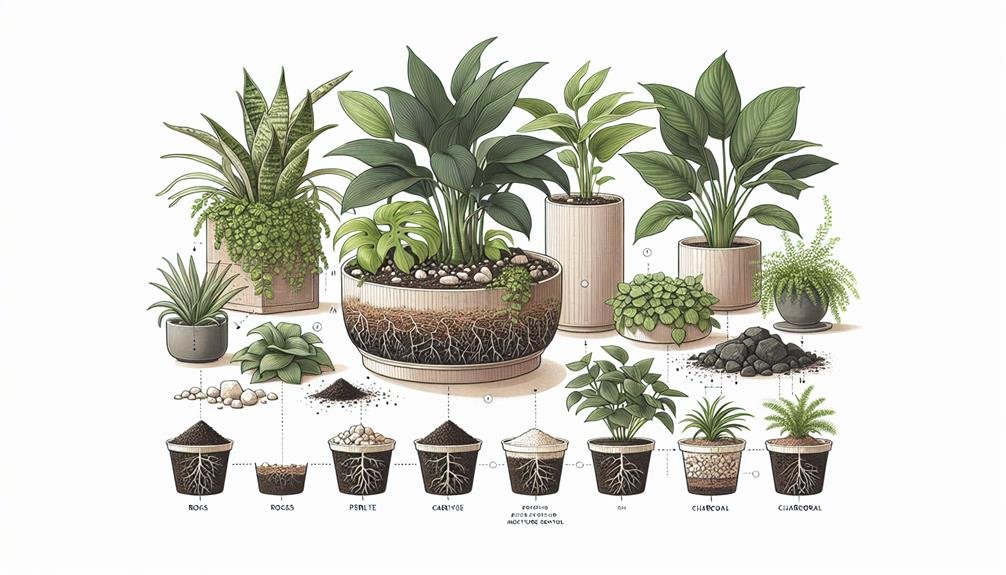
For optimal plant health, selecting a suitable soil mix is essential. When choosing a soil mix for your houseplants, look for a well-draining option that provides a balance of nutrients. A common choice is a peat-based mix, which offers good drainage while retaining moisture. You can also consider adding perlite or sand to improve drainage further.
It's important to match the soil mix to the specific needs of your plants. For example, succulents require a fast-draining mix to prevent root rot, while moisture-loving plants like ferns thrive in a mix that retains more water. Some specialty mixes are tailored to certain plant types, such as cacti or orchids, and can provide the ideal growing conditions.
Avoid using garden soil for your houseplants, as it can compact in containers, leading to poor drainage and aeration. Additionally, garden soil may contain pests or diseases that can harm your indoor plants. By selecting the right soil mix, you set your houseplants up for success and promote healthy growth.
Selecting Suitable Containers
When choosing containers for your houseplants, consider the size and material to ensure proper growth and drainage. Select pots that have drainage holes at the bottom to prevent waterlogging, which can lead to root rot.

The size of the container is crucial; it should be proportionate to the plant's root system, allowing room for growth without being excessively large. Opt for containers made of porous materials like terracotta or clay, as they allow excess moisture to evaporate, preventing water from stagnating around the roots.
Plastic containers are lightweight and retain moisture well, but make sure they have drainage holes to avoid water buildup. Hanging baskets are great for plants that thrive in well-drained soil and can add a decorative touch to your space.
Remember to choose containers that complement the aesthetic of your house while providing a conducive environment for your plants to flourish.
Monitoring Watering Frequency
Consider how often you water your houseplants to ensure they receive the right amount of moisture for optimal growth and health. The frequency of watering your plants depends on various factors such as the type of plant, the size of the container, the humidity levels in your home, and the season.
Overwatering can lead to root rot and other issues, while underwatering can cause wilting and stunted growth. To determine the watering needs of your houseplants, check the soil moisture regularly. Stick your finger about an inch into the soil – if it feels dry, it's time to water.
Different plants have different moisture requirements, so it's essential to research the specific needs of each plant you have. Keep in mind that during the winter months when plants aren't actively growing, they may require less frequent watering.
Implementing Drainage Solutions
To enhance the health of your houseplants, ensure proper soil drainage by incorporating suitable solutions. One effective method is to repot your plants using a well-draining potting mix. Look for mixes labeled specifically for cacti or succulents, or create your own blend by combining regular potting soil with perlite or sand. These amendments help prevent waterlogging and promote adequate drainage.
Additionally, consider using pots with drainage holes to allow excess water to escape, preventing the roots from sitting in water. Elevating your pots slightly by placing them on pot feet or adding a layer of gravel at the bottom can also enhance drainage.
For plants that are sensitive to overwatering, such as ferns or orchids, using a moisture meter can help you gauge when to water and avoid excessive moisture. Remember to empty saucers after watering to prevent water from pooling. By implementing these drainage solutions, you can create an environment that supports healthy plant growth and reduces the risk of root rot.
Frequently Asked Questions
Can I Reuse Old Potting Soil or Should I Always Start With Fresh Soil for My Houseplants?
You can reuse old potting soil for your houseplants, but it's essential to refresh it by adding new nutrients. Consider mixing in some fresh soil or compost to provide your plants with the necessary nutrients.
This way, you can save money and reduce waste while still ensuring your houseplants have the proper growing environment. Just remember to check for any signs of pests or diseases before reusing the soil.
How Can I Prevent Overwatering My Plants Even With Proper Drainage in Place?
To prevent overwatering your plants, ensure that you're not watering them on a strict schedule, but instead checking the soil moisture level regularly. Stick your finger into the soil about an inch deep—water only if it feels dry.
Consider using pots with drainage holes and a well-draining soil mix. Adjust watering based on environmental conditions. Remember, it's better to underwater a bit than to drown your plants with too much water.
Are There Any Specific Houseplants That Require Different Soil Drainage Needs Compared to Others?
When caring for houseplants, some species have distinct soil drainage needs. Certain plants like succulents and cacti prefer well-draining soil to prevent root rot, while others such as ferns thrive in soil that retains more moisture.
It's essential to research the specific requirements of each plant you own to ensure they receive the proper drainage for their health and growth. Experiment with different soil types to find the best fit for your plants.
Is It Necessary to Repot My Houseplants Every Year, or Can They Stay in the Same Container for Multiple Years?
It's not necessary to repot your houseplants every year; they can stay in the same container for multiple years if they're thriving. Regularly check the roots for overcrowding, which can indicate the need for repotting.
Factors like growth rate and pot size also influence when to repot. Ensure the plant isn't root-bound and has room to grow. Repot when needed to support the plant's health and growth.
How Do I Know if My Houseplant Needs More or Less Frequent Watering Based on Its Specific Soil Drainage Requirements?
To determine if your houseplant needs more or less frequent watering based on its soil drainage, check the moisture level in the potting mix. Stick your finger about an inch deep into the soil. If it feels dry, it's time to water. If it's still moist, hold off on watering.
Adjust the watering schedule accordingly to ensure your plant receives the right amount of moisture for optimal growth.
Conclusion
Remember, the key to thriving houseplants is proper soil drainage. By selecting the right soil mix, containers, and monitoring watering frequency, you can ensure your plants stay healthy and happy.
Don't forget to implement drainage solutions like rocks or gravel at the bottom of your pots to prevent waterlogging.
With these tips in mind, you'll be well on your way to having a green thumb and a house full of flourishing plants. Keep up the good work!