
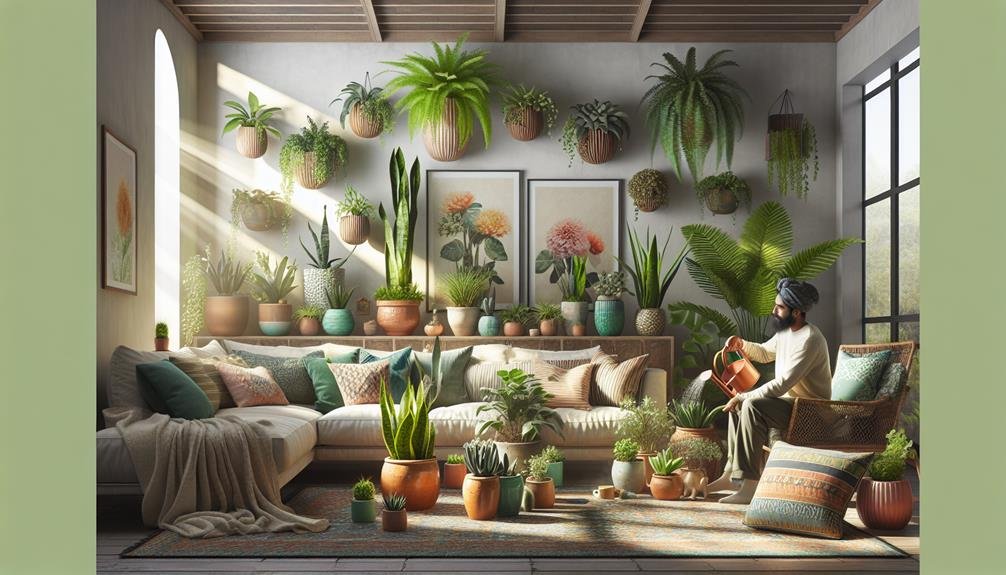
Have you ever considered the impact houseplants could have on your mental well-being?
The connection between greenery and mental health is a fascinating subject that has gained attention in recent years.
Imagine coming home to a space filled with lush foliage that not only enhances your decor but also uplifts your mood and reduces stress levels.
The benefits of incorporating houseplants into your daily life go beyond just aesthetics.
Stay tuned to discover how these simple botanical companions can positively influence your mental health and overall well-being.
Benefits of Houseplants for Mental Health
Having houseplants can significantly boost your mood and mental well-being. The presence of greenery in your living space has been proven to reduce stress, anxiety, and feelings of depression. The act of caring for plants can provide a sense of purpose and accomplishment, enhancing your overall sense of well-being. Studies have shown that being around indoor plants can improve concentration and productivity, making them beneficial additions to your home office or study area.
Houseplants also have physical health benefits that can positively impact your mental state. They can help purify the air by removing toxins and increasing oxygen levels, leading to a healthier indoor environment. Breathing in cleaner air can improve your sleep quality and energy levels, contributing to a more positive mindset throughout the day.
In addition, the simple act of nurturing and tending to your plants can foster a sense of mindfulness and connection to nature, promoting relaxation and reducing feelings of isolation. So, whether you have a green thumb or are new to plant care, incorporating houseplants into your living space can be a simple yet effective way to support your mental health.
Choosing the Right Plants
To ensure optimal benefits for your mental health, selecting the right houseplants that suit your living environment and lifestyle is key. Consider factors like the amount of sunlight your home receives. Plants like succulents and cacti thrive in bright, direct light, while ferns and peace lilies prefer indirect light. If your space lacks natural light, opt for low-light plants such as snake plants or pothos.
Additionally, think about your schedule and how much time you can dedicate to plant care. Some plants require frequent watering and attention, while others are more low-maintenance. Assessing your lifestyle will help you choose plants that align with your routine.

Another vital aspect is considering any pets you have; some plants are toxic to animals if ingested. Ensure the safety of your furry friends by selecting pet-friendly plants like spider plants or Boston ferns. By taking these factors into account, you can select houseplants that not only enhance your living space but also positively impact your mental well-being.
Caring for Your Houseplants
Ensuring the well-being of your houseplants involves consistent care and attention to their specific needs. Start by understanding the light requirements of each plant. Some thrive in bright, direct sunlight, while others prefer indirect light.
Water your plants appropriately, as overwatering can lead to root rot. Check the soil moisture regularly by sticking your finger into the soil; if it feels dry, it's time to water. However, make sure not to drown your plants by providing excess water.
Fertilize your houseplants during their growing season to replenish nutrients. Prune any dead leaves or stems to encourage new growth and maintain the plant's health.
Keep an eye out for pests and diseases, addressing any issues promptly to prevent them from spreading to other plants. Finally, rotate your plants occasionally to ensure they receive even sunlight and grow uniformly.
Incorporating Plants Into Your Space
Consider enhancing your living or workspace by strategically placing houseplants to create a calming and inviting atmosphere.
When incorporating plants into your space, it's essential to choose varieties that thrive in the lighting conditions available. Opt for low-light plants like pothos or snake plants for spaces with minimal natural light, while succulents or cacti are great for bright, sunny areas. Position your plants near windows or sources of natural light to ensure they receive adequate sunlight for healthy growth.
To make the most impact, group plants together in clusters rather than scattering them around the room. This creates a lush, green focal point that can help reduce stress and boost productivity. Additionally, consider adding plants of varying heights to add visual interest and depth to your space. Hanging planters or wall-mounted pots are excellent choices if you're short on surface space but still want to incorporate greenery into your environment.
Creating a Relaxing Plant Oasis
Enhance your living or workspace with a lush, green sanctuary by strategically arranging a variety of houseplants to create a relaxing plant oasis. Start by selecting plants known for their calming properties, such as lavender, jasmine, or aloe vera. These plants not only add a touch of nature but also promote relaxation through their scents and soothing qualities.
Consider creating different levels by using hanging planters, shelves, or stands to display your plants. This will add depth and visual interest to your plant oasis. Grouping plants with similar care needs together can also make maintenance easier and ensure that each plant thrives in its environment.
Incorporate a variety of textures and leaf shapes to make your plant oasis visually appealing. Mix in plants with broad leaves like peace lilies, delicate ferns, or trailing vines for a diverse and calming atmosphere. Don't forget to add natural elements like rocks, pebbles, or a small water feature to enhance the tranquil ambiance of your plant oasis.
DIY Plant Projects for Mental Wellness
Embark on simple DIY plant projects to boost your mental wellness and cultivate a sense of calm in your daily life. Creating your own plant arrangements or terrariums can be a therapeutic and fulfilling activity. Start by selecting a variety of plants that appeal to you visually and resonate with your care routine. Succulents, air plants, or easy-to-care-for herbs like basil or mint are excellent choices for beginners.
Consider making a mini indoor herb garden using mason jars or small pots. Not only will this project add a touch of green to your living space, but it will also provide you with fresh herbs for cooking, bringing a sense of accomplishment and joy.
Another idea is to design a hanging plant display using macramé hangers or repurposed containers. This project not only adds a decorative element to your home but also introduces a sense of tranquility as you care for your suspended greenery.
Let your creativity flow as you engage in these DIY plant projects, enhancing your mental well-being through the nurturing act of gardening.
Mindful Plant Care Practices
Practice mindful care for your houseplants by observing their growth patterns and responding to their needs with attention and care. Start by regularly checking your plants for any signs of distress such as yellowing leaves, wilting, or pests.
Adjust your watering schedule based on the plant's specific requirements – some plants prefer to dry out between waterings while others need more constant moisture. Take the time to dust the leaves, as clean foliage can better absorb sunlight for photosynthesis.
Prune dead or yellowing leaves to promote new growth and prevent disease spread. Rotate your plants occasionally to ensure even growth on all sides. Engage with your plants by talking to them or playing music, as this interaction can foster a sense of connection.
Lastly, consider repotting your plants when they outgrow their containers, providing fresh soil and space for continued growth and development. By incorporating these mindful practices, you can cultivate a nurturing environment for both your houseplants and your mental well-being.
Frequently Asked Questions
Can Houseplants Help Improve Symptoms of Specific Mental Health Conditions, Such as Anxiety or Depression?
Houseplants can indeed help improve symptoms of anxiety and depression. The presence of greenery indoors can create a calming and soothing environment, which may positively impact your mental health.
Taking care of plants can also give you a sense of purpose and accomplishment, boosting your mood. Additionally, plants can improve air quality, which can have a direct impact on your overall well-being.
Consider adding some greenery to your space for a mental health boost.
Are There Any Specific Houseplants That Are Known to Have a Negative Impact on Mental Health?
Some houseplants may have a negative impact on mental health due to their toxic properties or potential to trigger allergies. It's important to research and avoid plants that could cause adverse effects.
Look out for symptoms like skin irritation, respiratory issues, or discomfort when around certain plants.
Prioritize your well-being by choosing houseplants that promote a positive and healthy environment for your mental health.
How Can the Placement of Houseplants in a Room Affect Their Mental Health Benefits?
Placing houseplants strategically in a room can significantly impact their mental health benefits. Proximity to natural light can enhance plant growth and improve mood.
Plants near your workspace can increase productivity and reduce stress. In bedrooms, soothing plants by the bedside promote relaxation for better sleep.
Consider the room's layout and your daily activities when positioning houseplants to maximize their positive effects on your mental well-being.
Are There Any Potential Risks or Drawbacks to Using Houseplants as a Mental Health Aid?
Using houseplants for mental health benefits may have some potential risks or drawbacks to consider. Overwatering can lead to root rot, while under-watering can cause plants to wilt. Some plants may also be toxic to pets or children if ingested. Additionally, individuals with allergies or sensitivities may experience adverse reactions to certain plants.
It's important to research and choose houseplants carefully to minimize any potential risks while enjoying their mental health benefits.
Can Overwatering or Under-Watering Houseplants Have an Impact on Their Ability to Boost Mental Health?
Overwatering or under-watering houseplants can impact their ability to boost mental health.
When plants receive too much water, their roots can rot, leading to wilting and potential death.
On the other hand, underwatering can cause stress and damage to the plant, affecting its ability to thrive and provide the mental health benefits you seek.
It's important to find the right balance to ensure your houseplants can support your well-being effectively.
Conclusion
In conclusion, incorporating houseplants into your living space can significantly boost your mental health and overall well-being. By choosing the right plants, caring for them properly, and creating a relaxing plant oasis, you can create a peaceful and calming environment for yourself.
Implementing DIY plant projects and practicing mindful plant care can further enhance the benefits of having houseplants. So go ahead and bring some greenery into your home to improve your mental wellness today!



