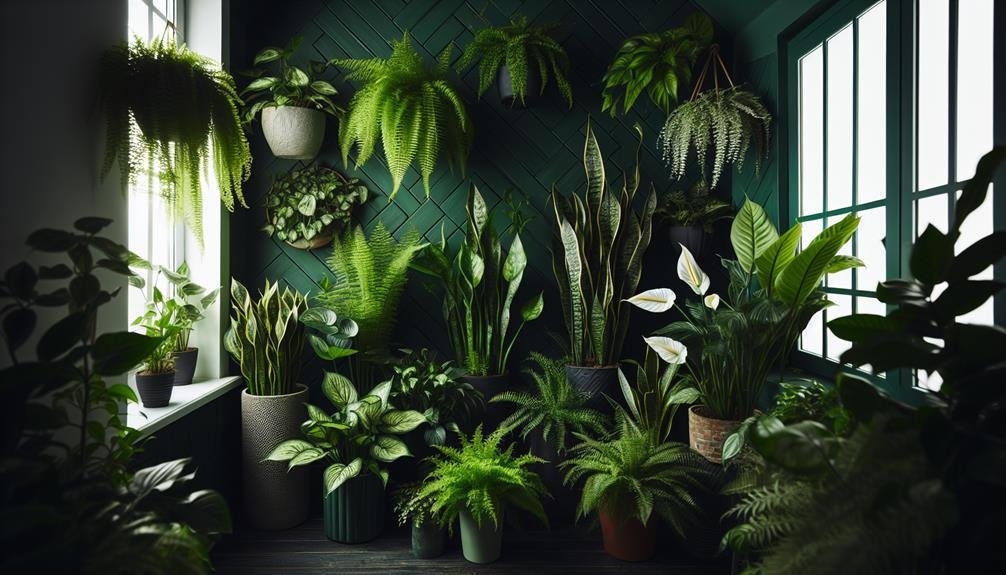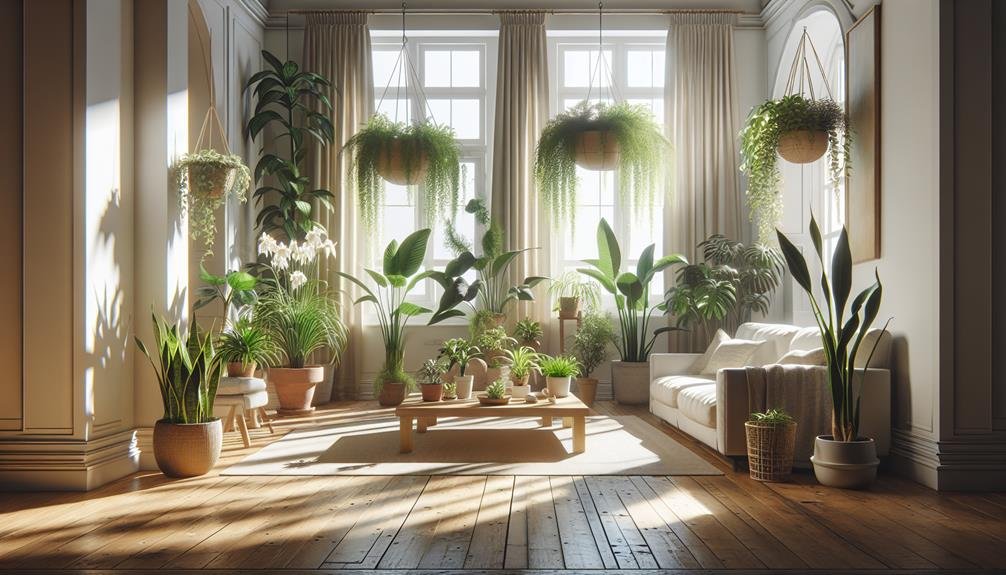
If you've ever struggled with indoor air quality, you might want to consider introducing a Snake Plant into your living space. This hardy plant not only adds a touch of greenery but also has the ability to filter out common indoor air pollutants.
But did you know there are several other houseplants that can also work wonders for the air you breathe? Stay tuned to discover more about these natural air purifiers and how they can benefit your home environment.
Snake Plant
Snake plants are known for their ability to purify indoor air and require minimal maintenance. These resilient plants are excellent choices for busy individuals or those new to plant care. With their vertical, sword-shaped leaves, snake plants can thrive in various lighting conditions, making them versatile additions to any room in your home.
One of the key benefits of having a snake plant is its air-purifying qualities. They're particularly effective at removing toxins like formaldehyde and benzene from the air, promoting a healthier indoor environment for you and your family. Additionally, snake plants are known for their ability to release oxygen at night, making them ideal for bedrooms to improve air quality while you sleep.
To care for your snake plant, ensure it receives indirect sunlight and water it sparingly, allowing the soil to dry out between waterings. These low-maintenance plants are perfect for beginners or those with busy schedules, as they can thrive with minimal attention. Consider adding a snake plant to your indoor space to enjoy its air-purifying benefits and easy upkeep.
Peace Lily
When considering another excellent houseplant for enhancing indoor air quality, the Peace Lily stands out as a beautiful and effective option. The Peace Lily, with its lush green leaves and elegant white flowers, isn't only visually appealing but also serves a practical purpose in purifying the air in your home. This plant is known for its ability to remove common indoor toxins such as formaldehyde, benzene, and trichloroethylene, making it a great addition to any room.
One of the Peace Lily's standout features is its adaptability to various light conditions, thriving in low light while still producing blooms in brighter settings. This makes it an ideal choice for rooms with limited sunlight. Additionally, Peace Lilies are relatively low maintenance, requiring watering about once a week and occasional fertilization.
Be mindful, though, that Peace Lilies are toxic to pets if ingested, so it's essential to keep them out of reach of any furry friends. With the Peace Lily's air-purifying qualities and aesthetic appeal, it's a fantastic option for improving the air quality in your home.
Spider Plant
The Spider Plant, renowned for its air-purifying abilities, thrives in various indoor environments and requires minimal upkeep. This plant is an excellent choice for improving the air quality in your home. With its long, arching leaves and ability to thrive in indirect sunlight, the Spider Plant is a popular choice for both experienced gardeners and beginners. One of the Spider Plant's most notable features is its ability to remove toxins like formaldehyde and xylene from the air, making it a valuable addition to any indoor space.
When caring for a Spider Plant, make sure to place it in well-draining soil and water it regularly but not excessively. The plant prefers to dry out between watering sessions, so be mindful not to overwater. Additionally, Spider Plants benefit from occasional misting to increase humidity levels, especially during dry seasons. Regularly removing any brown tips or spent flowers will help the plant maintain its health and appearance.

Aloe Vera
Aloe Vera's reputation for both its aesthetic appeal and healing properties makes it a popular choice for indoor plant enthusiasts. Not only does it add a touch of green to your space, but it also serves as a natural air purifier. Aloe Vera is known for its ability to remove toxins like formaldehyde and benzene from the air, helping to create a healthier indoor environment for you.
This succulent is relatively low maintenance, making it perfect for those who may not have a green thumb. Aloe Vera thrives in bright, indirect sunlight and only requires watering every few weeks. Its gel-filled leaves aren't only visually striking but also contain properties that can soothe skin irritations and burns.
Consider placing an Aloe Vera plant in your bedroom or office to enjoy its air-purifying benefits and have a natural remedy on hand for minor skin issues. With Aloe Vera in your indoor plant collection, you can enhance your space while also improving the air quality.
Pothos
A popular choice for indoor plant enthusiasts looking to add greenery and improve air quality is the Pothos plant. Pothos, also known as Devil's Ivy, is a low-maintenance plant that thrives in various indoor conditions, making it an ideal choice for beginners or those with busy schedules. This plant is characterized by its heart-shaped leaves that can be variegated with shades of green, yellow, or white, adding a vibrant touch to your living space.
One of the key benefits of having a Pothos plant indoors is its air-purifying qualities. Pothos is known to effectively remove common indoor pollutants such as formaldehyde, xylene, benzene, and toluene, helping to create a healthier environment for you and your family. Additionally, Pothos plants are versatile in their placement, as they can thrive in both low light and bright indirect light settings.
Incorporating a Pothos plant into your indoor garden not only enhances the aesthetic appeal of your home but also contributes to better air quality, making it a valuable addition to your living space.
Frequently Asked Questions
Can Houseplants Actually Purify the Air in Your Home or Is It Just a Myth?
Houseplants can indeed purify the air in your home, not just a myth. These green companions can filter out toxins and increase oxygen levels, creating a healthier indoor environment.
Are There Any Specific Maintenance Tips for Keeping These Houseplants Healthy and Thriving?
To keep houseplants thriving, make sure they get enough sunlight and water. Trim any dead leaves or flowers regularly and repot them as needed.
Check the soil moisture levels before watering to prevent overwatering. Use a gentle fertilizer occasionally to provide essential nutrients.
Rotate your plants periodically to ensure even growth. Lastly, keep an eye out for pests and take action promptly if you notice any issues.
Do These Houseplants Require Any Special Lighting Conditions to Effectively Improve Indoor Air Quality?
To effectively improve indoor air quality, these houseplants require adequate lighting conditions. Make sure they get sufficient sunlight exposure or use artificial grow lights if needed.
Proper lighting helps them photosynthesize and release oxygen, enhancing the air quality in your home. Be mindful of positioning your plants near windows or in well-lit areas to ensure they thrive and contribute to a healthier indoor environment.
How Long Does It Typically Take for These Houseplants to Make a Noticeable Difference in Air Quality?
Typically, it takes a few weeks for these houseplants to noticeably improve air quality in your space. The plants need time to acclimate and start purifying the air effectively.
Be patient and consistent in caring for them, providing proper light and water. Once they establish themselves, you should start experiencing fresher indoor air.
Keep monitoring and maintaining your plants for long-term benefits to your air quality.
Are There Any Potential Risks or Side Effects Associated With Having These Houseplants in Your Home, Such as Allergies or Toxicity to Pets?
When it comes to having houseplants in your home, potential risks like allergies or toxicity to pets can be a concern.
While beautiful and beneficial for air quality, some plants may trigger allergies or be harmful to pets when ingested.
It's essential to research and choose plants that are safe for your household, especially if you have pets or family members with allergies.
Always prioritize safety when selecting houseplants for your indoor space.
Conclusion
Overall, incorporating houseplants like Snake Plant, Peace Lily, Spider Plant, Aloe Vera, and Pothos into your indoor space can significantly improve air quality.
These plants work to filter out toxins and increase oxygen levels, creating a healthier environment for you and your loved ones.
So go ahead and add some greenery to your home to enjoy the benefits of cleaner air and a more refreshing atmosphere.