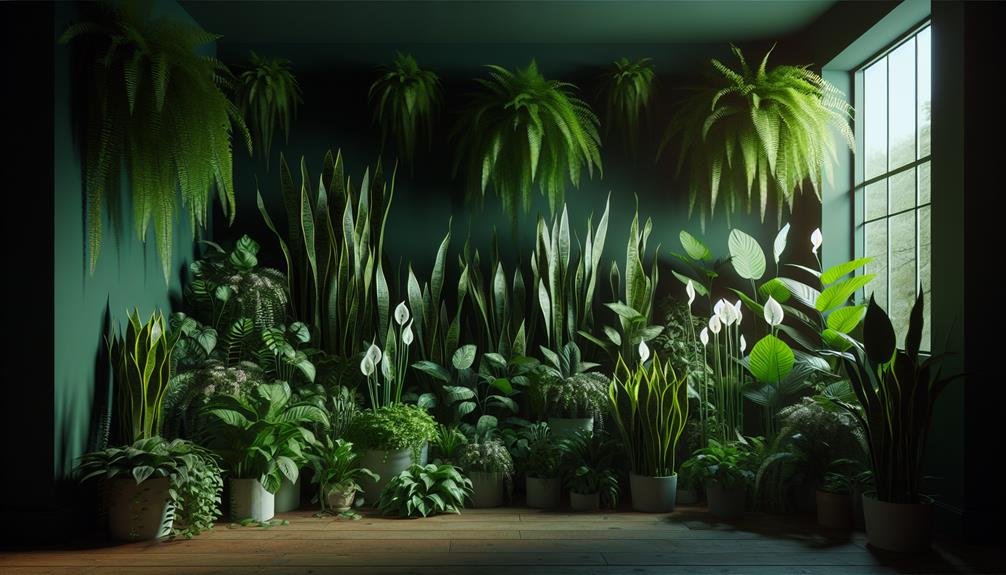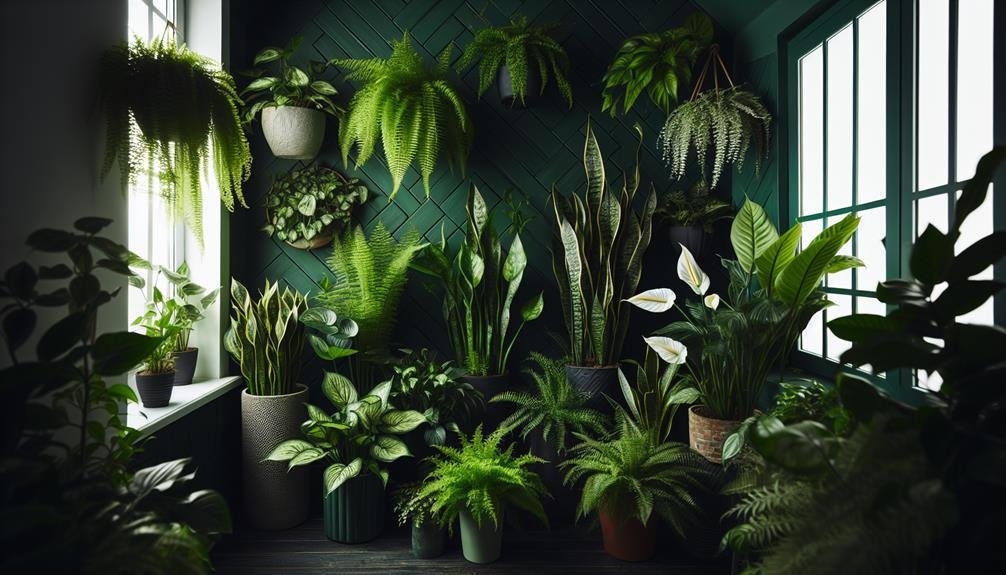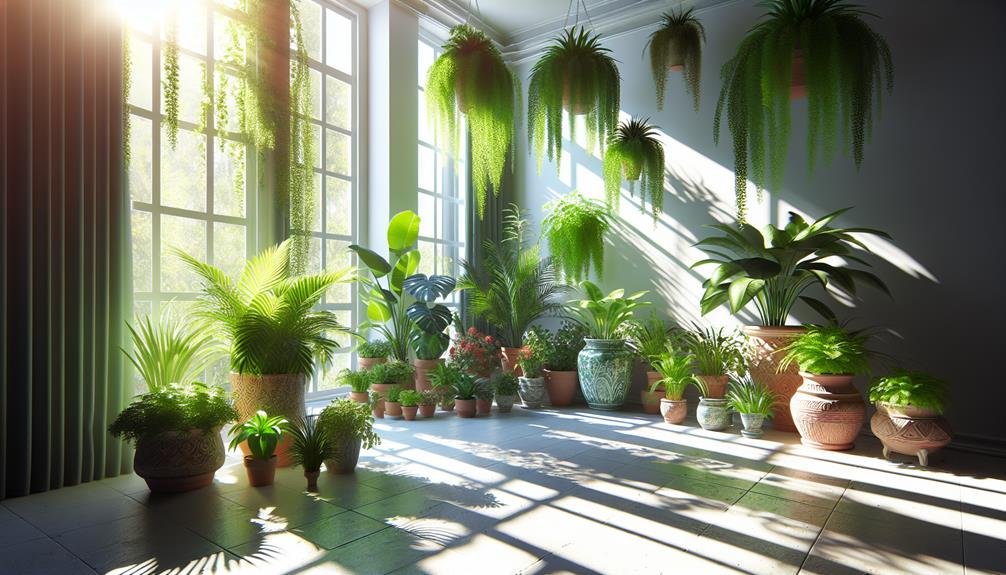
You might be thinking that keeping houseplants alive is too much work, but with the right selections, it can be surprisingly manageable.
Imagine coming home to a living space that not only looks beautiful but also contributes to a healthier environment.
By strategically incorporating specific types of plants, you can transform your home into a tranquil oasis that promotes well-being and adds a touch of nature to your surroundings.
Explore the world of houseplants and discover how they can enhance your indoor space in ways you never imagined.
Air-Purifying Plants
Revamp your living space with air-purifying plants to enhance the air quality in your home. Indoor air can often be more polluted than outdoor air, but these plants act as natural filters, removing harmful toxins and releasing oxygen.
Spider plants, known for their easy care and effectiveness in removing formaldehyde and xylene, are a great choice. Another popular option is the peace lily, which not only purifies the air but also adds a touch of elegance with its white blooms.
For a pop of color, consider the vibrant gerbera daisy, which not only brightens up your space but also filters out benzene commonly found in paints and solvents. The aloe vera plant not only purifies the air but also has healing properties for minor burns and cuts.
Lastly, the snake plant is a hardy choice that thrives in low light and helps remove toxins like formaldehyde and benzene. Introducing these air-purifying plants into your home can significantly improve your indoor air quality while adding a touch of nature to your decor.
Mood-Boosting Varieties
Enhance your indoor environment and uplift your spirits by introducing mood-boosting plant varieties into your living space. Incorporating plants like Lavender, known for its calming aroma that can reduce stress and anxiety, can create a tranquil atmosphere. The vibrant colors of flowers like Gerbera Daisies can evoke feelings of happiness and positivity, brightening your mood on even the gloomiest days.
Consider adding Snake Plants, which not only purify the air but also release oxygen at night, promoting better sleep and overall well-being. The soothing green leaves of Peace Lilies can help to increase humidity levels, aiding in respiratory issues and creating a more comfortable living environment. Additionally, the cheerful blooms of Sunflowers can bring a sense of warmth and energy, boosting your mood and creating a welcoming ambiance.

Low-Maintenance Options
Consider incorporating low-maintenance houseplants into your indoor space to add greenery without the need for constant attention and care. These plants are perfect for busy individuals or those new to plant care.
Spider plants are a great option; they thrive in various lighting conditions and only need occasional watering. Another low-maintenance choice is the pothos plant, known for its air-purifying qualities and resilience to irregular watering.
Snake plants are virtually indestructible and can survive in low light with infrequent watering, making them ideal for beginners. If you prefer flowering plants, the peace lily is a great low-maintenance option that adds a touch of elegance to any room.
ZZ plants are also a popular choice due to their ability to thrive in low light and with minimal watering. By choosing these low-maintenance houseplants, you can enjoy the benefits of indoor greenery without the stress of high upkeep.
Statement Plants for Impact
Looking to make a bold statement with your indoor plants? Statement plants are an excellent way to add drama and flair to your living space. One striking option is the Fiddle Leaf Fig, with its large, glossy leaves that instantly draw the eye. This plant can grow tall, making it a perfect choice for filling empty corners or adding height to a room. The Monstera Deliciosa, also known as the Swiss Cheese Plant, is another standout choice. Its unique split leaves create a stunning visual impact and can brighten up any room with its tropical vibes.
If you're looking for a plant that commands attention, consider the Bird of Paradise. With its broad, banana-like leaves and vibrant colors, this plant adds a touch of exotic beauty to your home. The Snake Plant, with its tall, sturdy leaves, isn't only visually striking but also easy to care for, making it a practical yet impactful choice for any space. Incorporating these statement plants into your indoor oasis will instantly revitalize your home decor and create a lasting impression on anyone who enters.
Hanging and Climbing Plants
To add dimension and visual interest to your indoor space, incorporating hanging and climbing plants can bring a unique charm and dynamic element to your decor.
Hanging plants like Spider Plants, Pothos, or String of Pearls can elegantly cascade down from shelves or hanging baskets, adding a touch of whimsy and greenery to higher areas of your room. These plants are perfect for creating a lush, jungle-like atmosphere in your space without taking up valuable floor space.
Climbing plants such as English Ivy, Philodendron, or Monstera are excellent for adding vertical interest and can be trained to climb up trellises, poles, or walls. Their climbing nature adds a sense of movement and life to bare walls or corners, transforming them into vibrant green focal points.
Frequently Asked Questions
What Are Some Common Pests That Can Affect Indoor Plants and How Can They Be Managed?
Common pests that can affect indoor plants include aphids, spider mites, and mealybugs. To manage them, regularly inspect your plants for any signs of infestation, such as sticky residue or webbing.
You can gently wash the plant with soapy water or a neem oil solution to get rid of these pests. Additionally, introducing natural predators like ladybugs or using insecticidal soap can help keep your indoor plants healthy and pest-free.
Are There Any Houseplants That Are Pet-Friendly and Safe for Homes With Animals?
If you're looking for pet-friendly houseplants, there are several options that can coexist safely with your furry friends. Plants like spider plants, Boston ferns, and African violets are generally considered pet-friendly choices.
Always double-check each plant's toxicity levels and keep them out of reach. Remember to monitor your pets around plants to ensure everyone stays happy and healthy in your home.
How Often Should Indoor Plants Be Repotted and What Is the Best Way to Do So?
When repotting indoor plants, it's important to consider their growth. Typically, plants should be repotted every 1-2 years to prevent root-bound conditions.
To repot, gently remove the plant from its current container, loosen the roots, and place it in a slightly larger pot with fresh soil.
Water the plant thoroughly after repotting to help it settle in its new home. Regular repotting will keep your plants healthy and thriving.
Can Houseplants Help Improve Air Quality in a Home With Smokers or in Areas With High Pollution?
Houseplants can indeed help improve air quality in your home, especially in areas with smoke or high pollution levels. They absorb carbon dioxide and release oxygen through photosynthesis.
Additionally, certain plants like spider plants, pothos, and peace lilies can also filter out harmful toxins from the air.
Are There Any Specific Houseplants That Are Known for Their Ability to Reduce Stress and Promote Relaxation in Indoor Spaces?
Looking to create a calming oasis indoors?
Some houseplants are known to reduce stress and promote relaxation. Plants like lavender, jasmine, and aloe vera can help create a tranquil atmosphere in your space.
These plants not only add a touch of greenery but also have soothing scents and qualities that can help you unwind after a long day.
Consider adding them to your indoor space for a more serene environment.
Conclusion
Transform your indoor space with the power of houseplants. From air-purifying varieties to mood-boosting options, there are plants for every style and level of maintenance.
Make a statement with impactful plants or add some greenery with hanging and climbing options. With a little care and attention, your indoor space can become a vibrant oasis of calm and beauty.
Embrace the natural world inside your home and enjoy the benefits of a greener environment.