
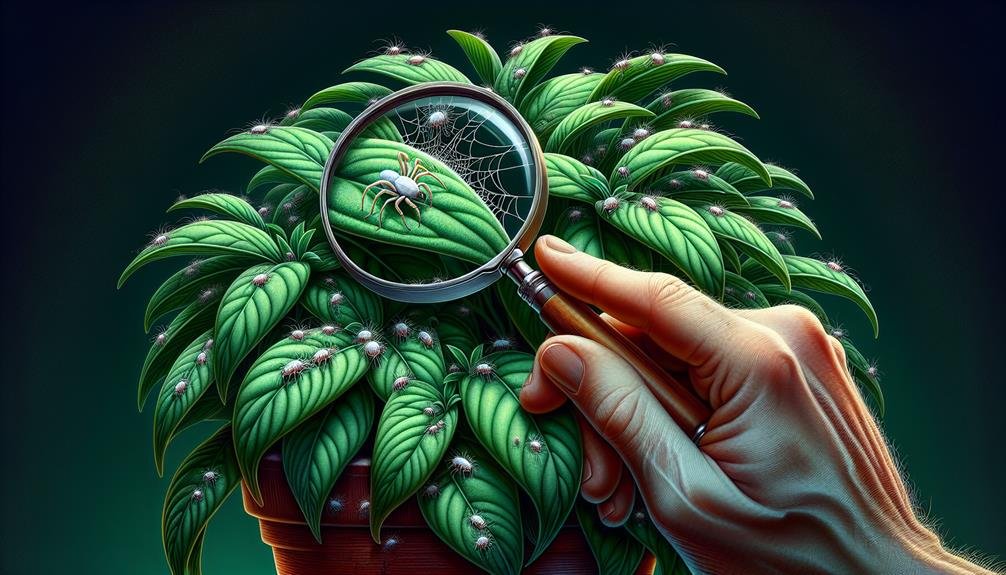
When it comes to dealing with spider mites on your plants, remember the old saying, 'An ounce of prevention is worth a pound of cure.'
You may think you've tried everything, but have you truly unlocked the secrets to banishing these pesky pests for good?
By exploring a range of effective strategies, you can finally bid farewell to those troublesome spider mites and ensure your plants thrive in a pest-free environment.
Identifying Spider Mite Infestations
If you notice tiny red dots moving on the underside of your plant's leaves, you may have a spider mite infestation. These minuscule pests, belonging to the arachnid family, are notorious for wreaking havoc on indoor and outdoor plants. Spider mites are difficult to spot with the naked eye due to their size, but their presence can lead to significant damage if left unchecked.
One key indicator of a spider mite infestation is the appearance of fine webbing on the plant's leaves and stems. This webbing serves as both a nesting site for the mites and a means of protection from predators. As the infestation progresses, you may notice yellow or white speckling on the leaves, indicating that the mites have been feeding on the plant's sap.
To confirm the presence of spider mites, gently shake a leaf over a white piece of paper. If tiny specks fall onto the paper and start moving, it's likely that spider mites are present. Identifying these pests early is crucial for effective treatment and preventing further damage to your beloved plants.
Natural Remedies for Spider Mite Control
To combat spider mites infesting your plants, consider employing natural remedies for effective control. One popular method is using neem oil, which disrupts the mites' growth and ability to feed. Simply dilute it in water and spray it on the affected plants.
Another option is insecticidal soap, which suffocates the mites on contact. Mix the soap with water and apply it to the plants, making sure to cover the undersides of the leaves where the mites usually reside.
Additionally, introducing predatory insects like ladybugs or lacewings can help keep spider mite populations in check. These insects feed on the mites, providing a natural and chemical-free solution to the infestation.
Moreover, a mixture of rubbing alcohol and water can be an effective remedy. Just spray it on the affected areas to kill the mites. Remember to test any treatment on a small area of the plant first to ensure it won't cause harm before applying it more broadly.

Implementing Preventative Measures
Consider incorporating regular plant inspections and implementing proper spacing between plants to prevent spider mite infestations. By regularly checking your plants for any signs of spider mites, such as webbing or stippling on leaves, you can catch infestations early on and prevent them from spreading.
Inspecting both the upper and lower sides of leaves is crucial since spider mites tend to hide on the undersides. Additionally, providing adequate spacing between plants can help improve air circulation, making it harder for spider mites to move between plants and infest new ones.
Another effective preventative measure is to avoid overcrowding plants, as this creates an ideal environment for spider mites to thrive. Overcrowded plants not only limit air circulation but also provide spider mites with a continuous food source. By giving your plants enough space to grow and ensuring proper ventilation, you can significantly reduce the risk of spider mite infestations.
Using Chemical Treatments Safely
For safe application of chemical treatments against spider mites on your plants, always follow the instructions provided on the product label.
Before applying any chemical treatment, make sure to wear appropriate protective gear such as gloves, a mask, and protective eyewear to avoid any contact with the chemicals. It's crucial to mix the chemical solution according to the specified dilution rates to prevent damaging your plants or causing harm to yourself.
When applying the treatment, ensure thorough coverage of the affected plant parts, including the undersides of leaves where spider mites tend to hide.
After the application, keep children and pets away from the treated plants until the chemicals have dried completely. Additionally, make sure to dispose of any leftover solution or empty containers as directed on the product label.
Regularly monitor your plants for any signs of reinfestation and be prepared to reapply the chemical treatment if needed. Remember, always store chemical treatments in a secure place away from food and out of reach of children.
Monitoring and Maintaining Plant Health
Ensure regular observation of your plants' overall condition and growth to detect any early signs of pest infestation or nutrient deficiencies for maintaining optimal plant health. By staying vigilant, you can catch issues early on and address them promptly. Monitor the leaves for discoloration, wilting, or unusual spots, as these could indicate a problem. Check the undersides of leaves for webbing, a common sign of spider mites. Additionally, inspect the stems and branches for any visible pests like aphids or mealybugs.
Maintaining plant health goes beyond pest control. Keep an eye on the soil moisture levels to prevent overwatering or underwatering, which can stress the plants. Ensure proper drainage to avoid waterlogged roots. Regularly fertilize your plants to provide essential nutrients for healthy growth. Prune regularly to remove dead or diseased parts and promote air circulation. Lastly, consider rotating your plants' positions to ensure even light exposure and prevent overcrowding.
Frequently Asked Questions
Can Spider Mites Be Harmful to Humans or Pets if They Come Into Contact With Infested Plants?
Yes, spider mites can be harmful to humans or pets if they come into contact with infested plants. These tiny pests can cause skin irritation, allergic reactions, and respiratory issues.
It's important to be cautious and avoid direct contact with infested plants to prevent any potential harm to yourself or your pets. Regularly inspecting your plants can help you spot spider mites early and take appropriate measures to protect your health and that of your furry friends.
How Do Spider Mites Affect the Overall Health and Growth of Plants in the Long Term?
Spider mites can wreak havoc on your plants' overall health and growth in the long term. These tiny pests pierce plant cells to feed on sap, leading to stunted growth, yellowing leaves, and even plant death.
As they multiply rapidly, infestations can quickly escalate, causing widespread damage. Regularly inspecting your plants for early signs of spider mites and taking prompt action can help prevent long-term negative effects on your plants' wellbeing.
Are There Any Specific Plant Species That Are More Susceptible to Spider Mite Infestations?
Some plant species are more susceptible to spider mite infestations than others. Factors like leaf texture, moisture levels, and plant genetics may make certain species more appealing to spider mites.
When it comes to protecting your plants, it's essential to know which ones are at higher risk so you can be proactive in preventing infestations. Monitoring and understanding the susceptibility of different plant species can help you keep your green friends healthy and thriving.
Can Spider Mites Develop Resistance to Natural Remedies Over Time?
Yes, spider mites can develop resistance to natural remedies over time. As you continue to use the same treatment, the spider mites may adapt and become less affected by it.
To prevent this, it's essential to rotate different methods of controlling spider mites and regularly monitor your plants for any signs of infestation. This proactive approach will help ensure that the mites don't build up resistance to your chosen natural remedies.
Is There a Way to Determine if a Plant Is at Risk of a Spider Mite Infestation Before It Actually Occurs?
To determine if a plant is at risk of a spider mite infestation before it happens, inspect the plant regularly for any signs of webs, stippling on leaves, or tiny moving dots. Keep an eye out for any yellowing or wilting leaves, as these could also indicate a potential mite problem.
Maintaining a clean and well-ventilated environment for your plants can also help prevent spider mites from infesting your greenery.
Conclusion
Now that you know how to identify and control spider mites on your plants, you can take action to keep them at bay.
By using natural remedies, preventative measures, and safe chemical treatments, you can effectively manage and eliminate these pesky pests.
Remember to regularly monitor your plants for signs of infestation and maintain their overall health to prevent future outbreaks.
With these tips, you can enjoy healthy, thriving plants free from spider mites.



