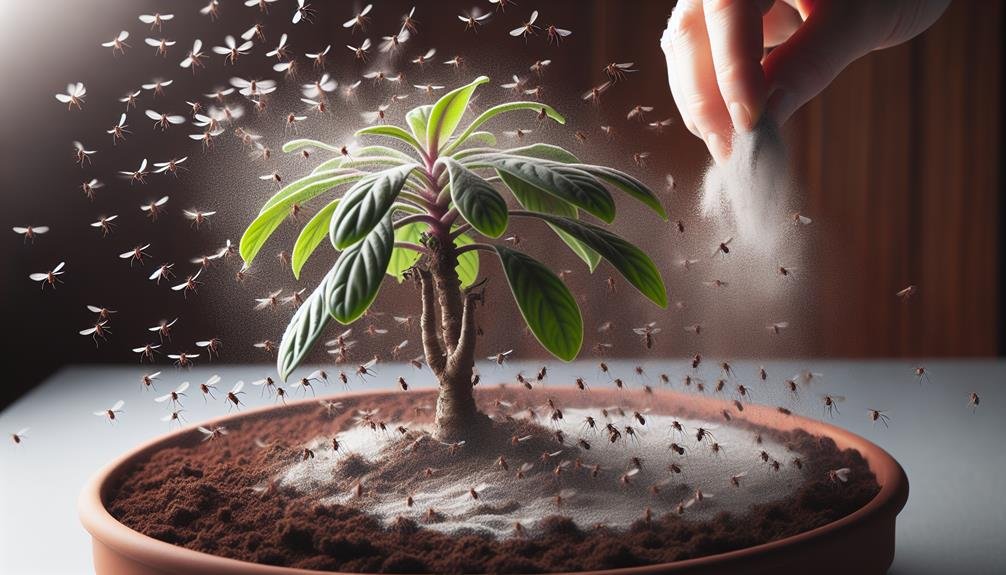
When tiny pests like fungus gnats start buzzing around your plants, it can feel like a dark cloud hanging over your gardening efforts. But fear not, for there are effective ways to control these pesky intruders.
By implementing a few key strategies, you can reclaim the health and vitality of your beloved greenery. So, how can you ensure your plants thrive without the nuisance of fungus gnats interrupting their growth?
Let's explore some practical solutions that can help you maintain a flourishing indoor garden.
Identifying Fungus Gnat Infestations
To identify fungus gnat infestations, examine the soil surface for tiny black flies hovering around your plants. These pesky insects are about 1/8 inch long, resembling mosquitoes but without the biting behavior. Additionally, you may notice small worm-like larvae in the soil, which can help confirm the presence of fungus gnats.
Fungus gnats thrive in moist environments, so overwatered houseplants are particularly susceptible to infestations. If you see adult gnats flying around your plants, it's essential to take action promptly to prevent further spread. Inspect not only the soil surface but also the undersides of leaves for eggs or larvae.
Keep in mind that fungus gnats aren't harmful to humans but can damage plant roots if left unchecked. By identifying these tiny black flies early on, you can implement effective control measures to protect your plants and prevent future infestations.
Implementing Natural Remedies
Consider utilizing common household items like vinegar, neem oil, or sticky traps to naturally combat fungus gnats in your plants. Vinegar can be an effective remedy due to its acidic properties, which disrupt the gnat larvae's environment. Mix one part vinegar with six parts water and water your plants with this solution.
Neem oil is a natural insecticide that can help control fungus gnats. Dilute neem oil in water according to the instructions on the product and spray it on the soil surface.
Sticky traps are another useful tool to catch adult fungus gnats. Place yellow sticky traps near your plants to trap flying adults and reduce the population.
These natural remedies are safe for your plants and environment-friendly. By incorporating these simple solutions into your plant care routine, you can effectively manage and eliminate fungus gnat infestations without the use of harsh chemicals.

Adjusting Watering Practices
Adjust your watering practices to effectively combat fungus gnats in your plants by controlling moisture levels in the soil. Fungus gnats thrive in damp environments, so adjusting how you water your plants can help eliminate their breeding grounds.
Start by allowing the top inch of soil to dry out between waterings. This will disrupt the gnat larvae's habitat and discourage adult fungus gnats from laying eggs.
Additionally, avoid overwatering your plants, as excessive moisture creates the perfect conditions for fungus gnat infestations. Instead, water your plants only when necessary, based on their individual needs and the specific requirements of each plant species.
Consider using pots with drainage holes to prevent water from accumulating at the bottom, further reducing the risk of fungal gnat infestations.
Using Beneficial Microorganisms
Beneficial microorganisms can play a crucial role in naturally controlling fungus gnats in your plants. These tiny organisms, such as certain species of beneficial bacteria and fungi, can help combat fungus gnat larvae present in the soil. When applied to the growing medium of your plants, these beneficial microorganisms establish themselves and outcompete the harmful fungus gnats for resources, ultimately reducing the gnat population.
One effective way to introduce beneficial microorganisms is by using specialized microbial products designed for pest control in plants. These products contain a high concentration of beneficial bacteria and fungi that actively work to suppress fungus gnat populations. Simply follow the instructions provided on the product label for optimal results.
Another method is to create a conducive environment for these beneficial microorganisms to thrive. Avoid using chemical pesticides that can harm the good microbes along with the bad ones. Instead, opt for organic fertilizers and natural pest control methods that support the growth of beneficial microorganisms in your plant's soil. By incorporating these practices, you can harness the power of beneficial microorganisms to keep fungus gnats at bay.
Applying Preventative Measures
To prevent future infestations of fungus gnats, implement proactive measures in your plant care routine starting with proper soil moisture management. Overwatering creates a hospitable environment for fungus gnats to thrive, so be mindful not to let your plants sit in soggy soil. Allow the top inch of soil to dry out between waterings to discourage gnats from laying eggs in the moist substrate.
Furthermore, consider using a well-draining potting mix that helps prevent waterlogging. Another preventative measure is to regularly remove any decaying plant matter or fallen leaves from the soil surface, as these can serve as breeding grounds for fungus gnats.
Additionally, incorporating yellow sticky traps near your plants can help catch adult gnats and reduce their numbers. Lastly, avoid over-fertilizing your plants, as excess nutrients can attract fungus gnats. By following these preventative steps, you can effectively control and prevent fungus gnat infestations in your plants.
Frequently Asked Questions
Can Fungus Gnats Spread Diseases to Humans or Pets?
Fungus gnats aren't known to spread diseases to humans or pets. These tiny insects primarily feed on fungi and decaying plant matter, so their interaction with humans or pets is minimal.
While their presence can be annoying and potentially harmful to plants, you can rest assured that they aren't a significant health risk to you or your furry friends. Just keep an eye on your plants and take steps to control them if needed.
Are There Any Specific Types of Plants That Are More Susceptible to Fungus Gnat Infestations?
Certain types of plants are more prone to fungus gnat infestations. Plants with moist soil, like potted houseplants or those overwatered, are particularly susceptible. Additionally, young seedlings and plants in high humidity environments are at risk.
When dealing with fungus gnats, it's essential to monitor these vulnerable plants closely to prevent infestations from taking hold and causing damage to your greenery.
How Long Does It Typically Take to See Results When Using Beneficial Microorganisms to Control Fungus Gnats?
Typically, you can expect to see results within a few weeks when using beneficial microorganisms to control fungus gnats. These helpful organisms work to naturally combat the gnat population in your plants.
With consistent application, you should notice a decrease in fungus gnat activity over time. Be patient and continue the treatment as directed to effectively manage the infestation and promote healthier plant growth.
Can Overwatering Plants Lead to Other Issues Besides Attracting Fungus Gnats?
Overwatering plants can definitely cause other issues beyond just attracting fungus gnats. Excessive moisture can lead to root rot, stunted growth, and nutrient deficiencies.
It's important to strike a balance in watering to ensure your plants thrive. Remember, moderation is key when it comes to keeping your plants healthy and happy.
Are There Any Signs or Symptoms of a Fungus Gnat Infestation That Are Often Overlooked by Plant Owners?
Sometimes, overlooked signs of a fungus gnat infestation include:
- Tiny black flies hovering around your plants, especially when watering.
- Small, worm-like larvae in the soil.
- Yellowing leaves due to root damage.
Keep an eye out for these subtle indicators to catch the issue early and prevent it from spreading.
Regularly inspecting your plant's soil and foliage can help you stay ahead of any infestation.
Conclusion
Overall, controlling fungus gnats in your plants doesn't have to be a daunting task. By identifying infestations early, implementing natural remedies, adjusting watering practices, using beneficial microorganisms, and applying preventative measures, you can effectively manage and prevent fungus gnat problems.
Remember to stay vigilant and proactive in your approach to keep your plants healthy and thriving. With these strategies in place, you can successfully control fungus gnats and enjoy a pest-free environment for your plants.