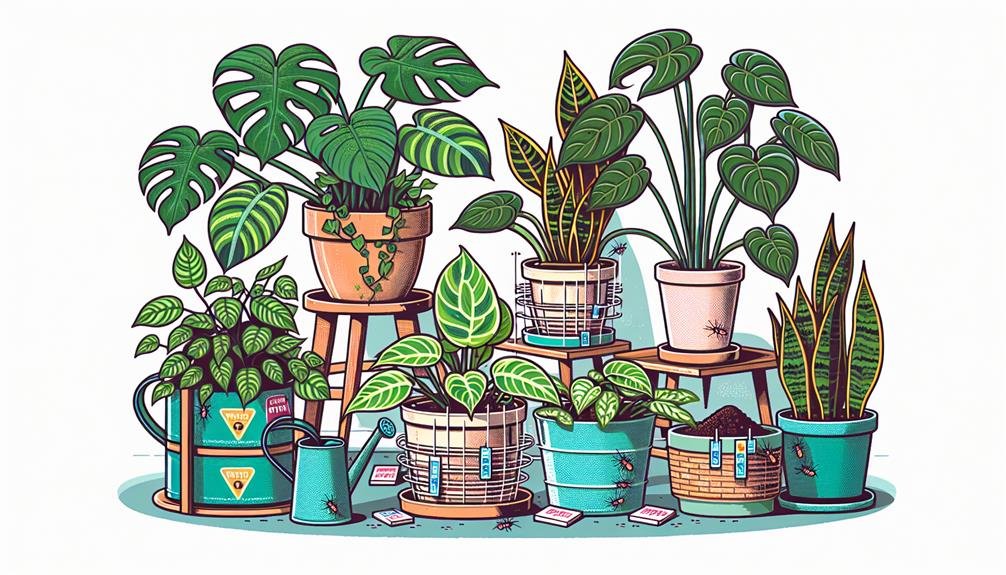
To keep those pesky fungus gnats at bay, start by mastering proper watering techniques.
But that's just the beginning; there are nine more expert tips waiting to help you safeguard your plants.
Each method is designed to tackle fungus gnats from various angles, giving you a comprehensive approach to prevent these tiny pests from wreaking havoc on your beloved greenery.
So, why not explore these practical strategies and safeguard your plants with confidence?
Proper Watering Techniques
To prevent fungus gnats, ensure you water your plants only when the top inch of soil is dry. Overwatering creates a damp environment that fungus gnats thrive in, so by allowing the soil to dry out slightly between waterings, you can discourage these pesky insects from infesting your plants.
When you do water, make sure to do so thoroughly but avoid letting excess water accumulate in the saucer beneath the pot.
Another important tip is to water your plants at the base, directly onto the soil, rather than on the leaves. Fungus gnats are attracted to moisture on plant surfaces, so keeping the foliage dry can help deter them. Additionally, consider using a watering can with a narrow spout to target the soil and minimize splashing.
Remember to check the moisture levels of your plants regularly by sticking your finger into the soil. If it feels dry at the top inch, then it's time to water. By following these simple watering techniques, you can significantly reduce the risk of fungus gnat infestations in your indoor garden.
Use Well-Draining Soil
Consider opting for well-draining soil to help prevent fungus gnats from infesting your plants. Fungus gnats thrive in moist environments, so using well-draining soil can significantly reduce the risk of infestation. Well-draining soil allows excess water to flow through the pot, preventing it from pooling at the bottom where gnats lay their eggs. When selecting soil for your plants, look for mixes that contain materials like perlite, sand, or bark to improve drainage.
Plants that sit in waterlogged soil are more susceptible to fungus gnat larvae feeding on the roots. By using well-draining soil, you create an environment that discourages these pests from laying eggs and establishing their population. Additionally, well-draining soil promotes healthy root growth by ensuring adequate aeration and preventing root rot caused by waterlogged conditions.

Before repotting your plants, check if the current soil is retaining too much moisture. If it is, consider repotting with a well-draining soil mix to safeguard your plants against fungus gnat infestations.
Implement Yellow Sticky Traps
To effectively combat fungus gnats, deploy yellow sticky traps in your indoor garden. These traps are a simple yet powerful tool in your arsenal against these pesky insects. Fungus gnats are attracted to the color yellow, making these traps highly effective in capturing them.
Place the yellow sticky traps near your plants, ensuring they're close to the soil surface where the gnats are most active. The bright yellow color will draw the gnats towards the traps, where they'll become stuck on the adhesive surface. By regularly monitoring and replacing the traps, you can significantly reduce the gnat population in your indoor garden.
Yellow sticky traps are non-toxic and safe to use around children and pets, making them an environmentally friendly option for gnat control. Incorporating these traps into your plant care routine can help prevent fungus gnat infestations before they become a widespread issue. Implementing yellow sticky traps is a proactive and effective measure to keep your indoor garden healthy and thriving.
Increase Ventilation Around Plants
Increasing ventilation around your plants can help prevent the buildup of excess moisture, creating an inhospitable environment for fungus gnats. Proper air circulation is vital in keeping fungus gnats at bay. These pests thrive in damp environments, making well-ventilated spaces less attractive to them. By allowing air to move freely around your plants, you reduce the chances of moisture accumulating in the soil, which is where fungus gnats lay their eggs.
To improve ventilation, consider placing a fan near your plants on a low setting. This gentle airflow can help dry out the soil surface and discourage fungus gnat activity. Additionally, make sure not to overcrowd your plants. Giving them ample space between each other promotes better airflow and reduces the risk of stagnant, humid conditions that fungus gnats love.
Avoid Over-Fertilizing
To prevent fungus gnats, be cautious about over-fertilizing your plants. Over-fertilizing can lead to excess nutrients in the soil, creating a welcoming environment for fungus gnat larvae to thrive. These pesky insects are attracted to damp, organic-rich soil, and over-fertilization exacerbates the moisture levels, making it an ideal breeding ground for them.
When fertilizing your plants, remember that more isn't always better. Follow the recommended dosage instructions on the fertilizer packaging and avoid the temptation to add extra thinking it will benefit your plants. Instead, stick to a regular fertilizing schedule and monitor your plants for any signs of nutrient deficiencies that may require adjustment in your fertilization routine.
Incorporate a balanced fertilizer that meets the specific needs of your plants without overloading them with excess nutrients. By practicing moderation and using fertilizers wisely, you can help prevent fungus gnats from infesting your plants and ensure their optimal growth and health.
Incorporate Beneficial Nematodes
In the battle against fungus gnats, one effective method is to incorporate beneficial nematodes into your plant care routine. Beneficial nematodes are microscopic roundworms that can help control the population of fungus gnat larvae in your soil. These tiny organisms are natural predators of fungus gnat larvae, effectively reducing their numbers and preventing future infestations.
To use beneficial nematodes, simply mix them with water according to the instructions on the package and apply the solution to the soil of your affected plants. The nematodes will then actively seek out fungus gnat larvae and other pests, effectively eliminating them without harming your plants or the environment.
It is important to note that beneficial nematodes work best in moist soil conditions, so be sure to water your plants thoroughly before and after application. Additionally, repeat the treatment as necessary to maintain control over the fungus gnat population in your plants. By incorporating beneficial nematodes into your plant care routine, you can effectively combat fungus gnats and keep your plants healthy and thriving.
Keep the Plant's Environment Clean
Maintain a tidy plant environment to deter fungus gnats and promote overall plant health. Start by regularly removing any dead leaves or decaying plant matter, as these provide breeding grounds for fungus gnats.
Make sure to clean up any spilled soil or standing water, as these moist areas attract these pests. Ensure that your plant pots have proper drainage to prevent water from accumulating at the bottom, as excess moisture creates a hospitable environment for fungus gnats to thrive.
Additionally, try not to overwater your plants, as soggy soil is a common attractant for these pests. Consider using a layer of sand or small pebbles on top of the soil to discourage adult fungus gnats from laying their eggs.
Utilize Cinnamon as a Natural Deterrent
Consider incorporating cinnamon as a natural deterrent for fungus gnats in your plant care routine. This common household spice not only adds flavor to your dishes but can also help keep those pesky gnats at bay.
Cinnamon has antifungal properties that can help prevent the growth of the fungus that attracts gnats. To use cinnamon as a deterrent, sprinkle a thin layer of cinnamon powder on the top layer of the soil in your potted plants. Make sure not to overdo it, as too much cinnamon can potentially harm your plants.
The scent of cinnamon is pleasant to humans but acts as a repellent for fungus gnats, making it a safe and natural way to protect your plants. Reapply the cinnamon as needed, especially after watering your plants.
Try Hydrogen Peroxide Soil Drench
For combating fungus gnats, try incorporating a hydrogen peroxide soil drench into your plant care routine. Hydrogen peroxide can be an effective solution for controlling fungus gnat larvae and eggs in the soil.
To create a hydrogen peroxide soil drench, mix one part 3% hydrogen peroxide with four parts water. Make sure the soil is already moist before applying the solution. Water your plants with the hydrogen peroxide mix until it begins to drain out of the bottom of the pot.
The hydrogen peroxide helps to kill the gnat larvae and disrupt their life cycle without harming your plants when used in moderation. Repeat this process every time you water your plants until the fungus gnat infestation is under control.
Remember not to overdo it, as excessive use of hydrogen peroxide can harm beneficial soil organisms. By incorporating hydrogen peroxide soil drenches into your plant care routine, you can effectively combat fungus gnats and keep your plants healthy.
Introduce Predatory Soil Mites
To further enhance your battle against fungus gnats, explore the option of introducing predatory soil mites into your plant environment. These tiny mites, such as Hypoaspis miles or Stratiolaelaps scimitus, are natural predators of fungus gnat larvae. Once introduced into the soil, predatory mites will actively hunt down and feed on the larvae, helping to control their population effectively.
Predatory soil mites are a safe and eco-friendly option for managing fungus gnats without the use of harmful chemicals. They don't pose any risks to your plants, pets, or family members, making them a great choice for natural pest control. Additionally, these mites can also target other pests like thrips, springtails, and root mealybugs, offering a comprehensive solution to various soil-borne issues.
To introduce predatory soil mites into your plant environment, you can purchase them from garden centers or online suppliers. Simply follow the instructions provided on how to release them into your soil. By incorporating these beneficial mites into your pest management strategy, you can effectively combat fungus gnats and promote a healthier growing environment for your plants.
Frequently Asked Questions
Can Fungus Gnats Cause Harm to Humans or Pets?
Fungus gnats are annoying pests that can cause harm to your houseplants by feeding on their roots. However, when it comes to humans or pets, these tiny insects are more of a nuisance than a threat. While they don't bite or sting, they can be bothersome and multiply quickly if not dealt with promptly.
Keeping your living space clean and dry can help prevent fungus gnats from becoming a bigger issue.
Are There Any Natural Predators That Can Help Control Fungus Gnat Populations?
When dealing with fungus gnats, natural predators can be a helpful solution. Beneficial insects like predatory mites or nematodes can assist in controlling the gnat population. These predators feed on the larvae of the gnats, effectively reducing their numbers.
Introducing these natural enemies into your environment can be a proactive and eco-friendly way to combat fungus gnats without resorting to chemical treatments.
How Long Does It Typically Take to See Results From Using Yellow Sticky Traps?
Typically, you can expect to see results from using yellow sticky traps within a few days. Once you set them up near your plants, these traps attract the adult fungus gnats and catch them as they land.
As the population of adult gnats decreases, you'll notice fewer flying around your plants. Keep an eye on the traps and replace them when they're full to maintain their effectiveness in controlling the gnat population.
Can Fungus Gnats Survive in Dry Environments?
In a dry environment, fungus gnats can still survive but may not thrive as well as in moist conditions. These pests prefer damp soil for breeding and laying eggs. While they can withstand dry periods, they're most active and reproduce faster in moist environments.
To combat them effectively, focus on reducing excess moisture in your plants and soil to discourage fungus gnat populations from growing.
Are There Any DIY Remedies for Preventing Fungus Gnats That Aren't Mentioned in the Article?
To prevent fungus gnats, you can make a DIY vinegar trap. Mix apple cider vinegar with a few drops of dish soap in a shallow container. The gnats are attracted to the vinegar but get stuck in the soap.
Also, try sprinkling a layer of sand on top of the soil to deter adult gnats from laying eggs. These remedies can help control the gnat population in your plants.
Conclusion
In conclusion, by following these 10 tips for preventing fungus gnats, you can ensure your plants remain healthy and pest-free. Remember to:
- Water your plants properly
- Use well-draining soil
- Keep the plant's environment clean
Implementing yellow sticky traps, increasing ventilation, and avoiding over-fertilizing are also key strategies.
Don't forget to try natural deterrents like cinnamon and hydrogen peroxide soil drench.
Lastly, consider introducing predatory soil mites for long-term prevention.
With these tips, you can effectively keep fungus gnats at bay.