
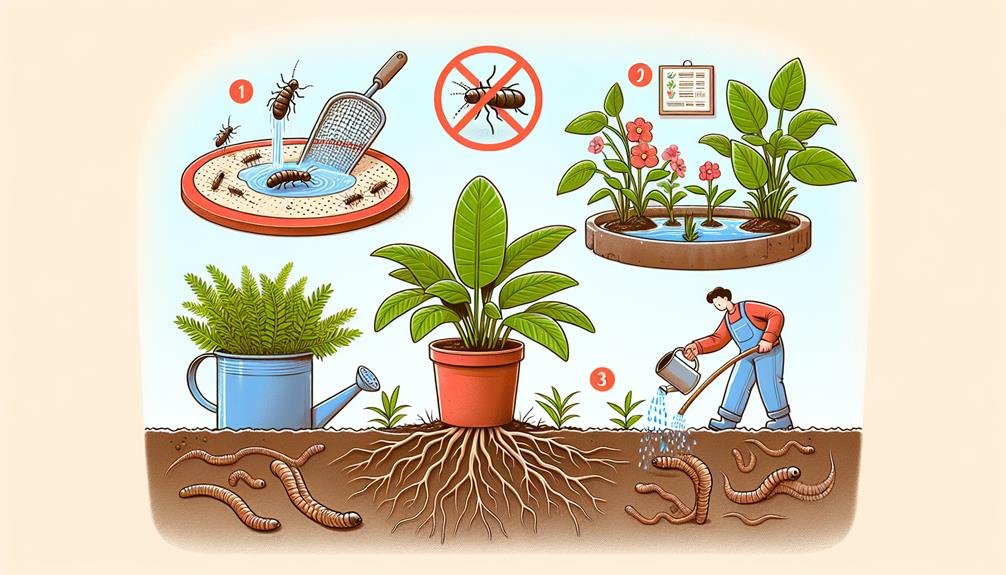
If you've ever felt like fungus gnats are as persistent as a dripping faucet, you're not alone in seeking effective methods to keep them at bay.
From implementing simple cultural practices to exploring natural remedies and soil management techniques, there are various approaches to consider.
But, before you reach for chemical control options, there's a wealth of strategies that could offer a more sustainable solution.
So, what are these methods, and how can you best protect your plants from these pesky pests?
Cultural Practices
To prevent fungus gnats, focus on implementing proper cultural practices in your gardening routine. Start by ensuring that your plants have proper drainage to avoid waterlogged soil, as fungus gnats thrive in moist environments. Overwatering is a common cause of these pests, so water your plants only when necessary and allow the top layer of soil to dry out between waterings.
Additionally, regularly remove any decaying plant matter from the soil surface, as this serves as a breeding ground for fungus gnats.
When potting or repotting plants, use a well-draining potting mix to discourage fungus gnat infestations. It's also essential to avoid over-fertilizing your plants, as excessive nutrients can attract these pests. Consider using sticky traps to catch adult fungus gnats and monitor their presence in your garden.
Lastly, maintaining good air circulation around your plants can help deter these pesky insects. By following these cultural practices, you can effectively prevent fungus gnats from becoming a problem in your garden.
Natural Remedies
Consider incorporating natural remedies into your gardening routine to combat fungus gnats effectively. One popular natural remedy is using a mixture of neem oil and water. Neem oil, derived from the neem tree, acts as a natural insecticide and disrupts the gnat's life cycle. Simply dilute neem oil in water and spray it on the soil surface to deter adult fungus gnats. Another effective remedy is introducing beneficial nematodes to the soil. These microscopic organisms seek out and feed on fungus gnat larvae, helping to reduce their population. You can purchase beneficial nematodes at most garden centers and follow the instructions for application.
Furthermore, sticky traps made from yellow or blue sticky paper are a non-toxic way to catch adult fungus gnats. Place these traps near your plants to attract and capture the flying insects. Additionally, cinnamon powder sprinkled on the soil can act as a natural fungicide, preventing the growth of fungus that attracts gnats. By incorporating these natural remedies into your gardening routine, you can effectively control and prevent fungus gnat infestations.

Soil Management
Effective soil management is key to preventing fungus gnat infestations in your garden. To keep these pesky insects at bay, start by using well-draining soil. Fungus gnats thrive in moist environments, so allowing the soil to dry out between waterings can help deter their presence. Ensure your pots have proper drainage holes to avoid waterlogged soil, which attracts fungus gnats looking to lay their eggs.
Another essential aspect of soil management is to avoid over-fertilizing your plants. Excess nutrients in the soil can attract fungus gnats, as they feed on organic matter breaking down in the soil. Follow the recommended fertilization guidelines for your plants to maintain a healthy balance in the soil.
Consider using sterilized soil or soilless mixes when planting to reduce the risk of introducing fungus gnat larvae into your garden. These mixes are less likely to contain the eggs or larvae of these pests, giving your plants a better chance at thriving fungus gnat-free. By implementing these soil management practices, you can effectively prevent fungus gnats from becoming a nuisance in your garden.
Monitoring and Trapping
For effective control of fungus gnats, begin by implementing monitoring and trapping methods in your garden. Monitoring involves keeping a close eye on your plants for any signs of adult fungus gnats or their larvae. Check the soil surface regularly for tiny, black flies hovering around or resting on the soil. Yellow sticky traps are excellent tools for trapping adult fungus gnats. Place these traps near the infested plants to capture the adult gnats and reduce their population.
Another effective trapping method is using potato slices. Cut a raw potato into thin slices and place them on the soil surface. The larvae of fungus gnats are attracted to the potato slices, making it easier for you to remove them from the soil. Remember to replace the potato slices every few days to keep the trapping process effective.
Chemical Control
To combat fungus gnats effectively, incorporating chemical treatments may be necessary in addition to monitoring and trapping methods. When dealing with a severe infestation or when other methods haven't provided sufficient control, pesticides can be a powerful tool. There are various chemical options available for combating fungus gnats, including insecticidal soaps, neem oil, pyrethrin-based sprays, and biological control agents like Bacillus thuringiensis (Bt). These chemicals work by disrupting the gnats' life cycle, killing larvae, or repelling adult gnats.
Before using any chemical treatments, it's crucial to carefully read and follow the instructions on the product label. Be sure to wear appropriate protective gear such as gloves and a mask to avoid direct contact with the chemicals. Additionally, consider the safety of using chemicals, especially in indoor environments or around children and pets. Always apply chemicals in well-ventilated areas and follow proper disposal guidelines for unused products. Remember to monitor the effectiveness of the chemical treatments and adjust your strategy as needed to prevent further infestations.
Frequently Asked Questions
Can Fungus Gnats Transmit Diseases to Humans?
Fungus gnats are pesky pests, and you may wonder if they can spread diseases to humans. These insects typically feed on fungi and decaying organic matter, so the risk of them transmitting diseases directly to humans is low.
However, they can still be a nuisance and may cause skin irritation in some cases.
To keep yourself safe, it's always a good idea to take measures to prevent fungus gnats from infesting your living spaces.
Is It Possible to Overwater Plants and Attract Fungus Gnats?
Overwatering plants can indeed attract fungus gnats. When you water your plants excessively, the excess moisture creates a favorable environment for fungus gnat larvae to thrive in the soil. This can lead to an infestation of these pesky insects around your plants.
Be mindful of your watering routine to prevent attracting fungus gnats and keep your plants healthy.
Do Fungus Gnats Prefer Certain Types of Plants Over Others?
Fungus gnats do prefer certain types of plants over others. Some plants, like those with moist soil and decaying organic matter, are more attractive to these pests.
If you notice fungus gnats around your plants, consider the plant species you have and their watering needs. Adjusting your watering schedule and soil moisture levels can help deter these gnats from infesting your plants.
How Long Do Fungus Gnats Typically Live?
Fungus gnats typically live for about one to two weeks as adults. During this time, they lay eggs in moist soil, leading to a new generation of gnats. These pests can quickly multiply if not controlled.
To prevent infestations, focus on eliminating their breeding grounds by keeping soil dry and avoiding overwatering your plants. This simple step can help reduce the lifespan and population of fungus gnats in your home or garden.
Are There Any Predators That Can Help Control Fungus Gnat Populations Naturally?
To naturally control fungus gnat populations, consider beneficial predators like predatory mites, nematodes, or rove beetles. These predators feed on the larvae and eggs of fungus gnats, reducing their numbers. Introducing these beneficial insects into your garden can help keep the fungus gnat population in check without the use of chemicals.
Additionally, maintaining proper soil moisture levels and avoiding overwatering can also deter fungus gnats from thriving in your plants.
Conclusion
In conclusion, preventing fungus gnats can be achieved through a combination of cultural practices, natural remedies, soil management, monitoring, trapping, and chemical control. By implementing these effective methods, you can keep your plants healthy and free from these pesky pests.
Remember to regularly inspect your plants, use sticky traps, and maintain proper watering practices to create an environment that's inhospitable to fungus gnats. Stay proactive and your plants will thank you for it!



