When it comes to dealing with aphids on your indoor plants, it's like navigating a maze with hidden traps at every turn. Imagine finding a solution that not only gets rid of these pesky pests but also prevents them from returning.
The three methods we are about to discuss will equip you with the knowledge needed to safeguard your plants and help them thrive. Let's explore these strategies that will have your indoor garden flourishing in no time.
Natural Aphid Repellents
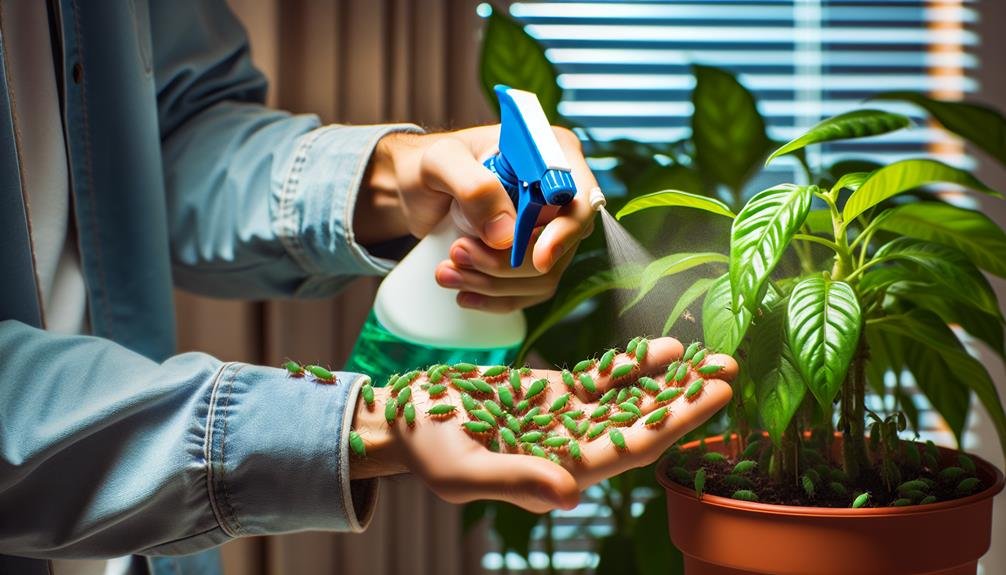
To naturally repel aphids from your indoor plants, try using a mixture of water and dish soap as a safe and effective solution. This simple concoction can be a powerful tool in your fight against these pesky insects. Start by mixing a few drops of dish soap with water in a spray bottle. Shake the solution gently to ensure it's well blended. Then, lightly spritz your plants, focusing on the undersides of leaves where aphids tend to hide. The soap disrupts the aphids' cell membranes, ultimately causing them to dehydrate and die.
Another natural repellent is neem oil, which not only deters aphids but also disrupts their growth and reproduction cycles. Dilute a small amount of neem oil in water and apply it to your plants following the instructions on the product label. Remember to test any new solution on a small area of your plant first to ensure it doesn't cause any damage.
Mechanical Removal Methods
If you're struggling to control aphids on your indoor plants, consider using mechanical removal methods to physically eliminate these pests without the need for chemicals.
One effective technique is to simply wipe the aphids off your plants with a damp cloth or sponge. Be sure to check the underside of leaves where aphids often hide.
Another method is to use a gentle stream of water from a hose to dislodge the aphids from your plants. Remember to do this outdoors or in a sink to prevent the aphids from spreading to other plants.
For heavier infestations, pruning heavily infested parts of the plant can help reduce the aphid population. Additionally, you can use sticky traps or tape around your plants to catch aphids that are crawling around.
Chemical Control Options
Consider utilizing insecticidal soaps or neem oil to effectively control aphids on your indoor plants. Insecticidal soaps work by suffocating the aphids on contact, while neem oil acts as a repellent and disrupts their feeding habits. When using insecticidal soaps, ensure complete coverage of the plant, including the underside of leaves where aphids often hide. Neem oil can also be effective in controlling other pests like spider mites and scales, offering a broader spectrum of protection for your indoor plants.
Before applying any chemical control option, always read and follow the instructions on the product label carefully to ensure proper application and safety for both your plants and yourself. It's important to note that repeated use of chemical controls can lead to the development of resistance in aphids and other pests, so it's advisable to rotate between different control methods and use them judiciously. Remember to monitor your plants regularly for any signs of aphid infestations and act promptly to keep them in check.

Frequently Asked Questions
Can Aphids Cause Harm to Humans if They Come Into Contact With Them?
Aphids can cause harm to humans if they come into contact with them. They can potentially transmit plant diseases, but direct harm to humans is rare. Nonetheless, it's always best to avoid contact with aphids to prevent any potential issues.
If you do come into contact with them, wash your hands thoroughly with soap and water. Remember, prevention is key when dealing with pests like aphids.
Are There Any Natural Predators That Can Help Control Aphid Populations on Indoor Plants?
When it comes to controlling aphid populations on indoor plants, natural predators can be a great help. Ladybugs, lacewings, and parasitic wasps are some of the beneficial insects that can prey on aphids and keep their numbers in check.
These natural predators can be a safe and effective way to manage aphids without resorting to chemical pesticides. Plus, they can help maintain a balanced ecosystem in your indoor garden.
Can Aphids Develop Resistance to Certain Mechanical Removal Methods Over Time?
Yes, aphids can develop resistance to certain mechanical removal methods over time. They may adapt to repeated physical disturbances, making these methods less effective in the long run.
It's important to vary your approach and combine different strategies to prevent aphids from building up resistance. Regular monitoring and adjusting your control methods can help combat this issue and keep your indoor plants healthy.
Are There Any Specific Indoor Plant Species That Are More Prone to Aphid Infestations?
Certain indoor plant species are more prone to aphid infestations. Factors like plant physiology, humidity levels, and location can influence susceptibility. Checking your plants regularly for signs of aphids and taking preventive measures can help combat infestations.
Keep an eye on vulnerable plant species to catch early signs of aphids and address them promptly. Regular maintenance and proper care can also reduce the risk of aphid problems on your indoor plants.
Can Aphids Transmit Diseases to Indoor Plants That Could Affect Their Overall Health and Growth?
Aphids can transmit diseases to indoor plants, impacting their health and growth. It's essential to monitor for signs of aphid infestations regularly.
These pests can weaken plants by sucking out their sap and secreting substances that may lead to mold growth. Taking proactive measures to control aphids, such as using natural predators or insecticidal soaps, can help prevent the spread of diseases and protect your indoor plants' overall well-being.
Conclusion
So there you have it, three effective ways to combat aphids on your indoor plants.
By using natural repellents, mechanical removal methods, or chemical control options, you can keep these pesky pests at bay and ensure your plants stay healthy and thriving.
Remember to regularly inspect your plants for any signs of aphids and take action promptly to prevent infestations.
Happy gardening!