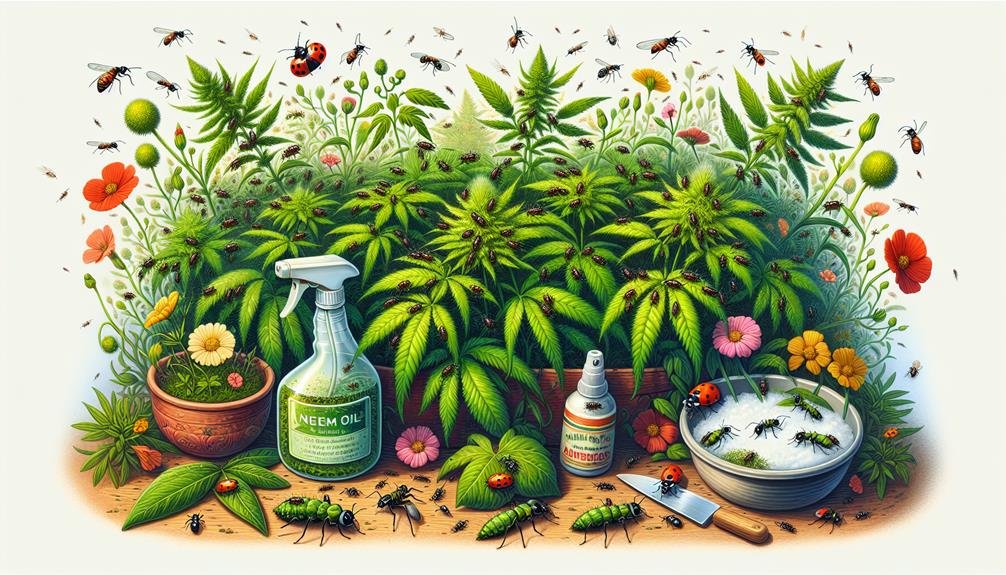
Imagine your garden as a delicate ecosystem, with aphids lurking like unwelcome guests at a party. You wonder how to handle these pests without harming the balance of your green oasis.
There are natural remedies that can help you tackle aphids effectively, providing solutions that are gentle on your plants and the environment. From homemade sprays to beneficial insects, a variety of methods exist to combat aphids naturally.
Let's explore these remedies together and discover how you can restore harmony to your garden.
Homemade Aphid Repellent Sprays
To effectively deter aphids from your plants, consider concocting your own homemade repellent sprays. These sprays are easy to make and can be highly effective in protecting your garden.
One popular recipe involves mixing water, dish soap, and a few drops of neem oil. The soap helps suffocate the aphids, while neem oil acts as a natural insecticide. Simply spray this mixture on your plants, focusing on the undersides of leaves where aphids tend to gather.
Another homemade spray option is a garlic and cayenne pepper solution. By blending garlic cloves and cayenne pepper with water, you create a potent repellent that deters aphids with its strong odor and taste. Remember to strain the mixture before spraying to avoid clogging your spray bottle. Additionally, incorporating essential oils like peppermint or eucalyptus into your homemade sprays can further enhance their effectiveness against aphids.
Experiment with different recipes to find the one that works best for your plants. Homemade repellent sprays offer a natural and cost-effective way to combat aphids without resorting to harsh chemicals.
Beneficial Insects for Aphid Control
Consider introducing beneficial insects to your garden as a natural solution for controlling aphids. Ladybugs, also known as lady beetles or ladybird beetles, are one of the most well-known beneficial insects that feed on aphids. They can consume a large number of aphids in a short period, helping to keep aphid populations in check. Lacewings are another beneficial insect that preys on aphids in their larval stage. These delicate insects are effective predators and can significantly reduce aphid numbers in your garden.
Parasitic wasps are tiny insects that lay their eggs inside aphids. As the eggs hatch, the larvae feed on the aphids, ultimately killing them. This natural form of pest control can be highly effective in managing aphid infestations. Hoverflies, also called flower flies, are beneficial insects whose larvae feed on aphids. By attracting hoverflies to your garden, you can help control aphid populations in a non-toxic and eco-friendly manner.
Companion Planting for Aphid Prevention
Introducing companion plants alongside your target crops can effectively deter aphids and promote a healthier garden ecosystem. Certain plants, such as marigolds, chives, and garlic, act as natural repellents for aphids due to their strong scents or chemical properties. By interplanting these companions with your susceptible crops, you create a natural barrier that can help keep aphids at bay.

Marigolds, with their pungent odor, are known to repel aphids while also attracting beneficial insects like ladybugs, which feed on aphids. Chives and garlic contain compounds that deter aphids and other pests, making them excellent companions in the garden. Additionally, planting mint near susceptible crops can help deter aphids due to its strong fragrance.
Companion planting not only helps in aphid prevention but also supports overall garden health by promoting biodiversity and attracting beneficial insects. Consider incorporating these natural aphid deterrents into your garden to create a more balanced and thriving environment for your plants.
Essential Oils for Aphid Deterrence
When looking to expand your arsenal against aphids, exploring the use of essential oils can be a potent and natural strategy for deterrence. Certain essential oils have properties that are effective at repelling aphids and other pests. Peppermint oil, for example, has a strong scent that aphids find unpleasant, making it an excellent option for keeping them away from your plants.
Similarly, rosemary oil is known for its ability to deter aphids while also attracting beneficial insects that can help control aphid populations naturally.
To create a simple aphid deterrent spray using essential oils, mix a few drops of peppermint or rosemary oil with water in a spray bottle. Shake well and then lightly mist your plants, focusing on areas where aphids tend to gather. Reapply the spray every few days or after rainfall to ensure its effectiveness.
Using essential oils for aphid deterrence is a safe and eco-friendly alternative to chemical pesticides, making it a popular choice among organic gardeners. Experiment with different oils to find the ones that work best for your specific aphid problems and enjoy a pest-free garden the natural way.
Natural Aphid Predators
Natural aphid predators play a crucial role in maintaining a balanced ecosystem within your garden by naturally controlling aphid populations. Ladybugs, also known as ladybirds or lady beetles, are among the most well-known aphid predators. These colorful insects can consume a large number of aphids during their larval and adult stages. Lacewings are another beneficial predator that feed on aphids in both their larval and adult forms. Their voracious appetite for aphids makes them valuable allies in keeping aphid numbers in check.
Parasitic wasps are tiny insects that lay eggs inside aphids, eventually leading to the death of the aphid as the wasp larvae develop. Hoverflies, resembling small bees, also contribute to aphid control by preying on them. Additionally, spiders, such as crab spiders and jumping spiders, feed on aphids when they come into contact with their webs or hunting paths. By encouraging these natural predators to inhabit your garden, you can effectively manage aphid infestations without the need for harmful chemicals.
Frequently Asked Questions
How Do Aphids Reproduce and Spread in a Garden Environment?
You'll find that aphids reproduce quickly and spread easily in a garden environment. These tiny pests reproduce asexually, with females giving birth to live offspring without mating. They can rapidly increase in numbers, especially in warm weather.
Winged aphids can also spread to new plants, carrying diseases and causing damage as they feed on sap. Keeping an eye out for these signs and acting promptly can help prevent infestations.
Are There Any Natural Predators of Aphids That Are Harmful to Other Beneficial Insects in the Garden?
When it comes to natural predators of aphids that could potentially harm other beneficial insects in your garden, it's essential to be cautious. Some predators like ladybugs, lacewings, and parasitic wasps are effective at controlling aphid populations without causing harm to other beneficial insects.
However, certain predators, such as certain species of ants, can disrupt the balance by protecting aphids for their honeydew secretion, leading to potential harm to beneficial insects.
Can Certain Types of Plants Attract Aphids More Than Others?
Certain types of plants can indeed attract aphids more than others. Factors like plant species, color, and scent can influence aphid attraction. For instance, some aphids are drawn to plants with tender new growth or high nitrogen content.
Understanding which plants are more likely to attract aphids can help you implement preventative measures to protect your garden. Remember to monitor and take action promptly if you notice aphid infestations.
Are There Any Specific Essential Oils That Are More Effective at Deterring Aphids?
When it comes to deterring aphids, certain essential oils can be more effective. Peppermint, neem, and rosemary oils are known for their ability to repel these pests. These oils contain compounds that aphids find unpleasant, making them great natural remedies.
How Long Does It Typically Take for Homemade Aphid Repellent Sprays to Show Results in Controlling Aphid Populations?
When using homemade aphid repellent sprays, it usually takes around 1 to 2 weeks to see noticeable results in controlling aphid populations.
Be patient and consistent in applying the spray to affected plants.
Results may vary depending on the severity of the infestation and the specific ingredients used in the repellent.
Keep monitoring the plants for any changes and adjust your spraying routine as needed for best outcomes.
Conclusion
In conclusion, there are several effective natural remedies for controlling aphids in your garden.
From homemade repellent sprays to introducing beneficial insects and companion planting, there are plenty of options to choose from.
Essential oils and natural predators can also help deter aphids and keep your plants healthy.
By incorporating these natural remedies into your gardening routine, you can effectively manage aphid infestations without relying on harmful chemicals.