
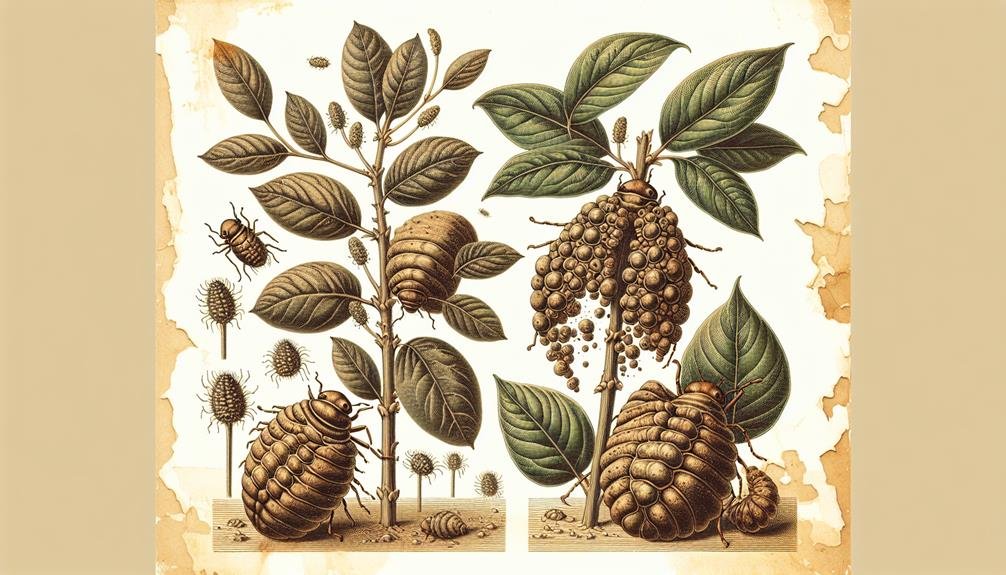
When it comes to managing scale insects, the historical journey is both fascinating and enlightening. From ancient remedies passed down through generations to the innovative strategies of the modern era, each period has contributed its unique perspective on combating these persistent pests.
As you explore the evolution of techniques from medieval times to the Industrial Revolution and beyond, you will uncover surprising insights into how civilizations have grappled with the challenge of scale insect control.
Ancient Remedies for Scale Insects
If you ever find yourself dealing with scale insects, consider ancient remedies that have been used for centuries to combat these pests effectively. One of the most renowned methods is using neem oil, a natural insecticide derived from the neem tree. Neem oil disrupts the growth and development of scale insects, ultimately leading to their demise. Additionally, introducing natural predators like ladybugs or lacewings to your garden can help keep scale populations in check. These predators feast on scale insects, reducing their numbers without the need for pesticides.
Another ancient remedy is creating a solution with water and mild dish soap to spray on the affected plants. This solution works by suffocating the scale insects, causing them to detach from the plant surface. Furthermore, a mixture of garlic and mineral oil can act as a deterrent for scale insects, preventing them from infesting your plants in the first place. By incorporating these ancient remedies into your pest management routine, you can effectively combat scale insects while minimizing the use of harsh chemicals.
Medieval Techniques and Strategies
During the medieval period, combating scale insects involved implementing various techniques and strategies that relied on natural and resourceful solutions. Farmers and gardeners often turned to manual methods to control scale insect infestations. One common approach was handpicking the insects off plants, a labor-intensive but effective method. Additionally, using natural predators such as ladybugs or lacewings to control scale populations was a prevalent strategy. Medieval agricultural texts also mention the use of plant-based remedies like garlic, neem oil, or soap solutions to deter and eliminate scale insects. Crop rotation and intercropping were techniques used to disrupt the life cycle of scale insects and prevent widespread infestations.
Furthermore, medieval practitioners experimented with companion planting, where certain plant combinations were believed to repel scale insects naturally. These strategies, although rudimentary by modern standards, laid the foundation for integrated pest management practices still used today. By combining these natural techniques with observational knowledge, medieval farmers were able to mitigate the damage caused by scale insects and protect their crops.
Renaissance Era Approaches
The approach to combating scale insects shifted during the Renaissance era, introducing innovative methods that built upon the foundations laid by medieval techniques and strategies. In this period, there was a growing interest in the study of natural history and botany, leading to a deeper understanding of scale insects and their impact on crops. Renaissance scholars began to experiment with various substances to control scale populations, such as using tobacco extracts and arsenic solutions. Additionally, advancements in agricultural practices allowed for more targeted applications of these control methods.
One notable figure during this time was Ulisse Aldrovandi, an Italian naturalist who conducted extensive research on scale insects and documented various species. His work laid the groundwork for future studies on scale insect management. Furthermore, botanical gardens and agricultural societies became important hubs for exchanging knowledge on pest control strategies.
The Renaissance era marked a significant shift towards more systematic and scientific approaches to managing scale insects, setting the stage for further developments in the field.
Industrial Revolution Impact on Management
The Industrial Revolution profoundly transformed the approach to managing scale insects, revolutionizing agricultural practices and pest control methods. With the introduction of machinery and mass production during this period, new tools and techniques were developed to combat scale insects more effectively. The increased efficiency in farming practices allowed for larger-scale cultivation, inadvertently creating more hospitable environments for scale insects to thrive. As a result, the need for pest control methods became more urgent.

During the Industrial Revolution, the use of chemical pesticides became more prevalent. Substances like arsenic and sulfur were commonly employed to combat scale insects, providing a more targeted approach to pest management. Additionally, advancements in transportation facilitated the distribution of these pesticides on a larger scale, reaching more farms and agricultural areas in need of protection.
Modern Innovations in Scale Insect Control
Innovative technologies have revolutionized the control of scale insects in modern agriculture. One of the most significant advancements is the development of biological control methods. Predatory insects such as ladybugs and lacewings are now being used to naturally regulate scale insect populations, reducing the need for chemical pesticides.
Furthermore, the use of pheromone traps has proven to be an effective way to monitor and manage scale insect infestations. These traps release synthetic pheromones that attract male insects, disrupting their mating patterns and ultimately reducing the overall population.
Another modern innovation is the application of neem oil, a natural insecticide derived from the neem tree. Neem oil works by disrupting the growth and development of scale insects, offering a more environmentally friendly alternative to traditional chemical pesticides.
Additionally, advancements in precision agriculture technology have allowed farmers to detect scale insect infestations early on. Drones equipped with high-resolution cameras can identify affected areas, enabling targeted treatment and minimizing the spread of infestations. These modern innovations highlight the ongoing efforts to develop sustainable and effective solutions for managing scale insects in agriculture.
Frequently Asked Questions
How Do Scale Insects Impact Ecosystems Beyond Just Their Host Plants?
Scale insects impact ecosystems beyond host plants by disrupting the natural balance. They can reduce plant vitality, making them more susceptible to diseases and other pests. This weakening effect ripples through the food chain, affecting animals dependent on those plants.
Additionally, scale insects produce honeydew, a sticky substance that promotes sooty mold growth, further harming plant health. Ultimately, these pests can alter ecosystems by reducing biodiversity and disrupting ecosystem functions.
Are There Any Cultural or Religious Beliefs Associated With Scale Insects in History?
In history, cultural and religious beliefs have often intertwined with nature, including scale insects. Various societies viewed these insects as symbols of resilience or destruction, depending on the context.
Some cultures even incorporated scale insects into rituals or folklore, attributing spiritual significance to them. Understanding these historical perspectives can offer insights into the diverse ways in which humans have interpreted and interacted with these tiny creatures over time.
Can Scale Insects Be Used for Beneficial Purposes in Agriculture or Other Industries?
Sure, scale insects can actually be beneficial in agriculture and other industries. Some scale insects produce substances like shellac and dye that have commercial uses.
Additionally, certain species of scale insects are natural predators of pest insects, helping to control their populations.
What Is the Role of Climate Change in the Spread of Scale Insects?
Climate change plays a significant role in the spread of scale insects. As temperatures rise and weather patterns shift, these pests can expand their range to new areas. Warmer conditions can also speed up their life cycles, leading to faster reproduction rates.
Additionally, changes in precipitation levels can create more hospitable environments for scale insects to thrive. It's crucial to monitor and adapt to these climate-related factors to effectively manage scale insect populations.
Are There Any Potential Long-Term Effects of Scale Insect Management Practices on the Environment?
When managing scale insects, it's important to consider potential long-term effects on the environment. Overusing pesticides can harm beneficial insects and disrupt the ecosystem. Changing habitat and food sources can also impact local wildlife.
To minimize these risks, opt for integrated pest management techniques that are sustainable and safe for the environment. Remember, your choices today can have lasting consequences on the ecosystem.
Conclusion
You have learned about the historical evolution of managing scale insects, from ancient remedies to modern innovations.
Throughout history, people have developed various techniques and strategies to control these pests. Today, thanks to advancements in technology and science, we've more effective ways to combat scale insects and protect our plants.
By understanding the past approaches and building upon them, we can continue to improve our management of scale insects in the future.



