Are whiteflies turning your indoor oasis into a battleground?
Discover effective strategies to combat these pesky pests and ensure your plants thrive.
From simple identification techniques to eco-friendly repellents, a holistic approach awaits to reclaim your foliage.
Let's explore the secrets to safeguarding your indoor greenery and restoring peace to your plant haven.
Identifying Whitefly Infestations
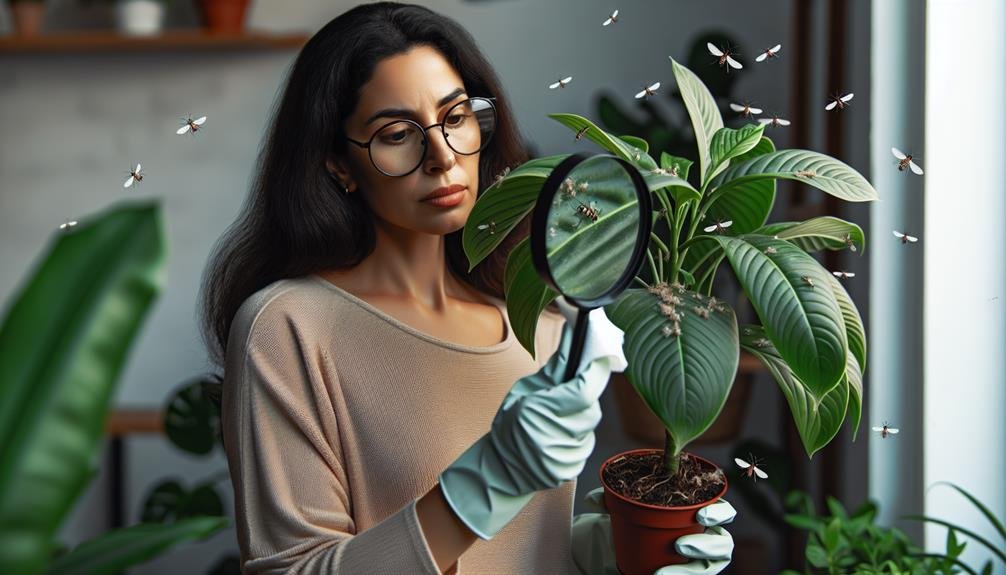
To identify whitefly infestations, examine the undersides of plant leaves for tiny white insects and sticky honeydew residue. Whiteflies are sneaky pests that often go unnoticed until their population grows. These tiny insects resemble specks of dandruff but will flutter around when disturbed. The undersides of leaves are their favorite hiding spot, so be thorough in your inspection.
When checking for whiteflies, pay close attention to any sticky residue left behind. This sugary substance, known as honeydew, is a telltale sign of whitefly presence. It can attract ants and promote the growth of sooty mold, further damaging your plants. If you spot whiteflies or honeydew, it's essential to take action promptly to prevent the infestation from spreading.
Regularly monitoring your plants for whiteflies is crucial for early detection and effective management. By staying vigilant and acting quickly, you can protect your indoor foliage from these troublesome pests.
Natural Predators for Whitefly Control
When managing whiteflies on indoor foliage, utilizing natural predators can be an effective method for controlling infestations. Ladybugs, lacewings, and parasitic wasps are examples of beneficial insects that prey on whiteflies.
Ladybugs, also known as lady beetles, are voracious predators of whiteflies in both their larval and adult stages. Lacewings, with their delicate appearance, are formidable predators of whiteflies in their larval stage. These insects not only consume whiteflies but also their eggs, helping to reduce the population.
Parasitic wasps, on the other hand, lay their eggs inside whitefly nymphs, eventually killing them. This biological control method is environmentally friendly and can help maintain a natural balance in your indoor garden.

Introducing these natural predators to your indoor foliage can help keep whitefly populations in check without the use of harmful chemicals. Remember to provide a suitable environment for these beneficial insects by avoiding pesticides that could harm them. By incorporating natural predators, you can effectively manage whiteflies while promoting a healthy ecosystem in your indoor garden.
Homemade Whitefly Repellents
Considering the natural approach to managing whiteflies with beneficial insects, another effective method is creating homemade whitefly repellents using common household items.
You can make a simple whitefly repellent spray by mixing water with a few drops of dish soap. The soapy water solution can be sprayed directly onto the foliage where whiteflies are present. The soap works by suffocating the whiteflies and disrupting their cell membranes, ultimately leading to their demise.
Another homemade option is a mixture of water and garlic. Blend a few garlic cloves with water, strain the mixture, and then spray it onto your plants. Whiteflies are repelled by the strong odor of garlic.
Additionally, a solution of neem oil and water can act as a natural repellent for whiteflies. Neem oil disrupts the growth and development of whiteflies, helping to keep their population under control.
Using Neem Oil as a Whitefly Deterrent
For effective control of whiteflies on your indoor foliage, consider using neem oil as a natural deterrent. Neem oil is derived from the seeds of the neem tree and has insecticidal properties that can help repel whiteflies.
To use neem oil as a whitefly deterrent, mix a small amount of neem oil with water in a spray bottle and apply it to the affected plants. Make sure to cover both the tops and bottoms of the leaves as whiteflies tend to hide on the undersides.
Neem oil works by disrupting the whiteflies' feeding and reproduction, ultimately reducing their population on your indoor plants. Regular applications of neem oil can help keep whiteflies at bay and prevent infestations from worsening. It's important to follow the instructions on the neem oil product label to ensure safe and effective use.
When using neem oil, remember to test it on a small section of the plant first to check for any adverse reactions. Additionally, consider applying the neem oil in the evening to prevent any potential sun damage to your plants. By incorporating neem oil into your whitefly management routine, you can help protect your indoor foliage from these pesky pests.
Implementing Proper Plant Care Practices
To maintain the health of your indoor foliage and further combat whiteflies, implementing proper plant care practices is key. Start by regularly inspecting your plants for any signs of whiteflies or other pests. By catching infestations early, you can prevent them from spreading and causing extensive damage. Ensure that your plants receive adequate sunlight, water, and nutrients to promote strong growth and resilience against whitefly attacks.
Proper watering is crucial in preventing whiteflies, as overwatering can create a humid environment that attracts these pests. Make sure your plants are in well-draining pots and allow the soil to dry out slightly between waterings. Additionally, regularly cleaning your indoor plants and wiping down their leaves can help remove whitefly eggs and discourage infestations.
Consider using natural predators like ladybugs or lacewings to keep whitefly populations in check. These beneficial insects can help control whiteflies without the use of harmful chemicals. Lastly, maintaining good air circulation around your plants can also deter whiteflies from settling in. By following these plant care practices, you can create a less hospitable environment for whiteflies and promote the overall health of your indoor foliage.
Frequently Asked Questions
Can Whiteflies Infest Both Indoor and Outdoor Plants?
Yes, whiteflies can infest both indoor and outdoor plants. These tiny insects can be a nuisance to your plants, causing damage by feeding on plant sap and spreading diseases.
To manage whiteflies effectively, it's important to regularly inspect your plants for signs of infestation and take appropriate measures, such as using natural predators, insecticidal soaps, or oils.
Keeping a close eye on your plants can help prevent whitefly infestations.
Are There Any Specific Plant Species That Are More Prone to Whitefly Infestations?
Certain plant species are more prone to whitefly infestations than others. Factors like plant size, leaf texture, and sap production can make some plants more attractive to whiteflies. Keep an eye on plants like tomatoes, peppers, poinsettias, hibiscus, and fuchsias, as they're commonly targeted by these pests.
Regularly inspecting your plants and taking preventive measures can help manage whitefly infestations effectively.
Can Whiteflies Cause Damage to Furniture or Other Items in the Home?
Yes, whiteflies can cause damage to furniture and other items in your home. They excrete a sticky substance called honeydew, which can attract mold and make surfaces sticky.
This can lead to discoloration and damage to wooden furniture, fabrics, and other household items.
It's important to address whitefly infestations promptly to prevent harm to your belongings and maintain a healthy indoor environment.
How Do Whitefly Infestations Affect the Overall Health of Indoor Plants?
Whitefly infestations can severely impact the overall health of your indoor plants. These pests feed on plant sap, weakening the plant and causing stunted growth, yellowing leaves, and leaf drop.
Additionally, whiteflies can transmit plant viruses, further compromising the plant's health. Regular monitoring and prompt action are essential to prevent whitefly damage and maintain the well-being of your indoor foliage.
Are There Any Risks to Using Neem Oil as a Whitefly Deterrent, Such as Toxicity to Pets or Children?
When using neem oil as a whitefly deterrent, be cautious about potential risks like toxicity to pets or children. It's essential to follow instructions carefully and store the product out of reach of kids and animals.
While neem oil is generally considered safe when used correctly, it's always wise to take precautions to prevent any potential harm to your loved ones. Stay informed and keep safety a top priority when dealing with pest control solutions.
Conclusion
In conclusion, managing whiteflies on indoor foliage can be challenging, but with the right strategies, it's possible to control their infestations effectively.
By identifying whitefly infestations early, encouraging natural predators, using homemade repellents, incorporating neem oil, and practicing proper plant care, you can keep your indoor plants healthy and whitefly-free.
Remember to stay vigilant and proactive in your efforts to protect your plants from these pesky pests.