You've diligently cared for your indoor garden, but those pesky whiteflies just won't quit.
Imagine a scenario where a plant enthusiast like yourself discovered a simple yet effective solution to rid their plants of these tiny nuisances.
What if there was a secret method that could finally help you reclaim your plant paradise?
Stay tuned as we unravel the mystery behind eliminating whiteflies on indoor plants and restoring your green oasis to its former glory.
Understanding Whiteflies: The Silent Invaders
If you notice tiny white insects fluttering around your indoor plants, you may have encountered whiteflies – the silent invaders wreaking havoc on your greenery. These minuscule pests, often measuring just 1/16 of an inch, may seem harmless at first glance, but their impact can be devastating. Whiteflies feed on plant sap, causing leaves to turn yellow, wither, and eventually die. Moreover, they excrete a sticky substance called honeydew, which can lead to the growth of black mold, further harming your plants.
One of the most challenging aspects of dealing with whiteflies is their rapid reproduction rate. A single female whitefly can lay hundreds of eggs on the undersides of leaves, quickly escalating the infestation. These eggs hatch into nymphs, which mature into adult whiteflies in just a few weeks, perpetuating the cycle.
To effectively combat whiteflies, it's crucial to understand their behavior, lifecycle, and preferred host plants. By gaining insight into these silent invaders, you can better equip yourself to protect your indoor greenery from their destructive presence.
Identifying Signs of Whitefly Infestation
When inspecting your indoor plants for signs of whitefly infestation, look for tiny white insects fluttering around the leaves and stems. These pests are about 1/16 of an inch long and have a moth-like appearance.
One of the most noticeable signs of whiteflies is the presence of sticky honeydew on the plant leaves. This sticky substance is excreted by the whiteflies as they feed on the plant sap, and it can attract other insects like ants.
Additionally, you may observe yellowing or wilting of the leaves, which is caused by the whiteflies draining the plant's nutrients. If you gently shake the plant, you might see a cloud of whiteflies flying around before settling back onto the leaves.

Another indication of whitefly infestation is the development of black sooty mold on the honeydew-coated leaves. By recognizing these signs early on, you can take action to eliminate whiteflies and protect your indoor plants.
The Secret Weapon: Natural Pest Control
Consider incorporating beneficial insects to naturally control whitefly infestations on your indoor plants. Beneficial insects like ladybugs, lacewings, and parasitic wasps are natural predators of whiteflies. Ladybugs, for instance, are voracious eaters of whitefly eggs and larvae, helping to keep their populations in check.
Lacewings, on the other hand, feed on whitefly eggs and young nymphs, preventing infestations from spiraling out of control. Parasitic wasps are another excellent option; they lay their eggs inside whitefly nymphs, eventually killing them.
Introducing these beneficial insects into your indoor garden can be an effective and environmentally friendly way to combat whiteflies without resorting to chemical pesticides. You can purchase these insects from garden centers or online suppliers. Once released, they'll help maintain a natural balance in your plant ecosystem by preying on whiteflies and other pests.
Step-by-Step Guide to Eliminating Whiteflies
To effectively eliminate whiteflies on your indoor plants, follow this step-by-step guide for successful pest control.
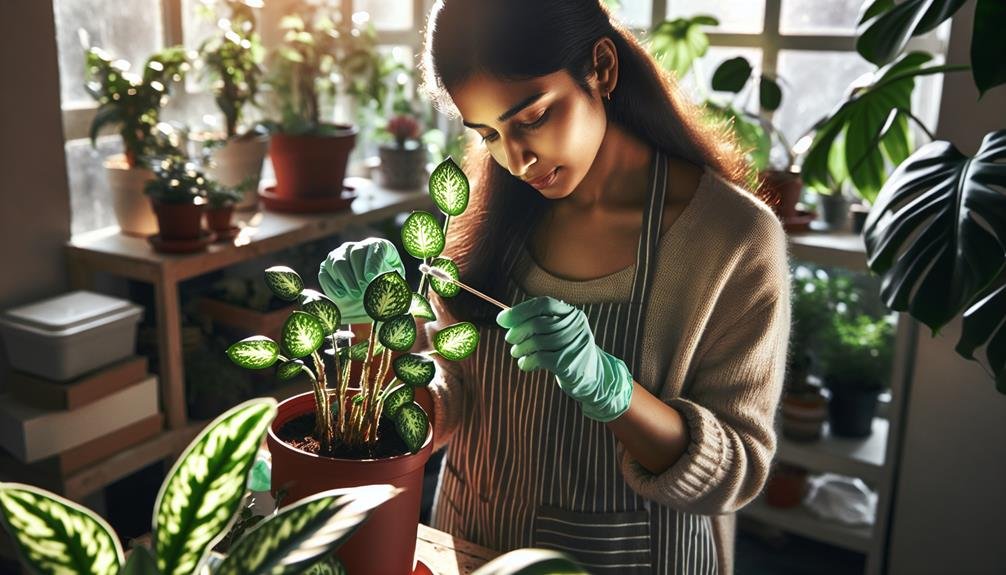
First, inspect your plants regularly for any signs of whiteflies. Look for tiny white insects flying around the leaves or a sticky substance called honeydew on the plants.
Next, gently shake the infested plants to disturb the whiteflies and make them fly around. This will make it easier to target and eliminate them.
Then, prepare a solution of water and mild liquid soap in a spray bottle. Spray this solution on both the upper and lower sides of the leaves where the whiteflies are present. The soap will suffocate the whiteflies.
After spraying, wait for a few hours and then rinse the plants with water to remove any soap residue.
Repeat this process every few days until the whiteflies are completely gone. Additionally, consider introducing natural predators like ladybugs to help keep the whitefly population in check.
Maintaining Whitefly-Free Indoor Plants
Inspect your indoor plants regularly for any signs of whiteflies to ensure they remain pest-free. Whiteflies are tiny, white insects that can quickly infest your plants if left unchecked.
To maintain whitefly-free indoor plants, start by examining the undersides of leaves where whiteflies usually congregate. If you notice any white, powdery residue or tiny flying insects, it's likely you have a whitefly issue.
In addition to visual inspections, consider using yellow sticky traps placed near your plants to catch adult whiteflies. These traps are an effective monitoring tool and can help reduce whitefly populations.
Furthermore, practice good plant hygiene by removing any dead leaves or debris where whiteflies can lay eggs. Regularly washing your plants with a gentle spray of water can also help deter whiteflies.
Frequently Asked Questions
Can Whiteflies Harm Humans or Pets if They Are Present on Indoor Plants?
Whiteflies can pose a risk to humans and pets if they're present on indoor plants. These tiny insects can irritate the skin and cause allergic reactions.
Additionally, whiteflies can transmit plant viruses which may harm pets if they ingest an infected plant. It's important to address the presence of whiteflies promptly to ensure the health and safety of both your family and pets.
Are There Any Specific Indoor Plants That Are More Prone to Whitefly Infestations?
Indoor plants vary in susceptibility to whitefly infestations. Certain plants like poinsettias, hibiscus, and fuchsia are more prone to attracting these pests.
Keeping an eye out for signs of whiteflies and taking preventive measures can help protect your indoor plants. Regularly inspect your plants for any whitefly presence and consider implementing strategies to deter these insects from infesting your greenery.
How Long Does It Typically Take for Whiteflies to Reappear After Using the Secret Method for Elimination?
After using the secret method for elimination, whiteflies may reappear within a few weeks. To prevent this, keep monitoring your plants regularly for any signs of whitefly activity.
Consider implementing preventive measures such as maintaining proper plant hygiene and using natural predators like ladybugs.
Are There Any Natural Predators That Can Help Control Whitefly Populations Indoors?
To control whitefly populations indoors, natural predators like ladybugs and lacewings can be effective. These beneficial insects feed on whiteflies and help keep their numbers in check. By introducing them to your indoor plants, you can create a more balanced ecosystem that can help control whitefly infestations.
Remember to provide a suitable environment for these predators to thrive and continue managing the whitefly population.
Can Whiteflies Develop Resistance to the Natural Pest Control Methods Over Time?
Over time, whiteflies can develop resistance to natural pest control methods. This resistance can occur as a result of genetic mutations in the whitefly population.
When exposed to the same control method repeatedly, whiteflies that possess traits allowing them to survive are more likely to reproduce, passing on their resistant genes.
This process can lead to a decrease in the effectiveness of the natural pest control method against whiteflies.
Conclusion
So, now you know the secret method to eliminate whiteflies on your indoor plants. By using natural pest control methods and following our step-by-step guide, you can keep your plants healthy and free from these pesky invaders.
Remember to regularly inspect your plants for any signs of whitefly infestation and continue to maintain a whitefly-free environment.
With a little effort and consistency, you can enjoy beautiful, thriving indoor plants all year round!