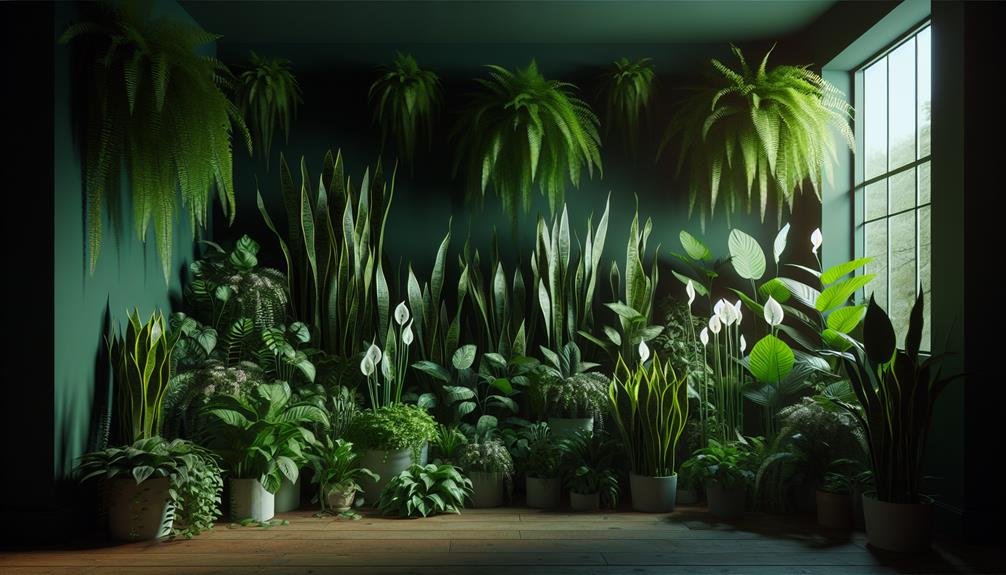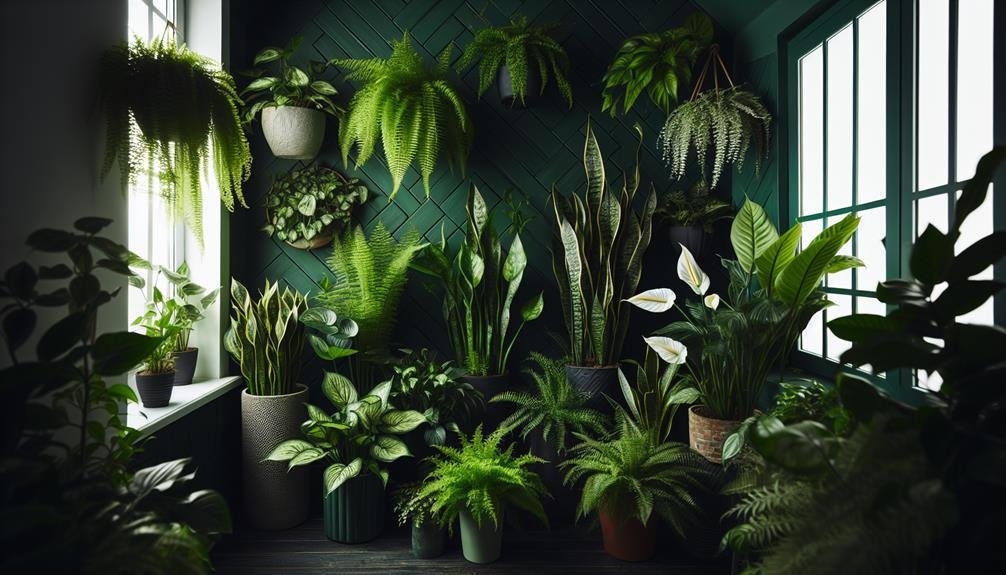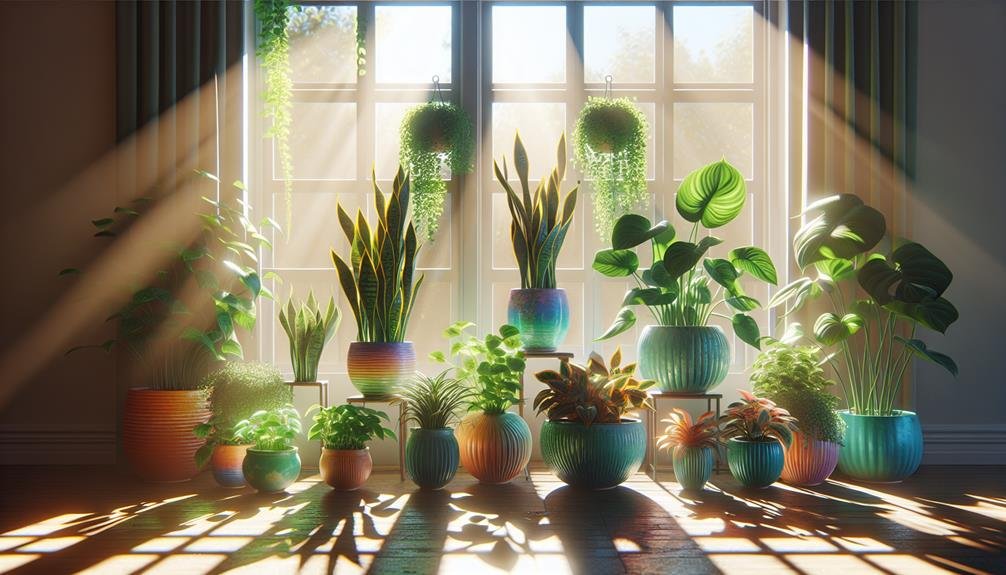
When it comes to nurturing your indoor greenery, think of it as selecting the perfect companions for your cozy living space. These beginner-friendly indoor plants offer not only a touch of nature but also a sense of accomplishment as you watch them grow and thrive with just a little care.
So, which of these top picks will elevate your indoor oasis and add a breath of fresh air to your home?
Spider Plant
If you're looking for a low-maintenance indoor plant, the Spider Plant is a great choice. This resilient plant thrives in various conditions and is perfect for beginners. Spider Plants have long, arching leaves that are green with a creamy-white stripe down the center, adding a touch of elegance to any room. They're known for their air-purifying qualities, making them a healthy addition to your living space.
One of the best features of the Spider Plant is its adaptability. It can tolerate a wide range of light conditions, from bright indirect light to partial shade, although it prefers indirect light. Watering is simple with this plant—just ensure the soil is consistently moist but not soggy. Spider Plants produce baby plantlets called 'spiderettes' that dangle down from the mother plant, creating a cascading effect perfect for hanging baskets or pedestals.
Pothos
The next beginner-friendly indoor plant to explore after the Spider Plant is the Pothos, an excellent choice for those seeking a versatile and easy-to-care-for houseplant. Pothos, also known as Devil's Ivy, features heart-shaped leaves that come in various shades of green, making it a visually appealing addition to any indoor space. This plant thrives in a variety of lighting conditions, from low light to bright, indirect sunlight, making it perfect for different areas of your home.
Pothos is low-maintenance and forgiving, making it ideal for beginners or those with busy schedules. It requires watering when the top inch of soil feels dry, and it can even tolerate some neglect. Pothos is also known for its air-purifying qualities, helping to improve indoor air quality by removing toxins.
To care for your Pothos, simply provide it with well-draining soil, occasional fertilization during the growing season, and regular pruning to encourage bushier growth. With minimal effort, you can enjoy the lush beauty of Pothos in your home while experiencing its air-purifying benefits.
Snake Plant
Wondering which indoor plant requires minimal care and can thrive in various lighting conditions? Look no further than the Snake Plant. This resilient plant, also known as Sansevieria or Mother-in-Law's Tongue, is perfect for beginners due to its hardy nature. With striking sword-shaped leaves that come in different variegated patterns, the Snake Plant can add a touch of elegance to any space.
One of the Snake Plant's most attractive features is its ability to survive in low light conditions, making it an ideal choice for offices or rooms with little natural light. This plant is also drought-tolerant, so you won't have to worry about overwatering. In fact, it's better to let the soil dry out between waterings to prevent root rot.
Snake Plants are excellent air purifiers, removing toxins such as formaldehyde and benzene from the air. Not only are they low maintenance, but they also provide health benefits. Add a Snake Plant to your indoor garden and enjoy a touch of greenery without the hassle.

Peace Lily
Looking for another low-maintenance indoor plant that offers beauty and benefits? The Peace Lily could be your perfect match. This elegant plant, with its dark green leaves and striking white flowers, not only adds a touch of sophistication to your space but also helps purify the air by removing toxins like formaldehyde and benzene.
Peace Lilies are known for their adaptability and resilience, making them an excellent choice for beginners. They thrive in low light conditions, although they'll flower more profusely in brighter light. These plants prefer their soil to dry out slightly between waterings, so they're forgiving if you forget to water them occasionally. Just be mindful not to overwater, as they're susceptible to root rot.
Another benefit of the Peace Lily is its ability to tell you when it's thirsty. The leaves will start to droop, signaling that it's time for a drink. A good soak will quickly revive the plant, and you'll soon be enjoying its beauty once again.
ZZ Plant
Consider adding a touch of modern elegance to your indoor space with the ZZ Plant. The ZZ Plant, also known as Zamioculcas Zamiifolia, is a popular choice for beginners due to its easy care requirements and ability to thrive in low light conditions. This plant features glossy, dark green leaves that add a sleek and sophisticated look to any room.
One of the key benefits of the ZZ Plant is its resilience to neglect, making it an ideal option for those with busy schedules or little experience with plant care. This plant has a natural ability to store water in its rhizomes, allowing it to withstand occasional missed waterings.
When caring for your ZZ Plant, make sure to place it in indirect light and water it sparingly to prevent overwatering. Allow the soil to dry out between waterings to avoid root rot. With minimal maintenance, the ZZ Plant can grow into a beautiful and lush addition to your indoor plant collection.
Aloe Vera
A versatile and popular choice for indoor plant enthusiasts, Aloe Vera is a low-maintenance succulent that offers both aesthetic appeal and practical benefits. This plant thrives in bright, indirect light and requires watering only when the soil is completely dry, making it ideal for beginners or those with busy schedules. Aloe Vera not only adds a touch of green to your space but also serves as a natural air purifier, removing toxins like formaldehyde and benzene from the air.
One of the most remarkable features of Aloe Vera is its healing properties. The gel inside its thick, spiky leaves is well-known for its soothing effects on sunburns, minor cuts, and skin irritations. To benefit from this natural remedy, simply cut a leaf, extract the gel, and apply it to the affected area.
In addition to its healing abilities, Aloe Vera is easy to propagate, producing 'pups' that can be separated and replanted to expand your indoor garden effortlessly.
Chinese Money Plant
The Chinese Money Plant, also known as Pilea Peperomioides, is a trendy and easy-to-care-for plant that's gaining popularity among indoor gardeners. This plant is characterized by its round, pancake-shaped leaves that sit atop delicate stems, creating a visually appealing display. Chinese Money Plants thrive in bright, indirect light, making them perfect for spaces like your living room or office.
When caring for your Chinese Money Plant, make sure to rotate it occasionally to ensure even growth, as this plant has a tendency to lean towards the light source. Water your Pilea when the top inch of soil feels dry to the touch, being careful not to overwater as this can lead to root rot. As a fast-growing plant, you may need to repot your Chinese Money Plant annually to provide ample space for its roots to spread.
With its unique appearance and low-maintenance nature, the Chinese Money Plant is an excellent choice for beginner indoor gardeners looking to add a touch of green to their space.
Frequently Asked Questions
Can These Indoor Plants Be Placed Near Pets or Young Children?
Yes, these indoor plants can generally be placed near pets or young children. However, it's important to research each plant specifically, as some may be toxic to animals or kids if ingested.
Make sure to choose plants that are safe for your furry friends or little ones. Keep an eye out for any signs of chewing or interaction with the plants to ensure everyone stays happy and healthy.
How Often Should These Plants Be Repotted or Transferred to a Larger Pot?
When should you repot indoor plants?
It's essential to monitor root growth. Check if roots are circling the pot's bottom or growing out of drainage holes. Generally, every 1-2 years is ideal for most plants.
Spring is often a good time to repot, allowing plants to adjust before their growing season. Choose a pot that's 2 inches larger in diameter than the current one.
Repotting helps prevent root-bound plants and supports healthy growth.
Are These Plants Safe for Individuals With Allergies or Respiratory Conditions?
If you have allergies or respiratory conditions, these plants are generally safe, but it's always best to be cautious. Certain plants may release pollen or irritants that could trigger reactions. Consider doing a test run with one plant to monitor your body's response.
If you notice any negative effects, it's best to avoid that particular plant. Overall, these indoor plants are known to be beginner-friendly and low-maintenance for most individuals.
Do These Plants Require Any Special Types of Soil or Fertilizers?
When caring for these plants, you'll find that they generally prefer well-draining soil to prevent root rot. A regular potting mix should work fine, but you could also mix in some perlite for better drainage.
As for fertilizers, a balanced liquid fertilizer diluted to half strength can be applied monthly during the growing season to keep your plants healthy and thriving.
Can These Plants Be Placed in Low Light Areas or Do They Require Direct Sunlight?
In low light areas, these plants can thrive without direct sunlight, making them versatile for different spaces. Some may need periodic exposure to indirect sunlight but can generally do well in shaded spots. Consider rotating them periodically if they start to lean towards light sources.
These beginner-friendly plants are adaptable and can still grow beautifully even in areas with limited natural light.
Conclusion
Overall, these 7 beginner-friendly indoor plants are perfect for adding a touch of greenery to your space without requiring a green thumb.
Whether you choose a Spider Plant, Pothos, Snake Plant, Peace Lily, ZZ Plant, Aloe Vera, or Chinese Money Plant, each one offers unique benefits and is easy to care for.
So go ahead and bring some nature indoors with these low-maintenance plants that will thrive in your home or office!