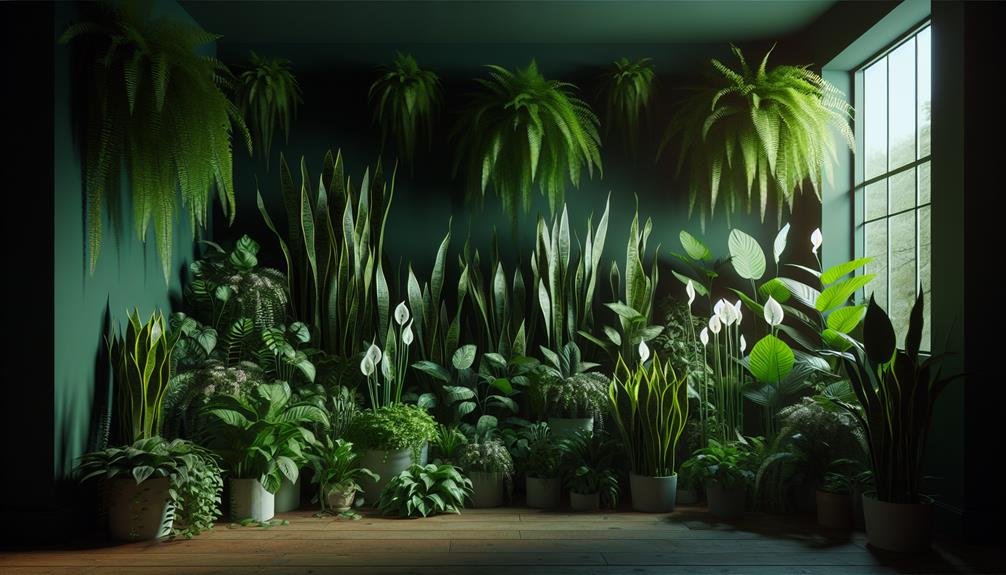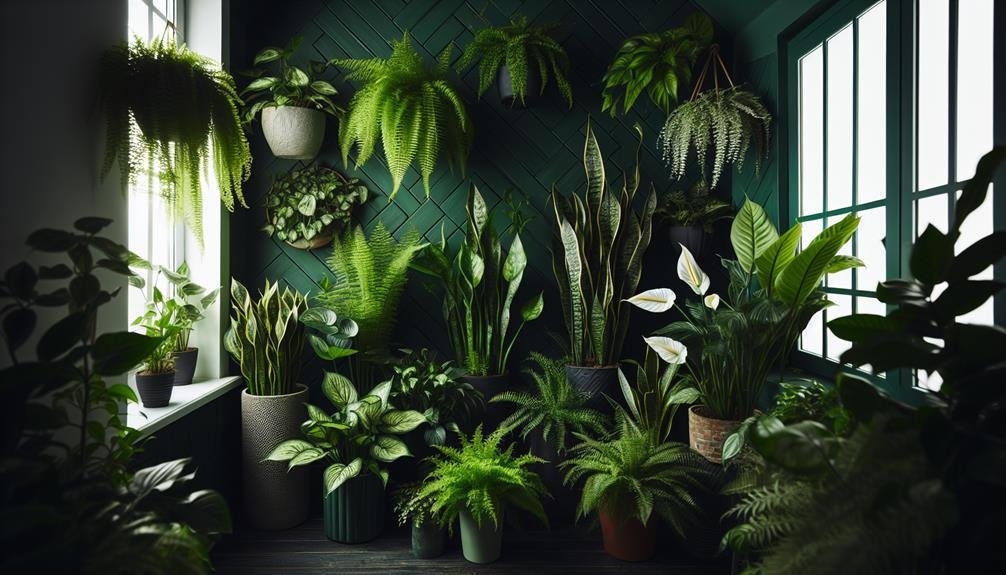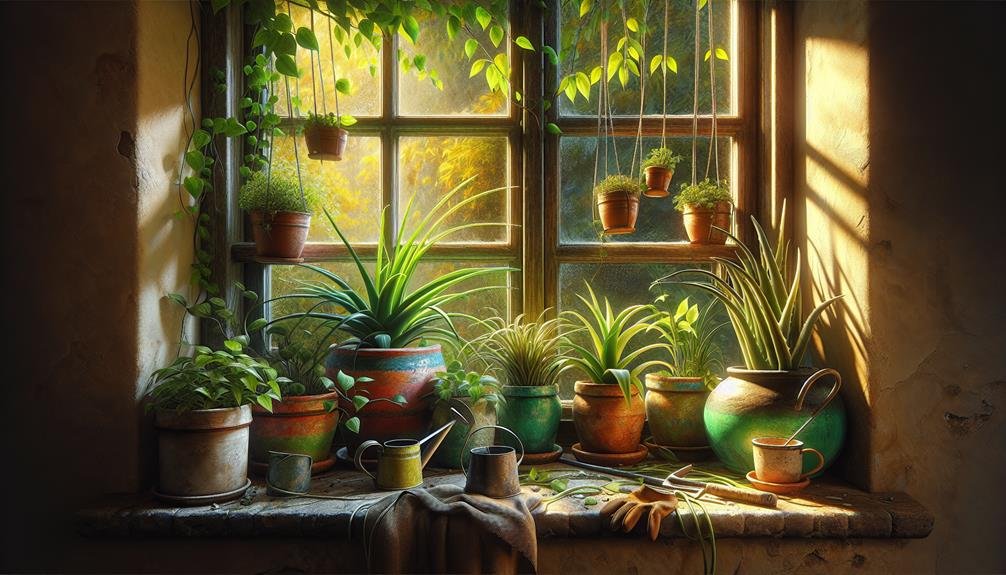
As you embark on your indoor gardening journey, think of plants as silent companions that bring life into your living space.
Consider starting with succulents, the resilient heroes that thrive on neglect and minimal watering.
But don't stop there; there are a few more green allies waiting to transform your home into a tranquil oasis.
Succulents
If you're new to indoor gardening, succulents are a great choice for their easy maintenance and unique aesthetic appeal. These plants come in various shapes, sizes, and colors, making them a versatile addition to your indoor space. Succulents have thick, fleshy leaves and stems that store water, allowing them to thrive in dry conditions and requiring minimal watering.
One key benefit of succulents is their ability to adapt to different light conditions, although they generally prefer bright, indirect sunlight. This flexibility makes them ideal for various indoor environments, from well-lit windowsills to office cubicles with fluorescent lighting. When it comes to care, succulents are forgiving plants that can withstand occasional neglect. However, it's essential to avoid overwatering, as this can lead to root rot—a common issue for these water-storing plants.
With their low maintenance requirements and striking appearance, succulents are perfect for beginners looking to add a touch of nature to their indoor spaces without the stress of high upkeep.
Spider Plant
Boasting graceful arching leaves and air-purifying qualities, the Spider Plant is a popular choice for indoor gardeners seeking an elegant yet low-maintenance addition to their space. This resilient plant thrives in various light conditions, making it ideal for beginners or those with less-than-ideal lighting situations. Spider Plants are known for their ability to remove toxins like formaldehyde and xylene from the air, promoting a healthier indoor environment.
When caring for your Spider Plant, make sure to place it in indirect sunlight and water it when the top inch of soil feels dry. These plants enjoy being slightly root-bound, so there's no need to repot them frequently. Spider Plants also produce offshoots called 'spiderettes' that can be propagated easily in water or soil, allowing you to expand your plant collection or share with friends. With its cascading foliage and easy-going nature, the Spider Plant is a fantastic choice for bringing a touch of greenery into your home.
Pothos
Pothos plants are versatile and easy to care for, making them an excellent choice for beginners looking to add greenery to their indoor spaces. These plants, also known as Devil's Ivy, thrive in various lighting conditions, from low light to indirect sunlight. They've attractive heart-shaped leaves that come in different shades of green, making them a visually appealing addition to any room.
One of the great things about Pothos is their low maintenance requirements. They only need to be watered when the top inch of soil feels dry, making them forgiving if you forget a watering session. Additionally, Pothos plants are excellent air purifiers, helping to improve the air quality in your home by removing toxins.

To care for your Pothos plant, simply place it in a well-draining potting mix, water it when needed, and watch it grow and trail beautifully. With minimal effort, you can enjoy the beauty and benefits that Pothos plants bring to your indoor space.
Peace Lily
A great beginner-friendly plant for indoor gardening is the Peace Lily. Peace Lilies are low-maintenance and known for their beautiful white flowers, adding a touch of elegance to any space. These plants thrive in low light conditions, making them perfect for rooms with little sunlight.
When caring for a Peace Lily, remember to water it consistently. They'll droop when they need water but quickly bounce back once you give them a drink. These plants are forgiving if you forget to water them occasionally. Additionally, Peace Lilies are excellent at purifying the air, making them a healthy and aesthetically pleasing choice for your indoor garden.
To keep your Peace Lily happy, occasionally wipe down its leaves to remove dust, which can block sunlight absorption. Pruning dead leaves and flowers will help encourage new growth and keep your plant looking its best. With minimal effort, you can enjoy the beauty and benefits of a Peace Lily in your home.
Snake Plant
Thriving in low light conditions, the Snake Plant is a resilient and beginner-friendly option for indoor gardening. Its striking long, sword-shaped leaves can add a touch of elegance to any space. One of the most appealing features of the Snake Plant is its ability to thrive with minimal care, making it perfect for those new to indoor gardening.
When it comes to maintenance, this plant is quite undemanding. You only need to water it occasionally, allowing the soil to dry out between waterings to prevent overwatering. The Snake Plant is also known for its air-purifying qualities, making it a beneficial addition to your indoor environment.
Another reason why the Snake Plant is favored among beginners is its tolerance for neglect. Even if you forget to water it from time to time, this hardy plant will likely forgive you. With its adaptability to various light conditions and minimal care requirements, the Snake Plant is an excellent choice for those looking to introduce greenery into their homes without the stress of high maintenance.
Frequently Asked Questions
Can Indoor Plants Like Succulents Be Grown in Low Light Conditions?
In low light conditions, succulents can struggle to thrive. These plants typically prefer bright light to grow well. If you still want to try growing succulents in low light, choose species like Haworthia or Gasteria, which are more tolerant of such conditions.
Remember to rotate them frequently to ensure all parts receive some light. Consider supplementing with artificial grow lights to provide the necessary light for healthy growth.
Do Spider Plants Require Frequent Repotting as They Grow?
Spider plants typically don't require frequent repotting as they grow. They've a tendency to produce offsets, known as 'spiderettes,' that can be easily propagated in separate pots. This means you can keep your spider plant thriving without having to repot it often.
Regularly removing the spiderettes and providing proper care can help maintain the plant's health and prevent the need for frequent repotting.
How Often Should Pothos Plants Be Watered to Thrive Indoors?
To keep your pothos plants thriving indoors, water them about once a week. Check the soil first; if it feels dry to the touch, it's time to water. Make sure excess water can drain away to prevent root rot.
Pothos are quite forgiving if you forget occasionally, but consistent watering will help them grow lush and healthy. Just remember, moderation is key when it comes to watering indoor plants like pothos.
Are Peace Lilies Safe for Pets to Be Around?
Peace lilies aren't safe for pets to be around, as they can be toxic if ingested. Keep your furry friends away from these plants to prevent any potential harm.
Make sure to place peace lilies in a location where pets can't reach them. It's important to prioritize your pet's safety by choosing non-toxic plants for your indoor garden.
What Are Some Common Issues That Can Arise When Caring for a Snake Plant Indoors?
When caring for a snake plant indoors, common issues like overwatering and root rot can arise. Make sure the plant's soil dries out between waterings to prevent this.
Also, ensure the plant gets enough indirect sunlight and avoid placing it in drafty areas. If the leaves start to droop or turn yellow, it might be a sign of too much water or insufficient light.
Keep an eye on these indicators for a healthy snake plant.
Conclusion
Overall, indoor gardening can be a fun and rewarding hobby, especially with these beginner-friendly plants.
From low-maintenance succulents to air-purifying snake plants, there are plenty of options to choose from.
Remember to provide your plants with proper care, including sunlight, watering, and occasional trimming.
With a little bit of attention and love, your indoor garden will thrive and bring a touch of nature into your home.
Happy planting!