
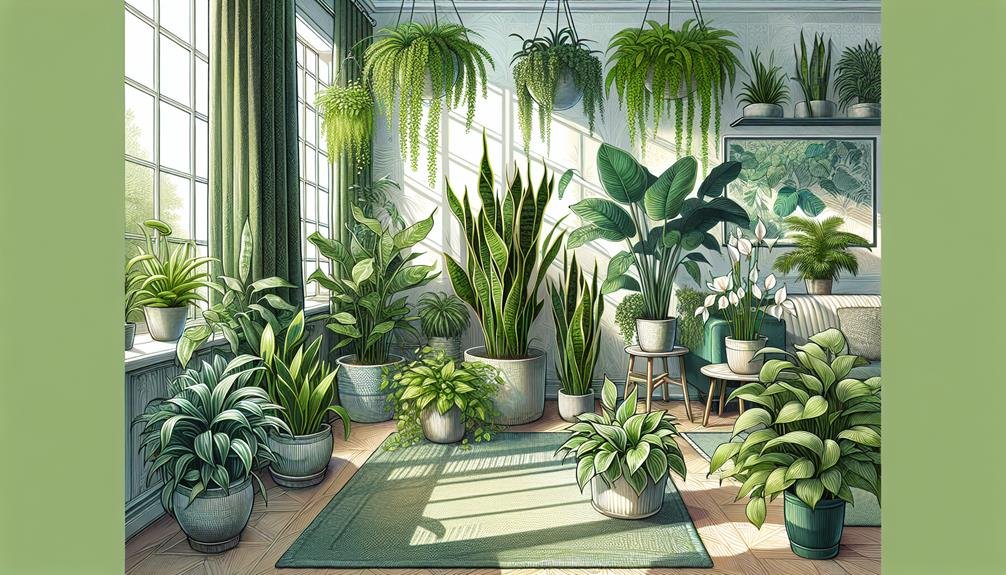
Curious about how you can effortlessly enhance your indoor air quality? Discover the top air-purifying plants suited for beginners, each offering a touch of greenery alongside their air-cleansing abilities.
These plants not only brighten up your space but also serve a dual purpose you might find intriguing. Wondering which plant could be your new air-purifying companion? Stay tuned to uncover the secrets of these green allies.
Spider Plant
If you're new to indoor gardening, consider starting with the low-maintenance Spider Plant. This plant is perfect for beginners because it thrives in a variety of conditions and is quite resilient. Spider Plants are known for their air-purifying qualities, making them a great addition to your home.
One of the Spider Plant's most appealing features is its ability to adapt to different light conditions. Whether you have a sunny spot or a shadier corner, this plant will likely do well. Watering is also straightforward with the Spider Plant, as it prefers slightly moist soil but can tolerate occasional drying out between waterings.
Propagation is another fun aspect of Spider Plants. They produce 'babies' called spiderettes that dangle down from the main plant. These can be snipped off and placed in water to grow roots, giving you the opportunity to expand your plant collection easily.
Snake Plant
The Snake Plant, also known as Sansevieria, is a popular choice for indoor gardeners due to its low maintenance and air-purifying properties. This hardy plant is perfect for beginners as it can thrive in various light conditions, from bright light to low light, and requires minimal watering. Its striking upright leaves come in different patterns and colors, adding a touch of elegance to any indoor space.
In addition to its aesthetic appeal, the Snake Plant is a powerhouse when it comes to purifying the air. It's known for its ability to remove toxins like formaldehyde, xylene, toluene, and nitrogen oxides, making it a great choice for improving indoor air quality. This plant is also excellent for bedrooms since it releases oxygen at night while filtering out harmful chemicals.
Pothos
With its vibrant green leaves and cascading growth habit, Pothos is a popular choice for indoor plant enthusiasts seeking a versatile and low-maintenance option. Pothos, also known as Devil's Ivy, thrives in various lighting conditions, making it perfect for beginners. This plant can purify the air by removing toxins like formaldehyde and benzene, promoting a healthier indoor environment.
Pothos is incredibly adaptable and can tolerate occasional neglect. It requires watering when the soil is dry to the touch and can survive in low light conditions, although it thrives in indirect sunlight. Regular pruning helps maintain its bushy appearance and encourages new growth. Pothos is also easy to propagate – simply cut a stem below a node and place it in water until roots develop.
To care for your Pothos, ensure it has well-draining soil and a pot with drainage holes to prevent overwatering. Keep an eye out for yellowing leaves, which may indicate overwatering. Overall, Pothos is a fantastic addition to any indoor space, adding a touch of greenery while purifying the air effortlessly.

Peace Lily
Thriving in low light conditions, the Peace Lily is a popular choice for indoor plant enthusiasts looking to add a touch of elegance to their living spaces. With its glossy, dark green leaves and elegant white flowers, the Peace Lily not only enhances the aesthetic appeal of your home but also serves as an efficient air purifier.
One of the key benefits of having a Peace Lily in your indoor environment is its ability to filter out harmful toxins like formaldehyde, benzene, and trichloroethylene. This plant works tirelessly to improve the air quality in your home, creating a healthier and more pleasant living space for you and your family.
Caring for a Peace Lily is relatively easy, making it an excellent choice for beginners. Remember to water it regularly, ensuring the soil remains consistently moist but not waterlogged. Additionally, placing it in indirect light and occasionally wiping the leaves to prevent dust buildup will help your Peace Lily thrive and continue to purify the air in your home effectively.
Aloe Vera
Moving on to Aloe Vera, another fantastic air-purifying plant for indoor beginners is this versatile succulent. Aloe Vera not only adds a touch of green to your space but also helps clean the air by removing toxins like formaldehyde and benzene. This low-maintenance plant thrives in bright, indirect light, making it perfect for indoor environments.
Aloe Vera is well-known for its healing properties, with the gel inside its leaves commonly used for soothing burns and skin irritations. Beyond its medicinal uses, Aloe Vera is an excellent choice for those looking to improve indoor air quality naturally.
Caring for Aloe Vera is relatively simple; it requires well-draining soil and infrequent watering. Ensure the plant is placed in a pot with drainage holes to prevent overwatering, as Aloe Vera is prone to root rot. Additionally, occasional pruning of dead leaves can help the plant thrive and grow more efficiently.
Incorporate Aloe Vera into your indoor plant collection to enjoy its air-purifying benefits and the beauty of its spiky, green leaves.
Frequently Asked Questions
Can These Air-Purifying Plants Be Harmful to Pets if Ingested?
If your pet ingests air-purifying plants, it can be harmful. Some plants are toxic to animals when consumed. Keep an eye on your furry friends around these plants.
Research which plants are safe for pets and consider placing them out of reach. It's important to prioritize your pet's safety and well-being when choosing indoor plants.
Be proactive in preventing any potential harm to your pets from ingesting these plants.
Do These Plants Require Any Special Care or Maintenance to Thrive Indoors?
To thrive indoors, air-purifying plants generally require regular watering, proper sunlight exposure, and occasional pruning. Ensure they're not placed near drafts or heating vents.
Dust their leaves occasionally to help with photosynthesis. Watch out for signs of overwatering or underwatering. Some plants may benefit from occasional fertilization.
Are There Any Specific Tips for Choosing the Right Size or Type of Pot for These Plants?
When selecting pots for your plants, consider ones with drainage holes to prevent overwatering. Opt for pots that are slightly larger than the current root ball to allow for growth but not too large, as excess soil can lead to root rot.
Terra cotta pots are great for plants that prefer drier soil, while plastic pots retain moisture better. Remember to repot as needed to ensure your plants have adequate space to thrive.
Can These Plants Effectively Remove Common Indoor Pollutants Like Formaldehyde or Benzene?
Yes, these plants can effectively remove common indoor pollutants like formaldehyde or benzene. They work by absorbing harmful chemicals through their leaves and roots, improving the air quality in your home.
Make sure to place them strategically around your living space for maximum benefits. With regular care and proper placement, these air-purifying plants will help you breathe cleaner and fresher air indoors.
Are There Any Specific Warnings or Precautions to Keep in Mind When Growing These Plants Indoors?
When growing these plants indoors, remember to check for any toxic effects they may have on pets or children. Keep them out of reach to avoid accidental ingestion.
Also, ensure proper sunlight and watering to prevent mold growth or root rot. Regularly dust the leaves to maintain their ability to purify the air effectively.
Stay attentive to any signs of pests or diseases to address them promptly and keep your plants healthy.
Conclusion
Overall, incorporating air-purifying plants into your indoor space can greatly improve the air quality and ambiance of your home.
With beginner-friendly options like the Spider Plant, Snake Plant, Pothos, Peace Lily, and Aloe Vera, you can easily reap the benefits of cleaner air and a more inviting environment.
So go ahead and add some greenery to your home – your lungs will thank you!



