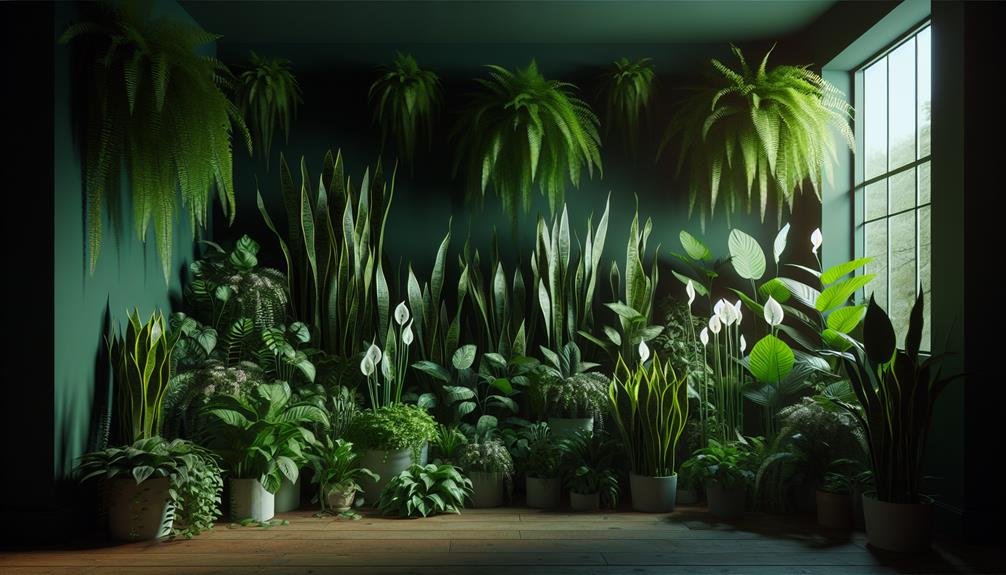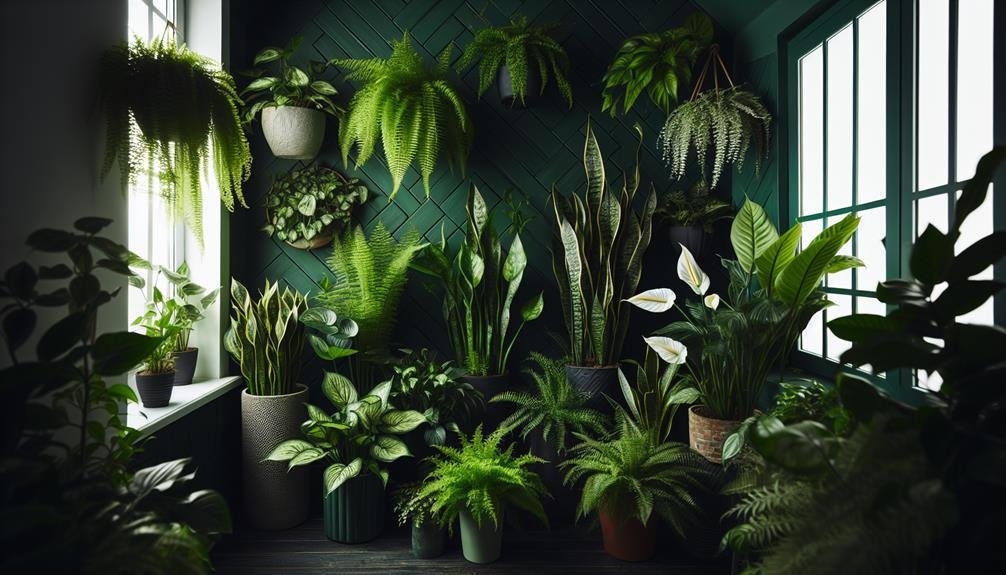
In the dim corners of your living space, where sunlight rarely reaches, finding the right plants can be a challenge. However, there are some shade-tolerant champions that thrive in such conditions, like the resilient Peace Lily.
But what other green companions can withstand low light levels and still flourish? Explore a variety of botanical options that not only survive but can also add a touch of nature's beauty to your shaded corners.
Benefits of Shade-Tolerant Plants
When considering shade-tolerant plants, you'll appreciate their ability to thrive in low-light conditions, making them ideal for dim corners in your home. These plants are resilient and adaptable, requiring minimal maintenance while adding a touch of greenery to even the darkest spaces. Not only do they enhance the aesthetics of your living environment, but they also contribute to better air quality by absorbing pollutants and releasing oxygen.
One of the key benefits of shade-tolerant plants is their versatility. Whether you have a small apartment with limited natural light or a spacious house with shaded areas, these plants can thrive in various environments. Their ability to survive in low-light conditions means you can enjoy gardening and plant care without the need for constant sunlight exposure. Additionally, shade-tolerant plants come in a wide range of species, from leafy ferns to colorful begonias, allowing you to choose plants that match your personal style and preferences.
Best Low-Light Indoor Plants
Discover the top choices for low-light indoor plants that thrive in dim corners, bringing both beauty and vitality to your living spaces.
When looking for plants that can thrive in low-light conditions, consider options like the resilient snake plant. This hardy plant requires minimal care and can survive in almost any light condition.
Another excellent choice is the pothos plant, known for its trailing vines and air-purifying qualities. The peace lily is a classic low-light plant that also adds a touch of elegance with its white blooms.
If you prefer a more unique option, the ZZ plant is a great pick, requiring little water and thriving in low light. Lastly, the spider plant is perfect for hanging baskets or shelves, adding a touch of green to overlooked spaces.
These low-light indoor plants aren't only visually appealing but also easy to care for, making them ideal choices for dimly lit areas in your home.
Care Tips for Shade-Loving Plants
Want to ensure your shade-loving plants thrive? Here are some essential care tips to keep them healthy and flourishing in dim corners.

First, make sure to place your plants in spots where they receive indirect sunlight or artificial light to compensate for the lack of natural light. While these plants thrive in shade, they still need some form of light to photosynthesize effectively.
Secondly, be mindful of watering your shade-loving plants. Since they aren't exposed to direct sunlight, they may require less water than other plants. Always check the soil moisture before watering to prevent overwatering, which can lead to root rot. Additionally, consider using a well-draining potting mix to avoid waterlogging.
Lastly, regular pruning and grooming are crucial for the overall health of your shade-loving plants. Remove any dead leaves or stems to promote new growth and prevent diseases. By following these care tips, your shade-loving plants will surely thrive in their dim corner environment.
Top Air-Purifying Shade Plants
Looking to enhance the air quality in your home? Consider incorporating these top air-purifying shade plants into your indoor space. Plants such as the peace lily, spider plant, and pothos aren't only visually appealing but also work hard to purify the air you breathe.
Peace lilies are known for their ability to remove common toxins like formaldehyde, benzene, and carbon monoxide. Spider plants are excellent at combating pollutants such as xylene and formaldehyde. Pothos, with its cascading vines, is effective in removing toxins like formaldehyde, benzene, and xylene.
These plants thrive in low-light conditions, making them perfect for dimly lit areas of your home. By adding these air-purifying plants to your space, you can enjoy cleaner and fresher indoor air while adding a touch of greenery to your décor.
Creative Ways to Display Shade-Tolerant Plants
Consider incorporating shade-tolerant plants into creative displays to brighten up dim corners of your living space. Hanging planters are an excellent way to add greenery to areas with limited floor space. Choose cascading plants like English ivy or spider plants to create a visually appealing display that adds depth to the room.
Utilize wall-mounted plant holders to turn empty walls into vertical gardens, using plants such as peace lilies or ferns to bring life to neglected spaces.
Another creative idea is to repurpose old furniture into plant stands. Place pots of shade-tolerant plants on shelves of an unused bookcase or dresser to transform them into unique plant displays. Terrariums are also a great option for showcasing shade-loving plants in a compact and stylish manner. Fill glass containers with mosses, ferns, or other small plants to create captivating mini ecosystems that thrive in low light conditions.
Frequently Asked Questions
Can Shade-Tolerant Plants Survive in Areas With No Natural Light at All?
Yes, shade-tolerant plants can survive in areas with no natural light at all. While they're adapted to low-light conditions, complete darkness may limit their growth.
Some plants can survive for a period without light, but eventually, they'll need at least a small amount to thrive. Consider supplementing with artificial light if necessary to support their growth in completely dark areas.
How Do I Know if My Plant Needs More Sunlight or if It's Just Naturally a Shade-Loving Plant?
If you're wondering how to tell if your plant needs more sunlight or if it naturally thrives in the shade, pay attention to its behavior. Plants that prefer shade may show signs of stress in direct sunlight, like wilting or leaf scorch.
On the other hand, sun-loving plants might struggle in low light, leading to leggy growth or pale leaves. Observing your plant's response to light conditions can help you determine its sunlight preferences.
Are There Any Shade-Tolerant Plants That Are Safe for Pets to Be Around?
When looking for shade-tolerant plants safe for pets, opt for non-toxic varieties like spider plants, bamboo palms, or Boston ferns. These can thrive in dim corners while keeping your furry friends out of harm's way.
Remember to double-check each plant's toxicity level before bringing them home. With these options, you can create a pet-friendly environment without compromising the greenery in your space.
Can Shade-Tolerant Plants Be Grown in Hydroponic Systems?
Yes, shade-tolerant plants can be grown in hydroponic systems. Hydroponics provide a controlled environment where you can adjust light levels to suit the plants' shade tolerance.
By using artificial lighting and nutrient-rich water solutions, you can successfully cultivate a variety of shade-loving plants hydroponically.
This method allows you to grow plants efficiently even in dimly lit corners, expanding your gardening possibilities indoors.
Are There Any Shade-Tolerant Plants That Are Known to Attract Certain Pests or Insects?
When it comes to shade-tolerant plants, some varieties might attract certain pests or insects. It's essential to be mindful of the potential pests that could be drawn to these plants and take preventive measures to protect your garden.
Regularly inspecting your plants and implementing organic pest control methods can help keep these unwanted visitors at bay. Remember that a little proactive effort can go a long way in maintaining a healthy garden.
Conclusion
So there you have it – a variety of shade-tolerant plants that are perfect for adding greenery to dim corners in your home.
From low-light indoor plants to air-purifying options, there are plenty of choices to suit your needs.
Remember to provide the proper care for these plants to ensure they thrive in their shaded environment.
Get creative with how you display them to bring a touch of nature into every corner of your space!