
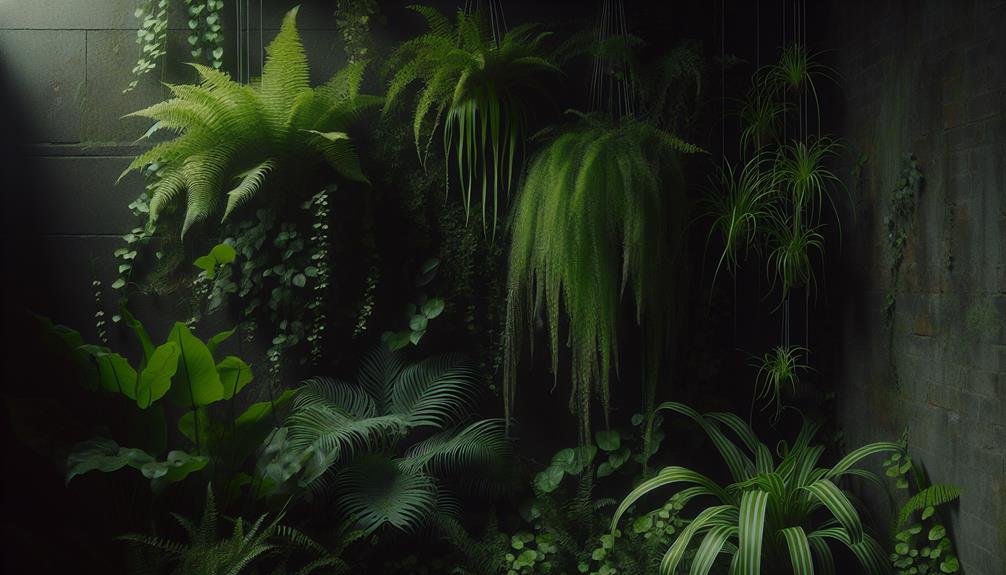
In the shadowy nooks of your living space, finding the perfect green companions can be a challenge. But fear not, as there are plants that can thrive in the dimmest corners of your home. These green allies not only survive but can also bring a touch of life and freshness to those darker areas.
Stay tuned to discover which plants can not only survive but truly thrive in the low-light conditions of your indoor spaces.
Ideal Plants for Low-Light Environments
When choosing plants for low-light environments, opt for varieties that thrive in shaded conditions. These plants are perfect for adding greenery to dimly lit spaces where other varieties might struggle to grow. Consider peace lilies, spider plants, or pothos, as they're resilient and can flourish with minimal sunlight. Peace lilies, with their elegant white blooms, not only thrive in low light but also help purify the air.
Spider plants are known for their air-purifying qualities and are easy to care for, making them an excellent choice for beginners. Pothos, with their trailing vines, are versatile and can be displayed in hanging baskets or on shelves.
Another great option for low-light areas is the snake plant, also known as mother-in-law's tongue. This hardy plant requires minimal care and can survive in almost any lighting condition. Its striking upright leaves add a touch of modern elegance to any room. By choosing plants that are well-suited for shaded environments, you can effortlessly brighten up even the darkest corners of your home.
Top Choices for Shady Spaces
For shady spaces, consider these top plant picks that thrive in low light conditions. When looking to add greenery to dim areas, peace lilies are an excellent choice. They not only tolerate shade but also boast elegant white flowers that can brighten up any corner.
Another great option is the snake plant, known for its air-purifying qualities and ability to thrive in low light environments. If you're seeking a pop of color, African violets are perfect for shady spots and come in a variety of hues.
English ivy is a classic choice for trailing greenery that can add a touch of charm to your dark corners. Lastly, ZZ plants are incredibly low maintenance and can survive with minimal light, making them ideal for those hard-to-reach shady areas.
Plants That Thrive in Darkness
Consider exploring plants that thrive in darkness to discover options that can bring life to even the dimmest corners of your home. While many plants require ample sunlight to thrive, there are some resilient options that can flourish in low-light conditions.
One excellent choice for dark corners is the Peace Lily (Spathiphyllum). This plant is known for its elegant white flowers and glossy green leaves, and it can thrive in low light while also helping to purify the air in your home.

Another great option is the Snake Plant (Sansevieria), which is extremely low maintenance and can tolerate low light levels. Its striking tall leaves add a touch of modern elegance to any space.
If you're looking for a trailing plant, consider the Heartleaf Philodendron (Philodendron hederaceum). This plant is perfect for hanging baskets or high shelves, as its vines cascade down beautifully even in dark corners.
The Cast Iron Plant (Aspidistra elatior) is another resilient option that can tolerate low light and neglect, making it a great choice for beginners or those with busy schedules.
Best Greenery for Dim Corners
Looking to add some vibrant greenery to those dim corners in your home? When selecting plants for low-light areas, it's essential to choose varieties that can thrive with minimal sunlight. One excellent option is the pothos plant. Pothos, also known as Devil's Ivy, is a hardy plant that can tolerate low light conditions and requires minimal maintenance. Its heart-shaped leaves add a touch of elegance and freshness to any space.
Another great greenery choice for dim corners is the peace lily. Peace lilies aren't only beautiful with their white blooms but also excellent air purifiers. These plants can adapt well to low light and are relatively easy to care for, making them perfect for indoor settings with limited natural light.
Spider plants are also fantastic for dim corners. Their long, arching leaves and air-purifying qualities make them a popular choice for low-light environments. Spider plants are resilient and can add a pop of lush green to brighten up any dark corner in your home.
Shade-Loving Plant Recommendations
If you're seeking plant recommendations for shaded areas, start by exploring shade-loving varieties that thrive in low-light conditions. Opt for lush greenery like the classic Peace Lily (Spathiphyllum), known for its elegant white blooms and air-purifying qualities.
Another fantastic option is the Snake Plant (Sansevieria), which requires minimal care and adds a modern touch with its tall, sturdy leaves.
For a pop of color, consider the vibrant foliage of the Calathea, with its unique patterns and hues that can brighten up any dark corner.
The Boston Fern (Nephrolepis exaltata) is an excellent choice for its feathery fronds that cascade gracefully, bringing a soft, lush feel to your space.
If you prefer flowering plants, the Impatiens walleriana, or 'Busy Lizzie,' thrives in shady spots and offers a profusion of blooms in various shades.
Whichever shade-loving plant you choose, ensure it matches the light levels of your space to help it thrive and bring life to those dim corners.
Frequently Asked Questions
Can Plants in Dark Corners Still Benefit From Natural Light if It's Indirect?
In dark corners, plants can still benefit from indirect natural light. While direct sunlight is ideal, indirect light can provide necessary energy for plant growth.
Choose shade-loving plants that thrive in low-light conditions to make the most of the limited light available.
Ensure you rotate the plants occasionally to ensure all sides receive adequate light exposure for healthy growth and development.
Are There Any Low-Light Plants That Are Safe for Pets to Be Around?
When it comes to pets and plants, you want to be cautious.
Some low-light plants that are safe for pets include spider plants, Boston ferns, and African violets. These can thrive in dimmer spaces and won't harm your furry friends if they decide to give them a nibble.
Just make sure to place them out of reach to prevent any curious snacking sessions.
How Often Should I Water Plants in Dark Corners Compared to Those in Well-Lit Areas?
In dark corners, plants usually need less water than those in well-lit areas. Keep an eye on the soil moisture level and water only when it's dry to the touch.
Overwatering can lead to root rot, so it's essential to let the soil dry out between waterings. Adjust your watering frequency based on the specific needs of your plant species to ensure they thrive in their low-light environment.
Are There Any Low-Light Plants That Can Help Improve Indoor Air Quality?
In dark corners, low-light plants can elevate indoor air quality. They work wonders in spaces with limited natural light. These plants not only thrive in such conditions but also help purify the air, promoting a healthier environment.
Consider adding these green companions to your home for a breath of fresh air. Keep them happy with proper care and occasional watering. Enjoy the benefits of improved air quality and the beauty of your green friends.
What Are Some Creative Ways to Incorporate Plants Into Dark Corners Without Overcrowding the Space?
To add plants to dark corners without overcrowding, consider hanging planters or wall-mounted shelves for a vertical display.
Opt for plants like snake plants or pothos that thrive in low light.
Group smaller plants together for a cohesive look.
Ensure to rotate your plants occasionally for even growth.
Conclusion
So, when looking for the best plants for dark corners, consider options like snake plants, peace lilies, and pothos. These low-light loving plants can thrive in shady spaces and add a touch of greenery to dim areas of your home.
With the right selection, you can bring life and beauty to even the darkest corners of your living space. Don't be afraid to experiment and find the perfect shade-loving plants for your home!



