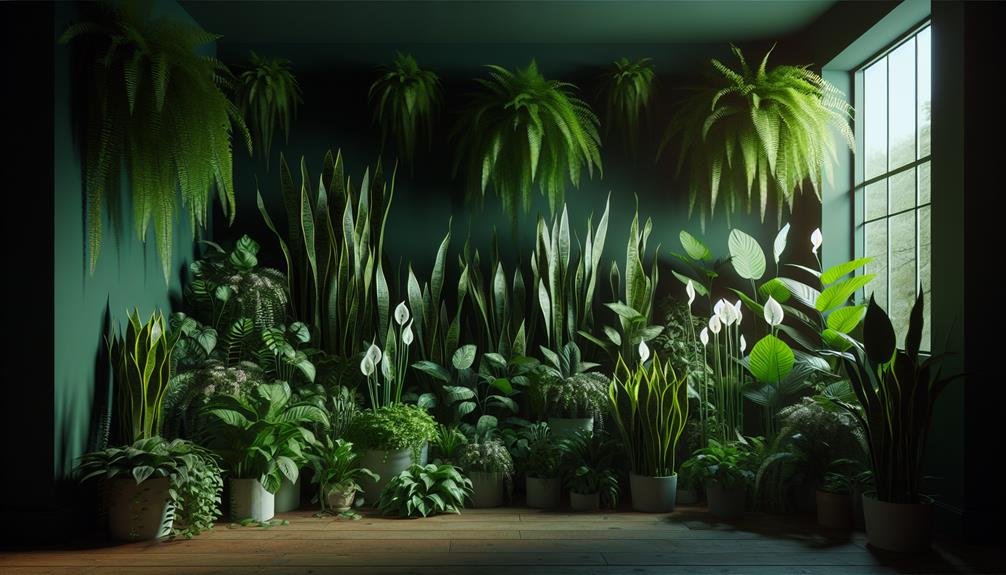
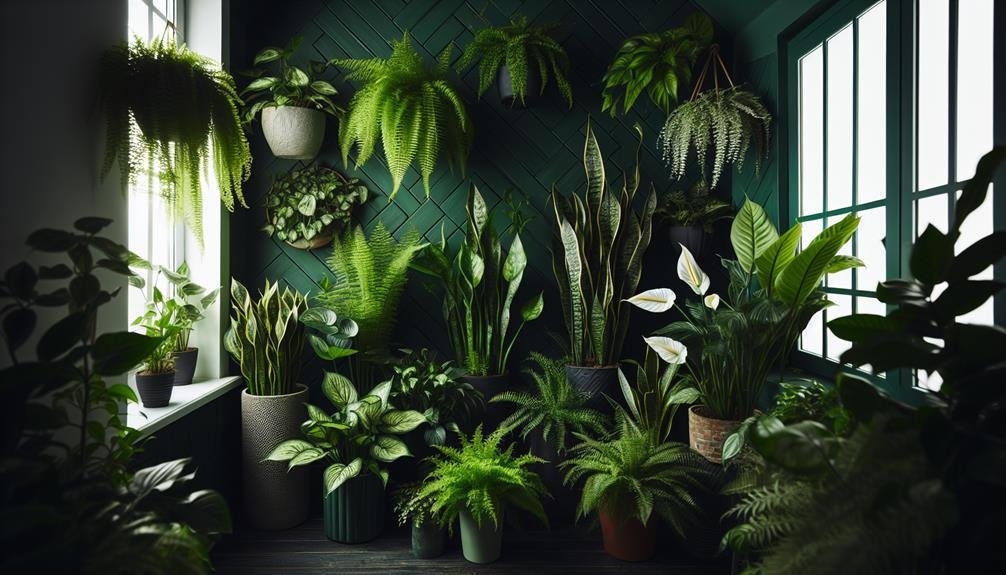
With approximately 68% of households in the United States owning at least one houseplant, it's evident that indoor greenery is a popular choice for many.
If you're looking to add some plant life to your space but lack abundant natural light, fret not. There are several plant varieties that thrive in low light conditions and can bring a touch of nature to even the dimmest corners of your home.
Whether you're a seasoned plant parent or just starting out on your green journey, discovering the best indoor plants for low light can brighten up your indoor environment effortlessly.
Snake Plant
If you're looking for a resilient indoor plant that thrives in low light conditions, the Snake Plant is an excellent choice. Also known as Sansevieria or Mother-in-Law's Tongue, this plant is perfect for those lacking a green thumb. The Snake Plant isn't only tolerant of low light but also requires minimal maintenance, making it an ideal addition to your indoor space.
One of the Snake Plant's most remarkable features is its ability to purify the air by removing toxins like formaldehyde and benzene. This plant is a natural air purifier, enhancing the air quality in your home while adding a touch of greenery to your decor. Its striking vertical leaves come in various shades of green and yellow, adding a modern and elegant aesthetic to any room.
In addition to its air-purifying qualities, the Snake Plant is also drought-resistant, meaning you can go for extended periods without watering it. This makes it a hassle-free plant for busy individuals or those who tend to forget about plant care. With its adaptability to low light conditions and minimal care requirements, the Snake Plant is a top choice for anyone looking to bring a bit of nature indoors.
Spider Plant
The Spider Plant, with its graceful arching leaves and easy care requirements, is a popular choice for indoor spaces with low light conditions. This resilient plant can thrive in various light conditions, making it ideal for rooms with minimal natural light. Spider Plants are known for their air-purifying qualities, helping to improve indoor air quality by reducing toxins.
When caring for a Spider Plant in low light, ensure that it receives some indirect sunlight throughout the day to maintain its health and vibrancy. Water the plant thoroughly but allow the soil to dry out between waterings to prevent root rot. Spider Plants are forgiving of occasional neglect, making them perfect for those new to plant care or with busy schedules.
Consider placing your Spider Plant in a hanging basket or on a shelf to showcase its cascading leaves. With proper care and a bit of attention, your Spider Plant will bring a touch of greenery and freshness to your low-light indoor spaces.
Peace Lily
Moving on from the Spider Plant, another excellent choice for indoor spaces with low light is the Peace Lily. Peace Lilies are known for their elegant, dark green leaves and charming white blooms, making them a popular choice for adding a touch of beauty to any room. These plants thrive in low light conditions, making them perfect for areas where other plants might struggle to survive.

One of the great benefits of Peace Lilies is their air-purifying qualities. They can help remove toxins such as formaldehyde, benzene, and trichloroethylene from the air, creating a healthier indoor environment for you to enjoy. Additionally, Peace Lilies are relatively low maintenance and easy to care for, making them ideal for busy individuals or those new to plant parenting.
When caring for your Peace Lily, be sure to keep the soil slightly moist but not soggy, as overwatering can lead to root rot. These plants also appreciate a regular misting to maintain humidity levels. With proper care, your Peace Lily will continue to thrive and bring a sense of peace and serenity to your indoor space.
Pothos
A versatile and resilient plant for low light environments, Pothos is a popular choice among indoor gardeners. This plant, also known as Devil's Ivy, features heart-shaped green leaves streaked with yellow or white, adding a touch of elegance to any space. Pothos thrives in low light conditions, making it perfect for offices, bathrooms, or any room with minimal natural light.
One of the key benefits of Pothos is its low maintenance requirements. It's forgiving of occasional missed waterings and can adapt to various light levels, although it prefers indirect sunlight. Pothos is also an excellent air purifier, removing toxins like formaldehyde from the air, thereby promoting a healthier indoor environment.
When caring for Pothos, ensure the soil is well-draining and water the plant when the top inch of soil feels dry. Regularly wipe the leaves with a damp cloth to keep them dust-free and glossy. With minimal effort, you can enjoy the lush beauty of Pothos brightening up your low light space.
ZZ Plant
In low light conditions, consider adding ZZ Plant to your indoor space for its hardy nature and striking appearance. The ZZ Plant, scientifically known as Zamioculcas zamiifolia, is an excellent choice for those looking for a low-maintenance plant that thrives in minimal light. Its glossy, dark green leaves add a touch of elegance to any room, making it a popular choice for home and office environments alike.
One of the standout features of the ZZ Plant is its ability to tolerate neglect and low light levels. This plant is incredibly resilient and can survive with infrequent watering, making it ideal for busy individuals or those new to plant care. Additionally, the ZZ Plant is known for its air-purifying qualities, helping to improve indoor air quality by removing toxins.
When placing your ZZ Plant, opt for a spot with indirect sunlight or artificial light sources. Avoid exposing it to direct sunlight, as this can lead to sunburn on its leaves. With its durability and aesthetic appeal, the ZZ Plant is a fantastic addition to any low light setting.
Frequently Asked Questions
Can These Indoor Plants Survive in a Room With No Windows?
In a room with no windows, indoor plants may struggle due to lack of natural light. It's essential to choose plants that thrive in low light conditions.
While some plants can survive with artificial light sources, others may need at least some natural light to grow successfully. Consider plants like snake plants, pothos, or ZZ plants that are known to tolerate low light conditions and require minimal sunlight to survive indoors.
How Often Should I Water These Plants if They Are in Low Light Conditions?
In low light conditions, you should water your plants less frequently compared to those in brighter spots. Check the soil moisture by feeling it with your fingers—only water when the top inch feels dry.
Overwatering can harm the plants, leading to root rot. Be mindful not to drown them. Adjust your watering schedule accordingly to keep your low light indoor plants healthy and thriving.
Are There Any Specific Pests or Diseases That These Plants Are Particularly Prone to in Low Light Environments?
In low light environments, some indoor plants may be prone to specific pests or diseases. Check for common issues like spider mites, mealybugs, or powdery mildew.
Regularly inspect your plants for any signs of infestation or disease. Proper air circulation and avoiding overwatering can help prevent these problems.
If you notice any issues, take action promptly to protect your plants and keep them healthy.
Can These Plants Be Placed in a Bathroom With Low Light?
Yes, indoor plants suitable for low light can thrive in a bathroom with minimal natural light. These plants are adapted to survive in such conditions and can enhance the ambiance of your bathroom. Just ensure they receive some indirect light and occasional watering.
Your bathroom can become a green oasis with the right low-light plants adding a touch of nature to your daily routine.
Are These Indoor Plants Safe for Pets to Be Around?
When considering if indoor plants are safe for pets, always check if they're non-toxic to your furry friends. Some plants can be harmful if ingested by pets, causing stomach upset or other issues.
Ensure the indoor plants you choose are pet-friendly to keep your beloved animals safe and healthy in your home. Research specific plants to confirm they won't pose a danger to your pets before bringing them indoors.
Conclusion
Overall, when looking for the best indoor plants for low light conditions, options like the Snake Plant, Spider Plant, Peace Lily, Pothos, and ZZ Plant are excellent choices.
These plants not only thrive in low light environments but also require minimal maintenance.
So, if you're looking to add some greenery to your home or office without the need for constant sunlight, these plants are the perfect solution.