
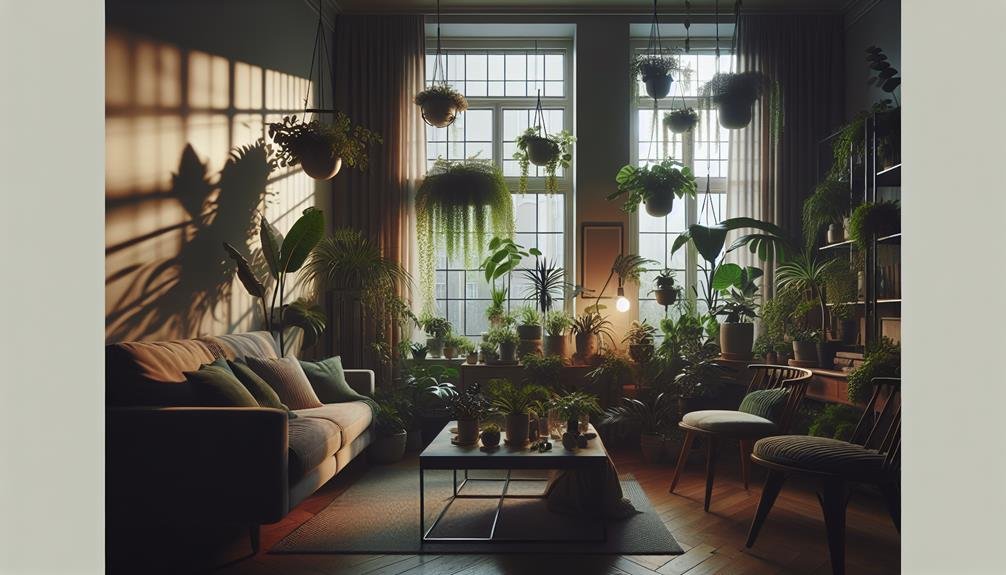
Step into a world where your home breathes new life with the serene presence of low-light plants. Picture the soft glow of green foliage dancing in the shadows, creating a tranquil oasis within your living space.
But how can you achieve this botanical transformation effortlessly, even in the darkest corners of your home? Stay tuned to discover the secrets of selecting the perfect low-light plants and nurturing them to thrive in their cozy, dimly lit abode.
Benefits of Low-Light Plants
Transform your living space effortlessly by incorporating low-light plants, offering a myriad of benefits such as air purification and mood enhancement. These plants can help remove harmful toxins from the air, promoting a healthier environment for you and your loved ones.
Not only do low-light plants freshen the air, but they also have the ability to boost your mood and reduce stress levels. Imagine coming home to a space filled with lush greenery that not only looks beautiful but also contributes to your overall well-being.
In addition to their air-purifying qualities, low-light plants are low-maintenance and perfect for those with busy schedules. They require minimal sunlight, making them ideal for rooms with limited natural light.
With the right selection of low-light plants, you can easily add a touch of nature to any corner of your home, creating a calming and inviting atmosphere. So why wait? Start reaping the benefits of low-light plants today and transform your living space into a peaceful sanctuary.
Top Low-Light Plant Varieties
Elevate your indoor garden with a selection of top low-light plant varieties that thrive in minimal sunlight conditions.
Spider plants are excellent choices for low-light environments, known for their air-purifying qualities and easy maintenance.
The pothos plant, with its vibrant green leaves, can brighten up any corner while requiring little light.
Peace lilies are elegant options that bloom lovely white flowers in low-light settings, adding a touch of beauty to your space.

Snake plants, also known as mother-in-law's tongue, are sturdy and can survive in low-light conditions with infrequent watering.
For a pop of color, consider African violets, which bloom in various shades and are well-suited for indoor settings with limited light.
Chinese evergreen plants are versatile and can thrive in both low light and bright, indirect light, making them adaptable to different spaces in your home.
Incorporating these top low-light plant varieties can bring life and freshness to your indoor spaces effortlessly.
Care Tips for Low-Light Plants
To ensure the health and vitality of your low-light plants, proper care is essential. Despite their ability to thrive in dimmer conditions, these plants still require attention.
Firstly, be mindful of watering. Overwatering can be a common issue, as low-light plants typically need less water. Ensure the soil is dry to the touch before watering again. Additionally, consider the plant's placement. While they can survive in low light, they still benefit from some indirect sunlight. Rotate your plants occasionally to ensure all parts receive adequate light.
Fertilizing low-light plants is also important but should be done sparingly. Too much fertilizer can harm these plants, so a diluted solution every few months should be sufficient. Keep an eye out for any signs of pests or diseases, as they can quickly spread in low-light conditions. Regularly dusting the leaves with a damp cloth can help prevent issues.
Creative Ways to Display Low-Light Plants
When looking to showcase your low-light plants, consider innovative ways to highlight their beauty within your living space. Hanging planters are a fantastic option for displaying your plants while also saving floor space. You can hang them near windows or from the ceiling to add a touch of greenery to any room.
Another creative idea is to repurpose old wooden crates or vintage suitcases into unique plant containers. These containers add a rustic charm and make for eye-catching displays.
If you have shelves in your home, use them to create a mini indoor garden by arranging your low-light plants at different heights. This not only adds a decorative element but also allows each plant to get adequate light.
For a more modern look, consider placing your plants in geometric planters or terrariums. These sleek containers provide a chic way to showcase your plants while adding a contemporary feel to your space. Get creative with your plant displays to bring life and style to your home effortlessly.
Troubleshooting Common Low-Light Plant Issues
If you notice your low-light plants showing signs of yellowing leaves or stunted growth, there are several common issues you can troubleshoot to help them thrive. One common problem is overwatering. Low-light plants typically require less water, so if you see waterlogged soil or wilting leaves, you may be watering them too frequently. Adjust your watering schedule to allow the soil to dry out between waterings.
Another issue could be inadequate light. Low-light plants can survive in low-light conditions, but they still need some indirect sunlight to thrive. If your plant isn't getting enough light, try moving it to a slightly brighter spot, but avoid direct sunlight as it can scorch the leaves.
Pests such as spider mites or mealybugs can also cause problems for low-light plants. Check your plants regularly for any signs of pests and treat them promptly with insecticidal soap or neem oil.
Frequently Asked Questions
Can Low-Light Plants Survive in Rooms With No Windows or Natural Light?
In rooms with no windows or natural light, low-light plants may struggle to survive. They typically need some level of light to thrive and carry out photosynthesis. Consider using artificial light sources like grow lights to provide the necessary light spectrum for their growth.
Without any light, these plants may not be able to survive for an extended period. Make sure to monitor their health and adjust lighting as needed to support their growth.
Are There Any Low-Light Plants That Are Safe for Pets to Be Around?
When looking for low-light plants safe for pets, consider options like spider plants, bamboo palms, or Boston ferns. These varieties are pet-friendly and can thrive in areas with minimal light.
Keep your furry friends in mind when choosing your indoor greenery to ensure a safe and happy environment for all. Remember to place these plants out of reach of curious pets to prevent any unwanted snacking!
How Often Should Low-Light Plants Be Fertilized?
You should fertilize low-light plants every 4 to 6 weeks during their active growing season. Use a diluted, balanced liquid fertilizer to avoid overfeeding.
Check the plant's specific requirements as some may need less frequent fertilization. Remember not to overdo it, as too much fertilizer can harm your plants.
Keep an eye on their growth and adjust the fertilizing schedule accordingly for healthy and thriving low-light plants.
Can Low-Light Plants Be Placed in a Bathroom With Low Humidity?
You can place low-light plants in a bathroom with low humidity. Make sure to choose plants that can thrive in such conditions, like snake plants or pothos.
These plants are more tolerant of lower humidity levels and can still grow well in your bathroom. Just be mindful of the light levels in the bathroom and water your plants accordingly to keep them healthy and happy in their new home.
Are There Any Low-Light Plants That Are Known for Improving Air Quality in the Home?
If you're looking to improve air quality in your home, several low-light plants can do the trick. Plants like snake plants, spider plants, and peace lilies are known for their air-purifying abilities. They can help filter out toxins and increase oxygen levels indoors.
Adding these plants to your living spaces can't only brighten up the room but also contribute to a healthier environment for you and your family.
Conclusion
Transforming your home with lush low-light plants is a simple and effective way to bring life and beauty into any space. With the right care and creative display ideas, you can easily incorporate these plants into your home decor.
From peace lilies to snake plants, there are plenty of low-light plant varieties to choose from. So go ahead, add some greenery to your home and enjoy the benefits of a healthier, more vibrant living environment.



