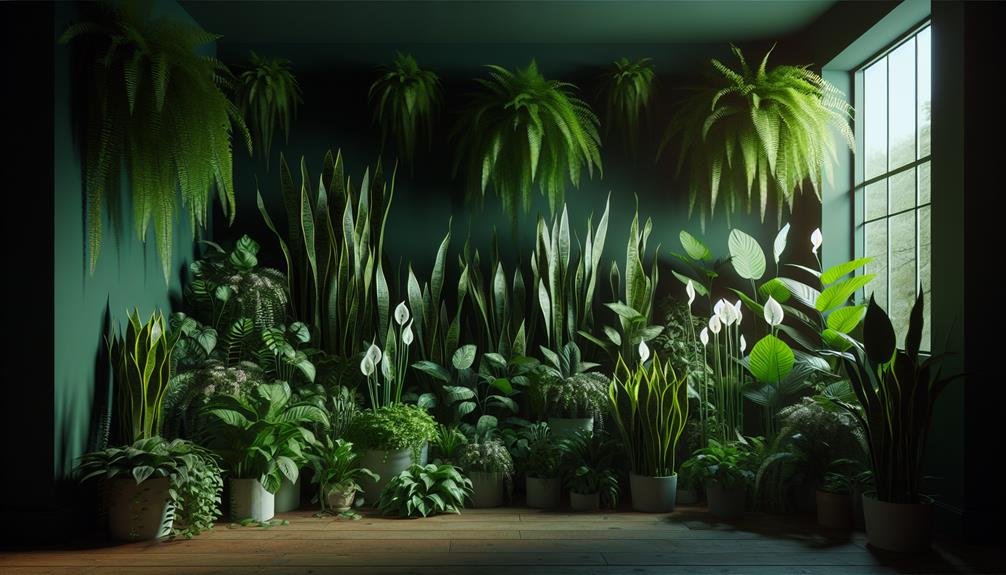
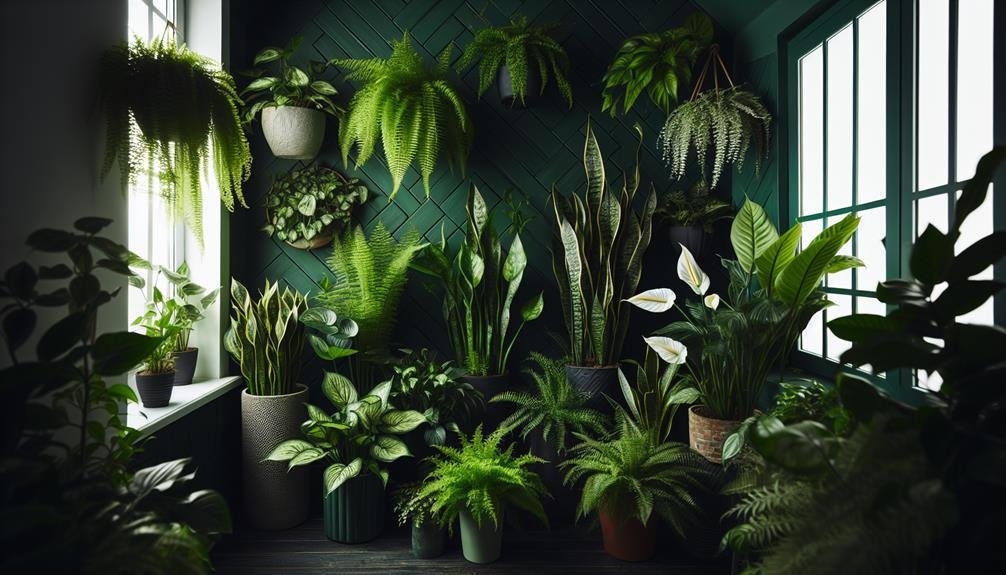
In a dimly lit room where traditional plants struggle, there are a few resilient options that thrive effortlessly.
Imagine adding a touch of greenery to your space without the worry of constant sunlight demands. These indoor plants not only tolerate low light but also elevate the ambiance with their lush foliage.
What sets them apart is their ability to purify the air, making them not only visually appealing but also beneficial for your well-being.
Snake Plant
If you're looking for a low-maintenance indoor plant that thrives in low light conditions, consider the Snake Plant. Also known as Sansevieria or Mother-in-Law's Tongue, this plant is a popular choice for many households due to its hardiness and unique vertical leaves. The Snake Plant is perfect for busy individuals as it requires minimal care and can survive in various environments.
This plant isn't only aesthetically pleasing but also offers numerous health benefits. It's known for its air-purifying properties, as it can remove toxins such as formaldehyde and benzene from the air, making it an excellent choice for improving indoor air quality. Additionally, the Snake Plant releases oxygen at night, making it ideal for bedrooms to promote better sleep.
In terms of care, the Snake Plant thrives in indirect light and only needs to be watered sparingly. Overwatering can be detrimental to this plant, so it's best to let the soil dry out between waterings. With its striking appearance and easy maintenance, the Snake Plant is a fantastic addition to any low-light indoor space.
Peace Lily
Moving on from the Snake Plant, another excellent indoor plant for low light settings is the Peace Lily. The Peace Lily, with its elegant white flowers and deep green leaves, is a popular choice for adding a touch of beauty to any indoor space. Not only is it visually appealing, but it also helps purify the air by removing harmful toxins like formaldehyde, benzene, and ammonia.
One of the best features of the Peace Lily is its ability to thrive in low light conditions, making it perfect for offices or rooms with limited natural light. This plant is relatively low maintenance, requiring watering only when the soil is dry to the touch. However, be mindful not to overwater the Peace Lily, as it's susceptible to root rot.
The Peace Lily is also known for its air-purifying qualities, promoting a healthier environment indoors. It's a great choice for those looking to add a touch of nature to their home or workspace without the need for direct sunlight.
ZZ Plant
The ZZ Plant stands out as a resilient and visually striking option for indoor settings with low light conditions. This plant, with its glossy, dark green leaves that grow in a unique feather-like pattern, adds a touch of elegance to any room. One of the key advantages of the ZZ Plant is its ability to thrive in environments where other plants may struggle due to low light levels. It's a low-maintenance plant, making it perfect for individuals who've busy schedules or are new to plant care.

When caring for your ZZ Plant, ensure that you place it in indirect light as direct sunlight can cause its leaves to burn. Water the plant sparingly, allowing the soil to dry out between waterings to prevent root rot. The ZZ Plant is also known for its air-purifying qualities, helping to improve the air quality in your home.
Pothos
Explore the versatility of Pothos, a popular choice for indoor spaces with its vibrant foliage and easy-care nature. Pothos, also known as Devil's Ivy, thrives in low light conditions, making it an ideal plant for those dimly lit corners of your home. This hardy plant features heart-shaped leaves that come in various shades of green, from light to dark, adding a touch of natural beauty to any room.
One of the best features of Pothos is its ability to purify the air, removing toxins like formaldehyde and benzene, creating a healthier environment for you to enjoy. The low light tolerance of Pothos makes it a perfect option for offices, bathrooms, or bedrooms with minimal natural light.
Caring for Pothos is a breeze – simply water it when the top inch of soil feels dry, and watch it thrive. You can also trim and propagate Pothos easily, allowing you to expand your plant collection effortlessly. With its attractive foliage and undemanding nature, Pothos is a must-have for any indoor plant enthusiast looking to brighten up their space.
Cast Iron Plant
Wondering which indoor plant can withstand low light conditions like a champ? Look no further than the Cast Iron Plant (Aspidistra elatior). This resilient plant is a perfect choice for those dimly lit corners in your home or office where other plants struggle to thrive.
The Cast Iron Plant is known for its ability to tolerate neglect and low light levels, earning its reputation as a hardy and adaptable houseplant. Its dark green, leathery leaves bring a touch of elegance to any space, even without abundant sunlight. This plant is a great option for beginners or busy individuals who may not have the time to provide constant care and attention.
In addition to its low light tolerance, the Cast Iron Plant is also relatively pest-resistant and can withstand fluctuations in temperature. It requires minimal watering, making it a low-maintenance choice for indoor plant enthusiasts. With its robust nature and attractive foliage, the Cast Iron Plant is a top contender for adding greenery to your low light environments.
Frequently Asked Questions
Are These Indoor Plants Safe for Pets to Be Around?
Indoor plants can be safe for pets, but it's essential to research each plant's toxicity level. Some common indoor plants can be harmful to pets if ingested.
Be cautious and choose non-toxic options if you have pets around. Make sure to place them out of reach or opt for pet-friendly plants to keep your furry friends safe and your home green and vibrant.
How Often Should These Plants Be Watered in Low Light Settings?
In low light settings, water your indoor plants less frequently compared to those in brighter spots. Check the soil moisture by sticking your finger in about an inch deep. If it feels dry, then it's time to water.
Overwatering can harm your plants, so it's better to let them dry out a bit between waterings. Adjust based on the specific needs of your plant type and the conditions in your home.
Do These Plants Require Any Special Fertilization or Care?
To keep your indoor plants thriving in low light, special care is key. Regular fertilization can help replenish nutrients that may be lacking. Consider a balanced houseplant fertilizer diluted to half strength. Be cautious not to over-fertilize, as it can harm your plants.
Adjust your care routine based on plant type and individual needs. Consistent monitoring and adjusting will ensure your plants stay healthy and vibrant in low light conditions.
Can These Plants Thrive in Air-Conditioned or Heated Environments?
In air-conditioned or heated environments, your plants can still thrive with proper care. Maintaining consistent temperatures and humidity levels is crucial. Be mindful of drafts or vents that might affect your plants. Consider placing them away from direct airflow.
Regularly check the soil moisture and adjust your watering schedule accordingly. With a little attention to detail, your indoor plants can flourish in these environments.
Are There Any Potential Pests or Diseases That These Plants Are Prone to in Low Light Settings?
In low light settings, indoor plants may be prone to pests like spider mites, mealybugs, and fungus gnats. These pests thrive in conditions with limited light and can cause damage to your plants if not addressed promptly.
It's essential to regularly inspect your plants for any signs of infestation and take appropriate measures to control and prevent these pests from spreading. Proper care and maintenance can help keep your plants healthy and pest-free.
Conclusion
So there you have it – some of the best indoor plants for low light settings. Whether you have a dimly lit room or just prefer plants that can thrive in lower light conditions, these options are sure to brighten up your space.
With their ability to purify the air and add a touch of greenery to your home, these plants are a great choice for any indoor environment. Give them a try and enjoy the benefits they bring!