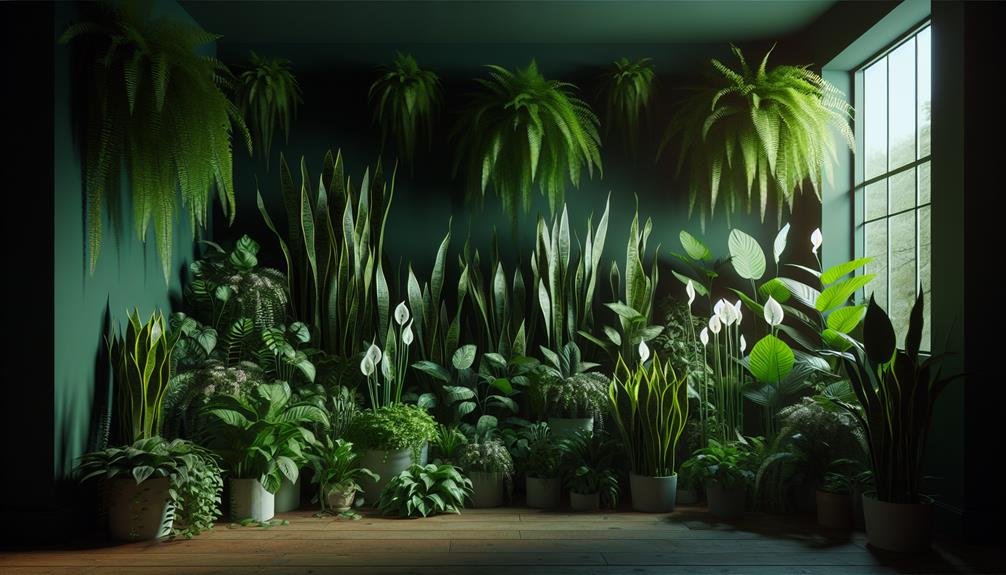
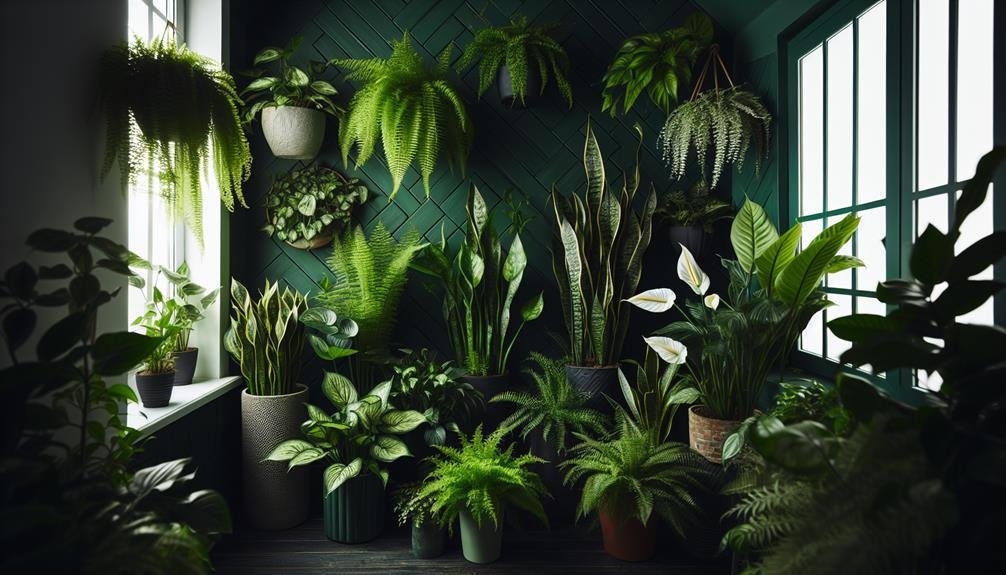
Step into a world where the subtle dance of shadows shapes a serene atmosphere within your living space. Discover how shade-loving houseplants can transform your home into a tranquil oasis, bringing a touch of nature's elegance indoors.
But what makes these plants so special, and how can they thrive in environments where sunlight is scarce? Explore the secrets behind these green companions and unlock the key to creating a cozy sanctuary right in your own home.
Benefits of Shade-Loving Houseplants
Shade-loving houseplants provide a vibrant touch of greenery to dimly lit spaces, enhancing indoor air quality and creating a soothing atmosphere. By choosing these plants for your home, you aren't only adding beauty but also reaping numerous benefits. These plants are excellent at purifying the air, absorbing toxins, and releasing oxygen, making your indoor environment healthier and more refreshing.
In addition, their presence can help reduce stress levels and improve overall well-being, as the sight of greenery is known to have a calming effect on the mind.
Having shade-loving houseplants around also adds a touch of nature to your living space, even if you have limited access to natural light. Their lush foliage can brighten up any corner and bring life to areas that may otherwise feel dull or uninviting. Furthermore, caring for these plants can be a rewarding experience, as they're often low-maintenance and can thrive with minimal attention.
Top 5 Low-Light Indoor Plants
When looking to brighten up dimly lit spaces, consider incorporating these top 5 low-light indoor plants for a touch of greenery.
- Snake Plant: Known for its resilience and air-purifying qualities, the snake plant thrives in low light and requires minimal maintenance, making it perfect for beginners. Its striking upright leaves add a modern touch to any room.
- ZZ Plant: With its glossy leaves and low light tolerance, the ZZ plant is a great choice for adding a pop of green to darker corners. It's drought tolerant and can go for long periods without water.
- Peace Lily: This elegant plant with its dark green leaves and white flowers can bloom in low light, bringing a sense of tranquility to your space. It also helps improve air quality.
- Pothos: A classic choice for low-light conditions, pothos vines can trail gracefully or climb, adding a lush feel to your home. They're easy to care for and propagate.
- Spider Plant: The spider plant's long, arching leaves and air-purifying qualities make it a popular choice for low-light environments. It thrives in indirect sunlight and is known for its easy propagation.
Tips for Caring for Shade-Loving Plants
To ensure the health and vitality of your low-light indoor plants, it's important to understand and implement effective care tips for shade-loving plants.
First, make sure to place your plants in areas with indirect sunlight to prevent them from getting scorched. Water your shade-loving plants thoroughly but allow the soil to dry out slightly between waterings to prevent root rot. It's crucial to choose the right type of soil that drains well to avoid waterlogging.
Fertilize your plants sparingly, as they generally require less fertilizer than plants that receive more sunlight. Keep an eye out for common pests like spider mites or mealybugs, which can thrive in low-light conditions. Regularly dust the leaves of your plants to ensure they can absorb as much light as possible.
Lastly, monitor the humidity levels in your home, as many shade-loving plants prefer slightly higher humidity. By following these care tips, you can enjoy healthy and thriving shade-loving houseplants in your cozy home.

Creative Ways to Display Shade-Loving Houseplants
Consider incorporating hanging planters or wall-mounted shelves to showcase your shade-loving houseplants in a creative and eye-catching way. Hanging planters not only save space but also add a touch of greenery at different eye levels, making your space feel more dynamic. You can hang them near windows, in corners, or even create a hanging garden in unused vertical spaces. Wall-mounted shelves are another fantastic option to display your plants while adding a decorative element to your walls. Mix and match different plant sizes and shapes to create an interesting visual display.
If you have limited floor space, consider placing a tall plant stand in a corner to create a mini indoor garden. This will draw the eye upward and make good use of vertical space. Additionally, placing plants on floating shelves or bookcases can create a lush and cozy atmosphere in any room. Get creative with your plant placements to bring life and personality to your home while keeping your shade-loving plants happy and thriving.
Troubleshooting Common Issues With Low-Light Plants
Having trouble keeping your shade-loving houseplants healthy and thriving? Here are some common issues you might encounter with low-light plants and how to troubleshoot them.
Firstly, yellowing leaves can be a sign of overwatering. Make sure your plant's pot has proper drainage to prevent waterlogged soil. Trim any yellow leaves to encourage new growth.
Secondly, leggy or spindly growth occurs when a plant isn't receiving enough light. Consider moving your plant to a brighter location or supplementing with artificial light if natural light is limited.
Additionally, pests like spider mites and mealybugs can sometimes infest low-light plants. To combat these, regularly inspect your plant for any signs of pests and treat them promptly with insecticidal soap or neem oil.
Furthermore, lack of humidity can lead to brown tips on leaves. Increase humidity levels by misting your plant or placing it on a pebble tray filled with water.
Frequently Asked Questions
Can Shade-Loving Houseplants Thrive in Rooms With No Windows?
You might struggle to keep shade-loving houseplants thriving in rooms with no windows. These plants typically need some natural light to grow properly.
Without windows, you might need to consider alternative light sources like grow lights to provide the necessary light for their growth.
Are There Any Shade-Loving Houseplants That Are Safe for Pets?
When looking for shade-loving houseplants that are safe for pets, opt for options like the spider plant, Boston fern, or the parlor palm.
These plants not only thrive in low-light conditions but are also non-toxic to your furry friends. Remember to keep your pets' safety in mind when choosing greenery for your home.
With these pet-friendly options, you can create a cozy and inviting space without worrying about any harm to your animals.
How Often Should I Rotate My Shade-Loving Houseplants to Ensure Even Growth?
To ensure even growth for your shade-loving houseplants, rotate them regularly. This helps prevent your plants from leaning towards the light source, promoting balanced development.
A good rule of thumb is to rotate them every 1-2 weeks. By doing so, you'll encourage all sides of the plant to receive adequate sunlight, resulting in healthier and more symmetrical growth.
Keep an eye on your plants and adjust the rotation frequency based on their specific needs.
Can Shade-Loving Houseplants Be Placed Near Air Conditioning Vents or Radiators?
Sure!
Placing shade-loving houseplants near air conditioning vents or radiators can be a bit tricky. The temperature fluctuations and dry air from these sources mightn't be ideal for their growth. It's best to keep them away from direct exposure to maintain their health.
Consider finding a spot with indirect light and consistent temperature to keep your plants thriving.
Are There Any Shade-Loving Houseplants That Can Help Improve Indoor Air Quality?
If you're looking to enhance indoor air quality with shade-loving houseplants, consider options like peace lilies, spider plants, or pothos.
These plants not only thrive in low-light conditions but also help purify the air by absorbing toxins like formaldehyde and benzene.
Conclusion
So if you're looking to add some greenery to your home but don't have a lot of natural light, don't worry! There are plenty of shade-loving houseplants that will thrive in low-light conditions.
With the right care and a little creativity, you can create a cozy and inviting space filled with beautiful plants that will bring a touch of nature indoors.
Happy gardening!