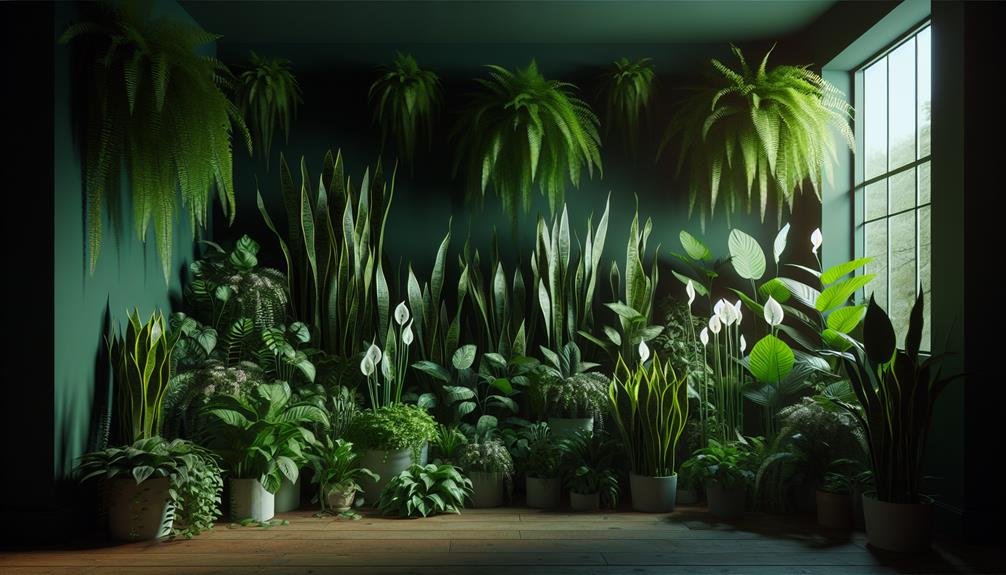
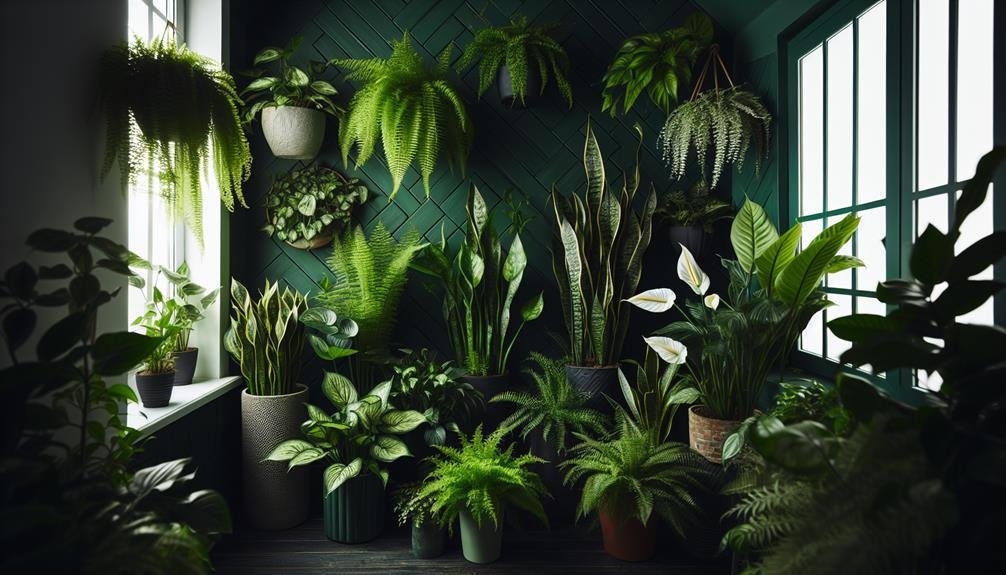
If you've ever tried to brighten up a dim corner in your home with a plant, you know the struggle of finding the right match. But fear not, there are plants out there that thrive in low-light conditions and can bring life to even the darkest rooms.
Understanding which plants can survive in such environments is key to creating a lush and inviting space. So, let's explore the world of greenery that can flourish in the shadows of your home.
Ideal Conditions for Dark Rooms
When selecting plants for dark rooms, consider their adaptability to low light conditions and minimal watering needs. Think about plants like snake plants, pothos, or peace lilies that thrive in low light environments. These plants can add a touch of greenery to even the darkest corners of your home without needing constant attention.
In dark rooms, natural light is scarce, so it's crucial to choose plants that can survive with minimal sunlight. Look for plants that have adapted to low light conditions, such as ZZ plants or spider plants. These varieties can thrive in dimly lit spaces and are perfect for adding some life to your dark room.
Additionally, consider the watering needs of the plants you choose for your dark room. Opt for plants that don't require frequent watering, like succulents or rubber plants. These plants are more forgiving if you forget to water them occasionally, making them ideal choices for low light environments. Remember, the key to successfully incorporating plants into dark rooms is selecting ones that can thrive with minimal light and care.
Top Low-Light Plant Options
Consider the following top low-light plant options that can thrive in dimly lit spaces and add a touch of greenery to your dark room.
- Snake Plant: Perfect for beginners, snake plants are hardy and can survive with minimal light and water. They come in various sizes and patterns, making them a versatile choice for any space.
- Spider Plant: Known for its air-purifying qualities, the spider plant can thrive in low light conditions. Its arching leaves and white flowers can brighten up any room.
- Peace Lily: With its elegant white blooms, the peace lily is a great option for dark rooms. It requires very little light and can even help improve air quality.
- ZZ Plant: A popular choice for low-light spaces, the ZZ plant is virtually indestructible. Its shiny, dark green leaves can add a modern touch to your room.
- Cast Iron Plant: True to its name, the cast iron plant is extremely resilient and can tolerate low light, neglect, and fluctuating temperatures. Its dark green leaves bring a lush feel to any dark corner.
Care Tips for Low-Light Plants
To ensure the health and longevity of your low-light plants, it's essential to provide them with proper care and attention. Low-light plants thrive in environments with minimal natural light, but they still need some light to grow. Place them near a window with indirect sunlight or provide artificial light sources like fluorescent or LED grow lights.
Water your low-light plants when the top inch of soil feels dry to the touch, as overwatering can lead to root rot. Ensure the pots have drainage holes to prevent waterlogging. Fertilize your plants sparingly, as they typically require less nutrients in low-light conditions. Dust the leaves regularly with a damp cloth to keep them clean and allow for proper photosynthesis.
Monitor your plants for any signs of pests or diseases, and address any issues promptly to prevent them from spreading. By following these care tips, you can enjoy thriving low-light plants in your dark spaces.
Benefits of Plants in Dark Spaces
Dark rooms can benefit greatly from the presence of plants, bringing life and vibrancy to otherwise dim spaces. Plants have the remarkable ability to thrive in low-light conditions, making them perfect companions for areas with minimal natural light. Not only do they add a touch of greenery to your space, but plants also help purify the air by absorbing carbon dioxide and releasing oxygen through photosynthesis. This can enhance the air quality in your dark room, creating a healthier environment for you to breathe in.

In addition to their air-purifying qualities, plants can also have a positive impact on your mental well-being. Studies have shown that being around plants can reduce stress, increase productivity, and improve overall mood. Their presence can create a calming and soothing atmosphere, making your dark room feel more inviting and comfortable. By incorporating plants into your space, you not only bring a bit of nature indoors but also reap the numerous benefits they offer in enhancing both the aesthetics and atmosphere of your room.
Decorating Tips for Dark Rooms
Enhancing a dark room with strategic lighting and reflective surfaces can help create the illusion of brightness and spaciousness. When working with a dark space, consider incorporating light fixtures that provide ambient lighting without overwhelming the room. Floor lamps with adjustable heads can direct light where needed, while wall sconces can add a soft glow without taking up floor space.
Mirrors are another essential tool for brightening up a dark room. Placing mirrors across from windows can help bounce natural light around the space, making it feel more open and airy. Additionally, mirrored furniture or decor items can further enhance this effect by reflecting light and creating the illusion of depth.
Opt for light-colored paint or wallpaper to help brighten the room and make it feel larger. Soft hues like pale blues, greens, or yellows can add a touch of warmth without overwhelming the space. Remember to keep clutter to a minimum to maintain a clean and spacious feel in the room.
Frequently Asked Questions
Can Low-Light Plants Survive Without Any Natural Sunlight?
Yes, low-light plants can survive without any natural sunlight. These plants have adapted to thrive in dim conditions by relying on artificial light sources or ambient room lighting.
While they may not grow as quickly or bloom as often as plants in brighter environments, they can still live and add a touch of green to your space. Just make sure to provide them with adequate care and the right light conditions.
Are There Any Low-Light Plants That Are Safe for Pets?
When looking for low-light plants that are safe for pets, consider options like spider plants, parlor palms, or Boston ferns. These plants not only thrive in low-light conditions but are also non-toxic to your furry friends.
What Are the Most Common Issues That Low-Light Plants Face in Dark Rooms?
In dark rooms, low-light plants commonly face issues like slow growth, leggy stems, and reduced foliage. Lack of sunlight can hinder photosynthesis, leading to weaker plants. Without proper light, plants struggle to produce energy and may become spindly.
It's essential to address these challenges by choosing suitable plants and providing artificial light if needed. Ensure your plants receive enough care to thrive in low-light conditions and combat these common issues effectively.
How Often Should Low-Light Plants Be Watered in a Dark Room?
In a dark room, low-light plants should be watered sparingly. Overwatering can lead to root rot due to the reduced light and slower drying of the soil. It's essential to check the soil moisture levels before watering to prevent waterlogged conditions.
Are There Any Low-Light Plants That Can Help Improve Air Quality in Dark Rooms?
In dark rooms, certain low-light plants like snake plants, spider plants, or peace lilies can help improve air quality. These plants are known for their ability to purify the air by removing toxins and producing oxygen. They're great choices for adding some greenery and cleaner air to your space, even in low-light conditions.
Just ensure to place them in spots where they can still get some indirect light for optimal growth and air-purifying benefits.
Conclusion
Overall, adding low-light plants to your dark rooms can brighten up the space and improve air quality. With the right care and attention, these plants can thrive even in the darkest corners of your home.
Consider incorporating some of the top low-light plant options mentioned in this guide to bring life and greenery into your dimly lit rooms. Remember, a little bit of nature can go a long way in transforming your space.