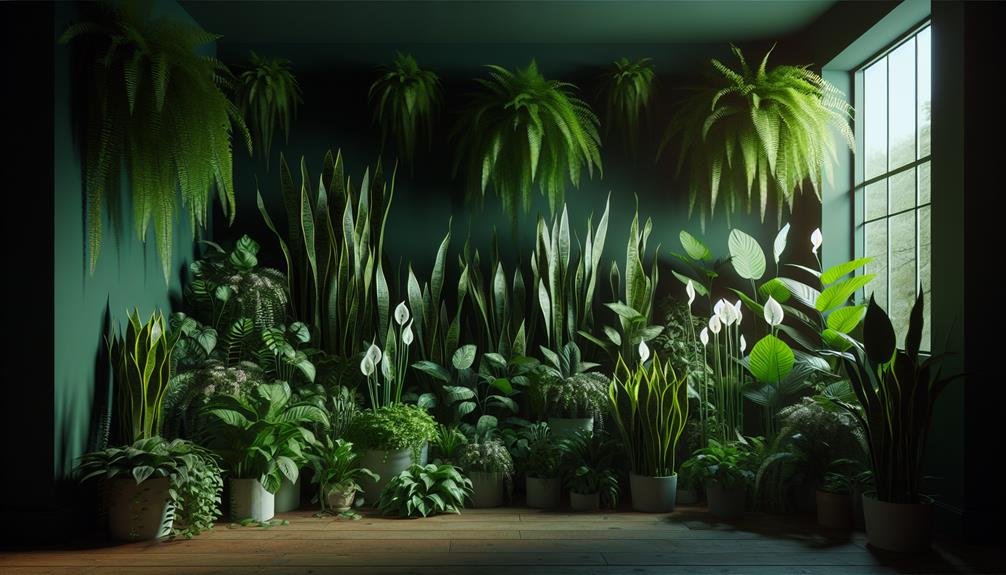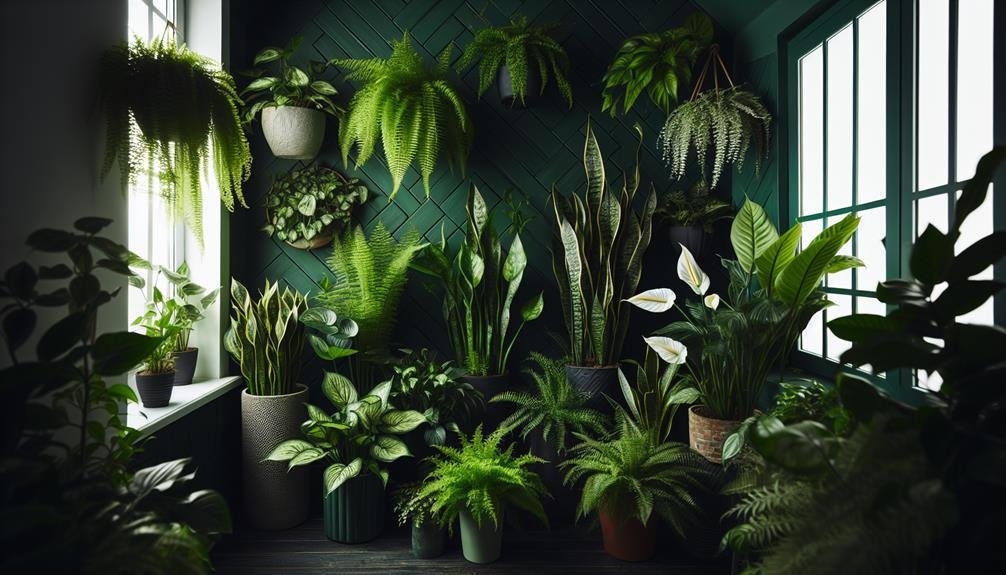
Step into a room where soft, dappled light dances through the leaves of lush green plants, casting tranquil shadows on the walls.
The interplay of greenery in dimly lit spaces can transform a mundane area into a captivating oasis, offering a breath of fresh air and a touch of nature in unexpected ways.
Discover how incorporating greenery into dimly lit environments can elevate your surroundings and enhance your well-being – it's a design choice that goes beyond mere aesthetics.
Benefits of Greenery in Low Light
In dimly lit spaces, greenery thrives by adapting to lower light conditions, adding a touch of natural vibrancy to any room. Having plants in areas with less light can significantly enhance the ambiance and bring life to otherwise dull spaces. These green companions not only beautify your surroundings but also have numerous benefits for your well-being.
Plants are natural air purifiers, absorbing carbon dioxide and releasing oxygen through photosynthesis. In low light conditions, certain plants like peace lilies, snake plants, or pothos can still effectively filter the air, improving the overall air quality in your home. This can help reduce stress, increase productivity, and boost your mood.
Moreover, greenery in dim spaces can act as natural humidifiers, releasing moisture into the air through a process called transpiration. This can be particularly beneficial during dry seasons or in air-conditioned rooms, helping to alleviate respiratory issues and prevent dry skin. Embracing these benefits, you can create a healthier and more inviting environment by incorporating greenery into your dimly lit spaces.
Best Plants for Dim Spaces
Thriving in dimly lit spaces, certain plants bring both beauty and functionality to your indoor environment. When selecting greenery for areas with limited sunlight, consider plants such as the cast-iron plant, snake plant, or peace lily.
These resilient options can thrive in low light conditions and require minimal maintenance, making them ideal choices for spaces with inadequate natural light. The cast-iron plant, known for its sturdy nature, can withstand neglect and low light levels, adding a touch of green to your dim room effortlessly.
Similarly, the snake plant, with its striking upright leaves, not only thrives in low light but also helps purify the air by removing toxins. For a touch of elegance, the peace lily is a great option, producing beautiful white flowers while thriving in shaded areas.
Tips for Plant Care Indoors
For successful indoor plant care, prioritize consistent watering and proper sunlight exposure. Water your plants when the top inch of soil feels dry to the touch – this helps prevent root rot from overwatering. Make sure your plants receive adequate light; south or west-facing windows typically provide the best light for most indoor plants. If natural light is limited, consider using grow lights to supplement.

Dust the leaves of your plants regularly to ensure they can photosynthesize efficiently. Rotate your plants occasionally to promote even growth on all sides. Use well-draining pots to prevent waterlogging, and repot your plants when they outgrow their current containers. Fertilize your plants during their growing season, typically in spring and summer, to provide essential nutrients. Keep an eye out for pests and treat them promptly to prevent infestations.
Design Ideas With Dim Lighting
To enhance the ambiance of dimly lit spaces with your thriving indoor plants, consider creative design ideas that complement the subdued lighting. Opt for plants with varying leaf textures and shades to create visual interest in the low light conditions. Hanging plants like English Ivy or Spider Plants can add depth to the room by cascading down shelves or from ceiling hooks. Place potted plants strategically near light sources, such as windows or under artificial lighting, to highlight their beauty in the dim environment.
Incorporate reflective surfaces like mirrors or metallic plant pots to bounce light around the room and amplify the effect of the dim lighting on your lush greenery. Utilize fairy lights or small LED light fixtures hidden among the plants to provide a subtle glow and illuminate your indoor garden during the dark hours. Experiment with different plant heights and groupings to add dimension and create a dynamic display in your dimly lit space.
Creating a Serene Atmosphere
When aiming to cultivate a serene atmosphere in your dimly lit space, focus on incorporating elements that promote relaxation and tranquility. Start by selecting a color palette dominated by soft, muted hues like pale blues, greens, and earthy tones, which can help create a calming ambiance. Integrate comfortable seating options such as plush cushions and cozy throws to encourage a sense of coziness and peace. Consider adding natural elements like indoor plants or a small water feature to bring a touch of the outdoors inside and enhance the overall tranquility of the space.
To further enhance the serene atmosphere, incorporate soft, ambient lighting sources like candles, string lights, or salt lamps to create a warm and inviting glow. Opt for natural materials such as wood, bamboo, or rattan in your furniture and decor choices to foster a sense of harmony and relaxation. Finally, declutter the space and keep it organized to promote a sense of calm and serenity. By combining these elements thoughtfully, you can transform your dimly lit space into a peaceful sanctuary where you can unwind and rejuvenate.
Frequently Asked Questions
Can Greenery Survive in Low Light Conditions Without Any Natural Sunlight?
Yes, greenery can survive in low light conditions without natural sunlight. Many plants, such as pothos and snake plants, are well adapted to thrive in dimly lit spaces. They've evolved to be able to photosynthesize efficiently with minimal light.
Are There Any Special Considerations for Watering Plants in Dimly Lit Spaces?
When watering plants in dimly lit spaces, be mindful of the moisture levels. It's crucial not to overwater as the reduced light can slow down the plant's water intake. Check the soil regularly to ensure it's not too damp.
Adjust your watering schedule accordingly, allowing the soil to dry out slightly between waterings. Consider using pots with drainage holes to prevent waterlogging and root rot. Proper watering is key to plant health in low-light environments.
How Can I Prevent Pests From Infesting My Indoor Plants in Low Light Conditions?
To prevent pests from infesting your indoor plants in low light conditions, ensure good air circulation by using a fan.
Keep your plants clean by wiping down leaves regularly.
Avoid overwatering, as damp conditions can attract pests.
Inspect your plants frequently for any signs of pests and address the issue promptly.
Consider using natural remedies like neem oil or insecticidal soap to combat infestations effectively.
Are There Specific Types of Fertilizer That Work Best for Plants in Dimly Lit Areas?
In dimly lit areas, opt for fertilizers labeled as 'low light' or 'slow-release' to help your plants thrive. These types of fertilizers are formulated to provide essential nutrients at a controlled pace, supporting plant growth even in less than ideal lighting conditions.
Remember to follow the instructions on the fertilizer packaging to avoid overfeeding your plants, which can be harmful. Your green companions will thank you for the nourishment!
Can Artificial Lighting Be Used to Supplement the Lack of Natural Light for Indoor Plants in Low Light Conditions?
Yes, you can use artificial lighting to supplement the lack of natural light for indoor plants in low light conditions. Place the lights close to the plants and keep them on for about 12-16 hours a day. Choose full-spectrum LED lights for optimal growth.
Make sure to monitor the plants' response to the artificial light and adjust the lighting schedule as needed. With proper care, your indoor plants can thrive even in dimly lit spaces.
Conclusion
Overall, adding lush greenery to dimly lit spaces can bring life and serenity to any room.
With the right plants and care, you can create a beautiful and tranquil atmosphere even in areas with limited natural light.
By incorporating greenery into your indoor spaces, you can enjoy the benefits of improved air quality, relaxation, and a touch of nature all year round.
Embrace the beauty of nature in every corner of your home.