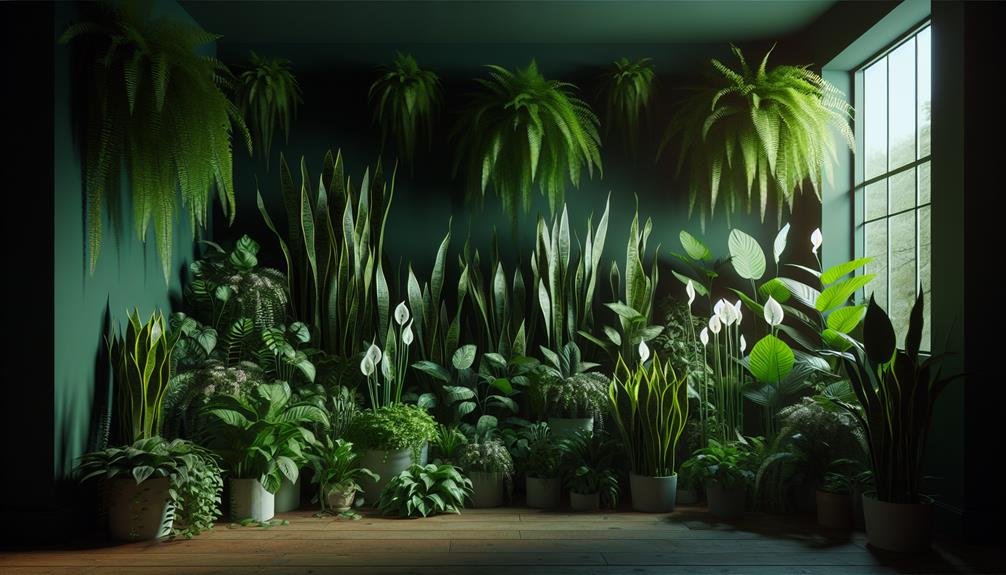
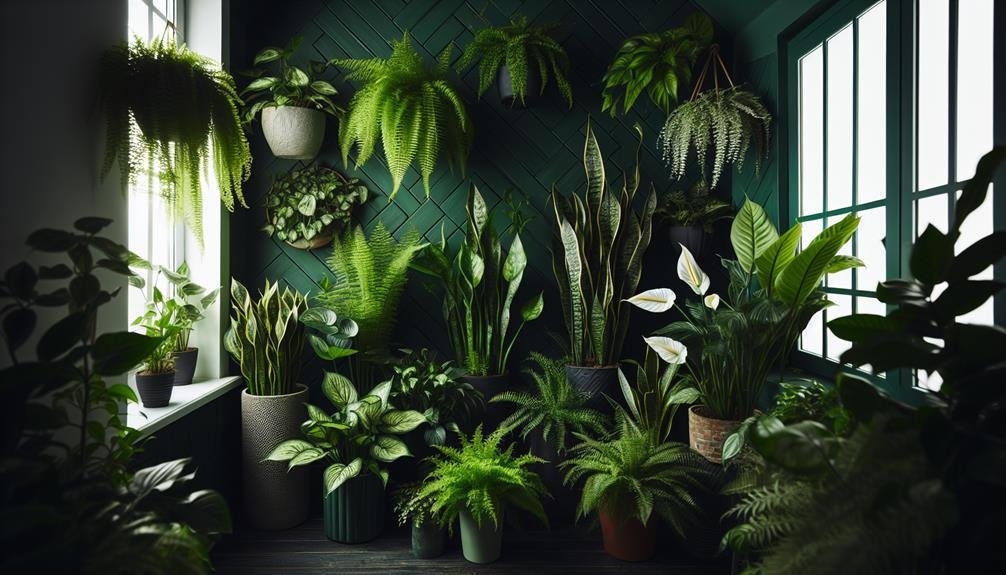
In a world where even the dimmest corners can thrive with a touch of green, finding the best plants for dark rooms is a quest worth embarking on.
Imagine transforming your light-deprived spaces into lush oases of life and tranquility with the right selection of green companions.
Discover how these resilient plants can breathe new life into your home, offering not just beauty but also potential health benefits.
Let's explore the top contenders that can thrive in the shadows and bring a touch of nature to your darkest rooms.
Benefits of Plants in Low-Light Environments
In low-light environments, plants thrive by efficiently utilizing available light sources for photosynthesis. They've evolved unique adaptations to make the most of limited light, such as larger surface areas on leaves to capture as much light as possible. Despite the challenges, plants can still grow and even flourish in darker spaces. By having green pigments like chlorophyll, plants are able to absorb light energy and convert it into sugars that fuel their growth. This process, known as photosynthesis, is essential for plants to produce their own food and survive.
Plants in low-light conditions also play a crucial role in improving indoor air quality. They help to filter out harmful toxins and pollutants, releasing oxygen and creating a healthier environment for you to breathe in. Additionally, having plants around can boost your mood and reduce stress levels, creating a more calming and inviting atmosphere in your home. So, consider adding some green companions to your dark rooms not just for aesthetic appeal but also for the numerous benefits they bring.
Factors to Consider Before Choosing Plants
Consider the specific lighting conditions in your dark rooms before selecting plants that can thrive in such environments. Low-light plants are adaptable to areas with minimal natural light, making them suitable for rooms with limited sunlight exposure.
Factors to consider include the amount of indirect light the room receives, as well as any artificial lighting available. Evaluate the duration of light exposure in the room throughout the day to determine the plant's suitability for the space.
Additionally, assess the temperature and humidity levels in the room, as these factors can impact plant growth and health. Some plants may require warmer temperatures or higher humidity levels to thrive in low-light conditions.
Consider the maintenance requirements of the plants you're interested in, as some may need more frequent watering or specific care routines. By taking these factors into account, you can select plants that are well-suited for the specific dark room environment you have.

Top 10 Plants for Dark Rooms
For selecting plants that thrive in low-light environments like dark rooms, here are the top 10 recommended options.
- Snake Plant: Known for its resilience and ability to thrive in low light.
- ZZ Plant: Requires minimal care and can survive in various light conditions.
- Spider Plant: Adaptable to different light levels and helps purify the air.
- Peace Lily: Flourishes in low light and blooms beautiful white flowers.
- Pothos: Versatile plant that can thrive in low light and even artificial light.
- Cast Iron Plant: Ideal for dark rooms as it can withstand neglect and low light.
- Parlor Palm: Enjoys indirect light and adds a tropical touch to any space.
- Dracaena: Comes in various varieties, some of which do well in low light.
- Philodendron: Easy to care for and can tolerate low-light conditions.
- Chinese Evergreen: Thrives in low light and brings color to dim spaces.
These plants are perfect for adding greenery and life to your dark room without requiring constant exposure to sunlight.
Care Tips for Low-Light Plant Varieties
Optimizing the care routine for low-light plant varieties ensures their health and longevity in dimly lit spaces. When caring for plants in low-light conditions, it's crucial to remember a few key tips.
Firstly, make sure not to overwater your plants, as they may not be able to dry out as quickly in low light. Stick to a schedule based on the plant's specific needs.
Additionally, dusting the leaves regularly with a damp cloth helps the plant maximize light absorption. Consider rotating your plants occasionally to ensure all sides receive adequate light exposure.
Fertilize sparingly, as low-light plants generally have slower growth rates and may not require as many nutrients. Keep an eye out for any signs of stress or disease, and address them promptly.
Lastly, choose the right potting mix for your low-light plants, ensuring good drainage while retaining enough moisture. By following these care tips, you can help your low-light plant varieties thrive in their dimly lit environment.
Creative Ways to Display Dark Room Plants
To enhance the ambiance of your dark room, explore innovative ways to showcase your low-light plants creatively. Hanging planters can be a fantastic option for dark rooms, allowing your plants to cascade down and make use of vertical space. Macrame hangers or geometric wall-mounted plant holders can add a touch of style while keeping your plants within reach of any available light.
Another creative idea is to place your plants on shelves or wall-mounted planters at varying heights to create visual interest and make the most of any natural light that filters into the room.
Consider placing your dark room plants in decorative pots that complement your existing decor. Opt for colorful ceramic pots, minimalist planters, or even quirky containers like teacups or mason jars to add personality to your space. Grouping different types of plants together can also create a lush, jungle-like feel in your dark room. Experiment with mixing textures, shapes, and sizes to design an eye-catching display that thrives in low-light conditions.
Frequently Asked Questions
Can Plants in Low-Light Environments Still Purify the Air Effectively?
In low-light environments, plants can still effectively purify the air. They may not photosynthesize as much as in brighter settings, but their air-purifying abilities remain active.
Even in dim spaces, plants continue to filter out toxins and release oxygen, improving indoor air quality.
Are There Any Low-Light Plants That Are Safe for Pets to Be Around?
When looking for low-light plants safe for pets, consider options like spider plants, Boston ferns, or parlor palms. These plants can thrive in dim environments and are non-toxic to your furry friends.
Remember to place them out of reach to prevent nibbling mishaps.
With a little care and attention, you can enjoy a green space that's both pet-friendly and visually appealing in your home.
How Can I Prevent Overwatering My Low-Light Plants?
To prevent overwatering your low-light plants, ensure you let the soil dry out between waterings. Stick your finger about an inch into the soil; if it's dry, then it's time to water.
Make sure your pots have drainage holes to prevent water from accumulating at the bottom. Consider using a watering schedule or a moisture meter to track when your plant truly needs water.
This way, you'll keep your plants healthy and thriving.
What Are Some Common Pests That Can Affect Plants in Dark Rooms?
To keep your plants healthy in low-light spaces, watch out for common pests like spider mites, fungus gnats, and mealybugs. These critters can thrive in dark rooms and harm your plants.
Keep an eye out for any signs of infestation like webbing, tiny flying insects, or white cotton-like spots. Regularly inspect your plants and treat any pest issues promptly to ensure your green friends stay happy and thriving.
Can Low-Light Plants Thrive in Humid Environments?
In humid environments, low-light plants can thrive if you choose the right ones. Some plants, like peace lilies and ferns, actually prefer high humidity levels. The moisture in the air can help these plants grow healthy and lush.
Just make sure not to overdo it with watering, as the humidity already provides moisture. With a good balance of light and humidity, your low-light plants can flourish in their cozy environment.
Conclusion
Overall, incorporating plants into dark rooms can't only brighten up the space but also provide numerous health benefits.
With the right selection of low-light plants and proper care, you can create a lush and inviting atmosphere even in the darkest corners of your home.
Remember to consider factors like watering needs and light requirements when choosing plants, and get creative with how you display them to enhance the overall aesthetic of your space.
Happy planting!