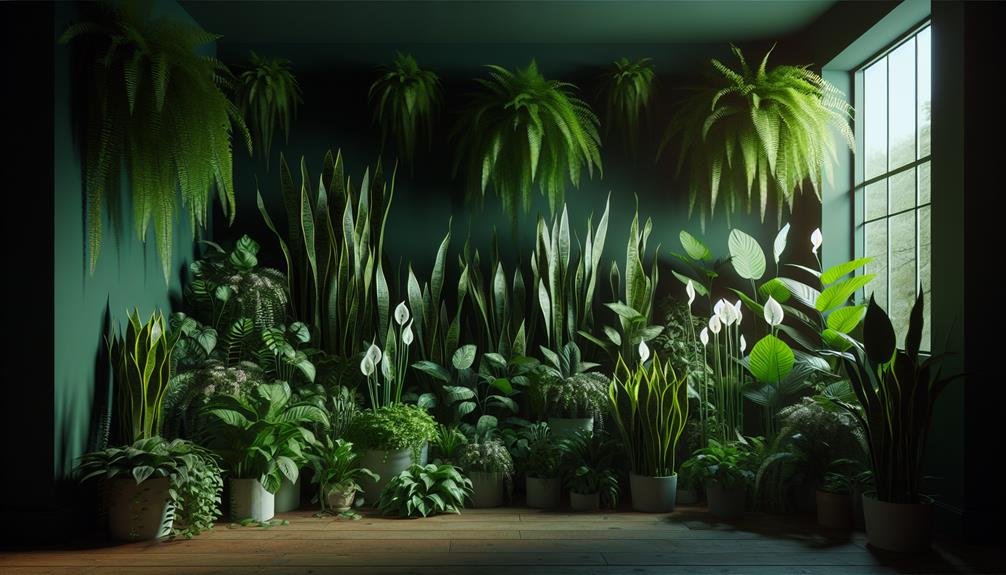
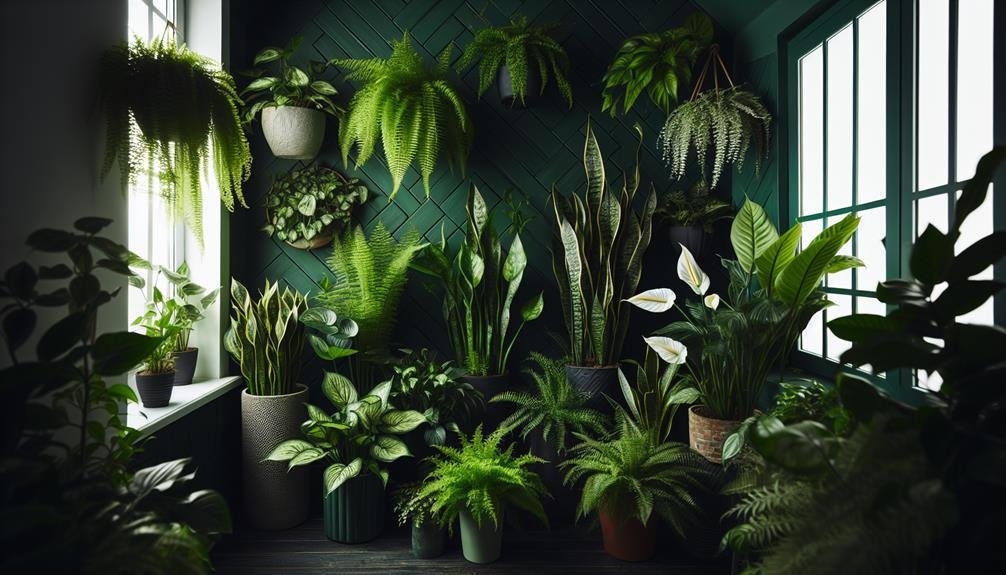
If you're seeking to bring some greenery into your dim dwellings, discovering the best indoor plants for dim spaces is crucial. These plants can enliven even the darkest corners of your home, adding a touch of nature to your interior.
But how do you choose the perfect plant for your light-deprived rooms? Stay tuned as we unravel the top five low-light houseplants that thrive in shadowy settings, providing both aesthetics and health benefits to your indoor environment.
Benefits of Indoor Plants in Low Light
Discover the vitality that indoor plants bring to dim spaces, enhancing both aesthetics and air quality. By introducing plants into low-light areas of your home, you not only brighten up the space but also improve the overall air quality. Plants have the exceptional ability to absorb carbon dioxide and release oxygen through photosynthesis, making them natural air purifiers. This process can help reduce toxins in the air, creating a healthier environment for you to breathe in.
Indoor plants also add a touch of nature to your indoor spaces, creating a calming and rejuvenating atmosphere. Their green foliage can help to reduce stress and boost your mood, making your home a more pleasant place to relax in. Moreover, caring for indoor plants can be a rewarding experience, giving you a sense of accomplishment as you watch them thrive and grow despite the dim lighting conditions.
Top 5 Low-Light Houseplants
Brighten up your dim spaces with the top 5 low-light houseplants that not only enhance your indoor aesthetics but also thrive in areas with minimal natural light.
- Spider Plant: Known for its air-purifying qualities, the spider plant is easy to care for and thrives in low light. Its long, arching leaves add a touch of elegance to any room.
- ZZ Plant: Perfect for beginners, the ZZ plant is virtually indestructible and can survive with little water and light. Its glossy, dark green leaves bring a modern feel to your space.
- Peace Lily: With its striking white blooms, the peace lily can brighten up any corner. It thrives in low light conditions and helps improve indoor air quality.
- Snake Plant: Also known as the mother-in-law's tongue, the snake plant is a hardy plant that can tolerate low light and irregular watering. Its upright leaves add a sculptural element to your decor.
- Pothos: A versatile plant, pothos can thrive in various light conditions, including low light. Its cascading vines make it perfect for hanging baskets or shelves, adding a pop of green to your space.
Care Tips for Dim Spaces
Enhance the longevity of your low-light houseplants by implementing these effective care tips for dim spaces. When caring for plants in low-light environments, it's crucial to strike the right balance with watering. Overwatering can lead to root rot, especially in plants that already receive less light. Ensure your pots have proper drainage to prevent waterlogging. Additionally, consider using a well-draining potting mix to help control moisture levels.
While low-light plants require less light, they still need some form of it to thrive. Rotate your plants occasionally to ensure all sides receive adequate light exposure. Dust the leaves regularly to maximize light absorption. It's also helpful to supplement natural light with artificial light sources like grow lights if necessary.
Avoid fertilizing your low-light plants too frequently. Since they grow at a slower pace in dim spaces, they require less frequent feeding. Opt for a balanced, diluted fertilizer and apply it sparingly during the growing seasons. By following these care tips, you can ensure your low-light houseplants remain healthy and vibrant in dim spaces.
Styling Ideas for Dark Rooms
To bring life and warmth to dimly lit spaces, consider incorporating cozy textiles and rich textures in your decor. Start by choosing curtains and rugs in warm tones like deep reds, oranges, or browns to add a pop of color. Opt for plush fabrics such as velvet or faux fur to create a sense of luxury and comfort in the room.
Additionally, strategically placing mirrors can help bounce light around the space, making it feel brighter and more inviting.

When it comes to furniture, select pieces with metallic accents like gold or brass to reflect any available light. Introduce statement lighting fixtures such as floor lamps or pendant lights to brighten up dark corners. Adding a variety of indoor plants can also liven up the room and improve air quality. Choose plants with dark green foliage like snake plants or peace lilies, as they can thrive in low light conditions.
Troubleshooting Common Plant Issues
If your indoor plants aren't thriving as expected, identifying and addressing common plant issues is crucial to ensure their health and well-being. One common problem is overwatering, which can lead to root rot and other issues. Ensure proper drainage for your plants and let the soil dry out between waterings.
On the other hand, underwatering can cause wilting and dryness. Be sure to water your plants when the top inch of soil feels dry.
Another issue to watch out for is inadequate light. If your plants aren't getting enough light, consider moving them to a brighter location or supplementing with grow lights.
Pests like spider mites and aphids can also wreak havoc on indoor plants. Regularly inspect your plants for any signs of pests and treat them promptly.
Lastly, be mindful of temperature fluctuations, as extreme hot or cold temperatures can stress your plants. By addressing these common plant issues, you can help your indoor plants thrive in dim spaces.
Frequently Asked Questions
Can Indoor Plants in Low Light Spaces Still Improve Air Quality and Provide Health Benefits?
Indoor plants in low light spaces can still boost air quality and offer health benefits. Despite dim conditions, plants like snake plants and pothos can thrive and purify the air by absorbing toxins.
They also release oxygen and enhance your mood. So, go ahead and bring some greenery into your space – your well-being will thank you!
Are There Any Indoor Plants That Are Known to Thrive Specifically in Dimly Lit Areas?
In dimly lit areas, some indoor plants can thrive. These plants have adapted to lower light levels and can still grow healthily. Look for options like snake plants, pothos, or peace lilies for your dim space.
Remember to place them near windows or under artificial grow lights for the best results. With the right care, you can enjoy the benefits of indoor plants even in less bright environments.
How Can I Prevent Overwatering My Indoor Plants in Low Light Conditions?
To prevent overwatering your indoor plants in low light conditions, feel the soil before watering. Stick your finger about an inch down; if it's dry, then water your plant.
Make sure your pots have drainage holes to avoid waterlogging. Consider using a moisture meter for accuracy.
Are There Any Specific Ways to Decorate With Indoor Plants in Dark Rooms to Enhance Their Appearance?
To enhance the appearance of indoor plants in dark rooms, consider using plants with unique textures or colors that can stand out in low light. Opt for plants like snake plants or ZZ plants that thrive in dim conditions.
Utilize decorative pots or hanging planters to add visual interest. Incorporate plant stands or shelves to create varying heights and depths, adding dimension to your plant display.
Don't forget to rotate plants regularly for balanced growth.
What Are Some Signs That My Indoor Plants in Low Light Spaces May Need to Be Repotted or Have Their Soil Replaced?
If your indoor plants in low light spaces start showing signs like roots peeking out of the drainage holes, slow growth, or excessive water runoff, it's time to consider repotting or changing the soil.
These indicators suggest that your plants may have outgrown their current pots or the soil has become compacted.
Keep an eye out for these signals to ensure your plants remain healthy and thriving in their dim environment.
Conclusion
Overall, adding indoor plants to dim spaces can greatly improve the ambiance and air quality of your home.
With the right low-light houseplants and proper care, you can transform any dark room into a lush and inviting space.
Remember to consider the lighting conditions, watering schedule, and styling options to ensure your plants thrive in even the darkest corners.
Happy planting!