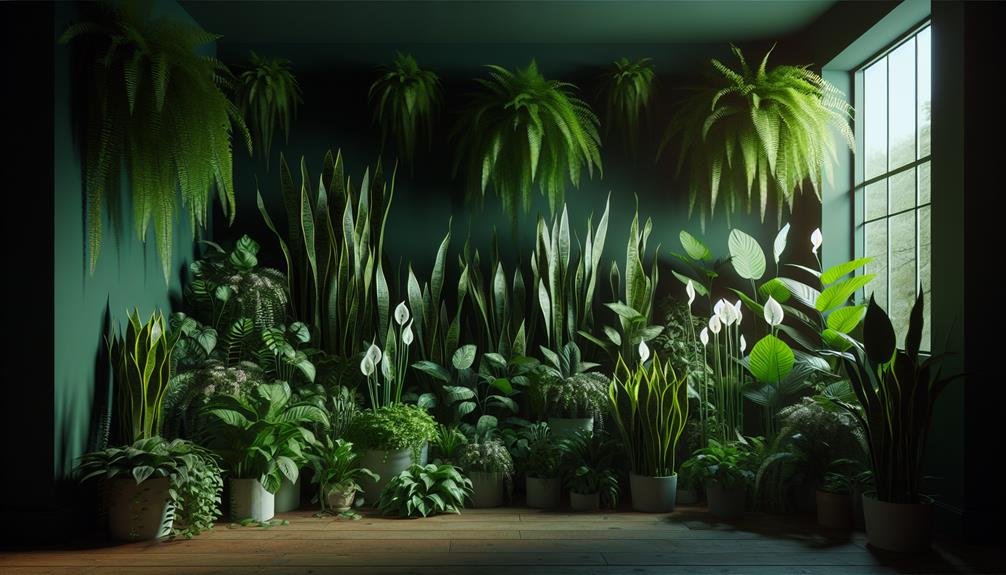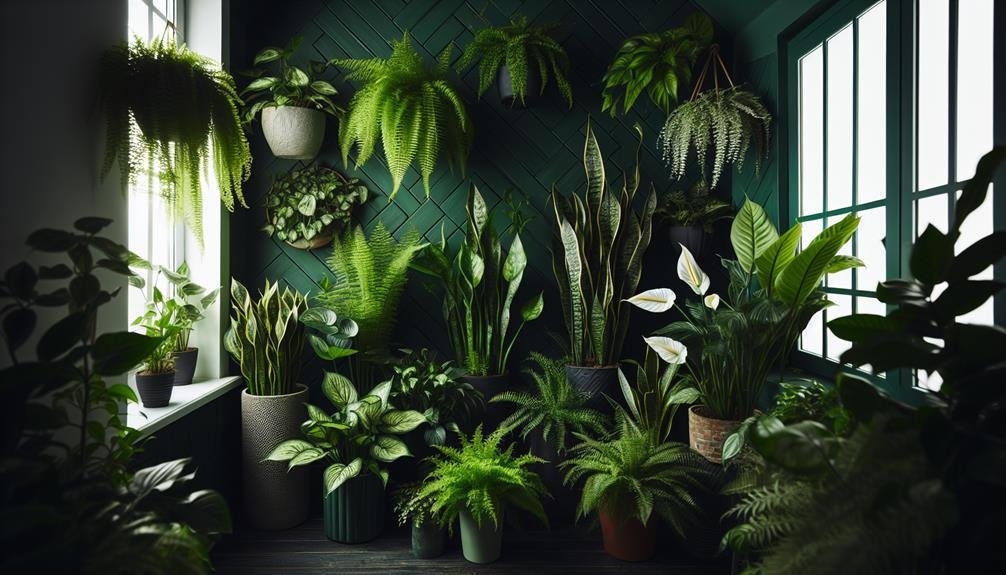
In the dimly lit corners of your home, finding the right indoor plant is like discovering a hidden treasure chest waiting to be unveiled. Imagine the lush greenery that can thrive in the shadows, transforming your space into a tranquil oasis.
But which plants are truly the best companions for these light-starved areas? Stay tuned to uncover the secrets of selecting the perfect low-light plants that will not only survive but also thrive in your dimly lit spaces.
Top 5 Low-Light Indoor Plants
If you're looking for low-light indoor plants that are easy to care for, consider these top 5 picks.
First on the list is the Snake Plant, also known as Mother-in-Law's Tongue. This plant is practically indestructible and can thrive in low light conditions while also purifying the air.
Another excellent choice is the Peace Lily, with its elegant white flowers and ability to bloom in low light.
The Spider Plant is a popular option that adds a touch of green to any space and is known for its air-purifying qualities.
For a pop of color, the African Violet is a great choice as it can blossom in dimly lit rooms, adding a vibrant touch to your indoor garden.
Lastly, the ZZ Plant is a hardy plant that requires minimal care and can adapt well to low light environments.
These top 5 low-light indoor plants are sure to brighten up your space with their beauty and easy maintenance.
Benefits of Greenery in Dim Rooms
Greenery in dim rooms not only adds aesthetic appeal but also offers several benefits for both your space and well-being. Plants have the remarkable ability to purify the air by absorbing harmful toxins and releasing oxygen, creating a healthier environment for you to breathe in. In addition, indoor plants can help regulate humidity levels, making the air more comfortable, especially in spaces that tend to be dry.

Having greenery around can also boost your mood and reduce stress. Studies have shown that being around plants can have a calming effect on the mind, promoting relaxation and overall well-being. The presence of indoor plants in dimly lit rooms can also help increase focus and productivity, making it an ideal addition to home offices or workspaces.
Furthermore, plants can act as natural decor elements, adding a touch of nature to your indoor spaces. Their vibrant colors and textures can enhance the visual appeal of a room, creating a more inviting and lively atmosphere. Embracing greenery in dimly lit rooms not only elevates the aesthetics but also contributes to a healthier and more pleasant living environment.
Care Tips for Low-Light Plants
For low-light plants, proper care and attention are essential to ensure they thrive in dimly lit spaces. When caring for these plants, remember that even though they require less light, they still need some level of brightness to survive. Place them near a window where they can receive indirect sunlight or under artificial grow lights suitable for low-light conditions.
Watering is crucial but be cautious not to overwater. Low-light plants generally have slower growth rates and therefore require less frequent watering. Ensure the soil is well-draining to prevent root rot. It's advisable to let the soil dry out slightly between waterings to avoid waterlogged conditions.
Regularly dust the leaves of your low-light plants to ensure they can absorb what little light is available efficiently. Additionally, consider rotating the plants occasionally to promote even growth on all sides. Fertilize sparingly, as low-light plants don't need as many nutrients as those in brighter conditions. By following these care tips, your low-light plants can flourish and bring life to your dimly lit spaces.
Stylish Plant Display Ideas
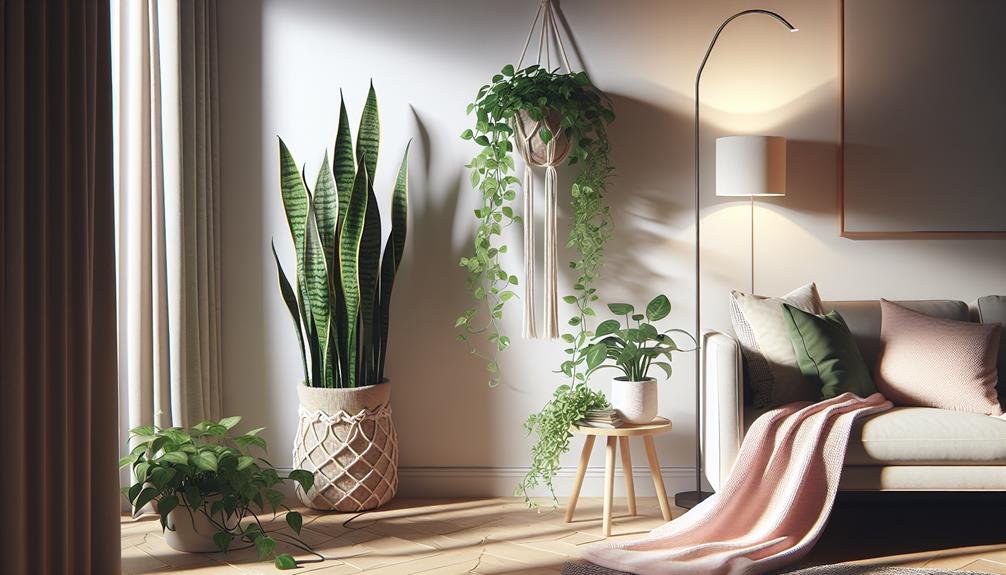
Consider incorporating hanging planters to add a touch of elegance and uniqueness to your indoor plant display. Hanging planters not only save space but also create a stunning visual impact, especially in rooms with limited natural light.
You can mix and match different plant varieties in these planters to create a dynamic and eye-catching display. Another stylish idea is to place plants on floating shelves or wall-mounted planters. This not only adds a modern touch to your space but also keeps your plants out of reach from pets or young children.
Additionally, using decorative pots or plant stands can elevate the overall look of your indoor garden. Opt for pots in various shapes, sizes, and materials to create visual interest. Grouping plants together in clusters of varying heights can also create a visually appealing display.
Experiment with different arrangements until you find a stylish plant display that suits your personal taste and complements your home decor.
Common Mistakes to Avoid
To maintain healthy indoor plants in dimly lit spaces, it's important to be aware of common mistakes that can hinder their growth and overall well-being. One of the most common errors is overwatering. In low light conditions, plants absorb water at a slower rate, so excess water can lead to root rot and other issues. Ensure the soil is dry to the touch before watering again.
Another mistake to avoid is choosing the wrong plant for the light conditions. Some plants, like snake plants and ZZ plants, thrive in low light, while others, such as succulents, need more sunlight to survive. Research the light requirements of your plants before purchasing them.
Ignoring pests is a detrimental mistake. In dimly lit spaces, pests like spider mites can easily infest plants without being noticed. Regularly inspect your plants for any signs of pests and take action promptly.
Lastly, neglecting to dust your plant's leaves can block sunlight absorption. Wipe down your plant's leaves with a damp cloth occasionally to keep them clean and healthy. By avoiding these common mistakes, you can ensure your indoor plants thrive in dimly lit spaces.
Frequently Asked Questions
Can Indoor Plants Actually Thrive in Dimly Lit Spaces or Do They Require a Lot of Sunlight?
Indoor plants can thrive in dimly lit spaces, but they may not require as much sunlight as outdoor plants. Some plants, like peace lilies or snake plants, can adapt well to low light conditions.
However, it's important to choose the right plant for the level of light available in your space to ensure they can grow and thrive. Remember to rotate your plants occasionally to help them get more even light exposure.
Are There Any Indoor Plants That Can Help Improve Air Quality in Dimly Lit Rooms?
If you're looking to enhance air quality in dimly lit rooms, certain indoor plants can do wonders. Plants like peace lilies, snake plants, and spider plants are excellent choices. They not only thrive in low light conditions but also help purify the air by absorbing toxins.
Adding these plants to your space can create a healthier environment while adding a touch of greenery to brighten up the room.
How Often Should I Water Low-Light Indoor Plants Compared to Those in Well-Lit Areas?
When caring for low-light indoor plants, water frequency is crucial. In dimly lit areas, plants generally require less water compared to those in well-lit spaces.
Check the soil moisture regularly by sticking your finger into the soil. If it feels dry, it's time to water. Overwatering can lead to root rot, so it's best to let the soil dry out slightly between waterings to keep your plants healthy.
Can I Use Artificial Lighting to Supplement the Natural Light for My Indoor Plants in Dim Spaces?
You can definitely use artificial lighting to supplement natural light for your indoor plants in dim spaces. Positioning grow lights strategically can provide the additional light needed for your plants to thrive.
Make sure to choose the right type of artificial light and adjust the duration of lighting based on the specific needs of your plants.
Remember to monitor their growth and health to ensure they're receiving adequate light.
Are There Any Specific Indoor Plants That Are Pet-Friendly and Safe for Households With Animals?
If you're looking for pet-friendly indoor plants safe for households with animals, consider options like spider plants, ferns, and palms. These plants can add greenery to your space without posing a threat to your furry friends.
Remember to research each plant's specific care needs to ensure a healthy environment for both your plants and pets. Keep these non-toxic options in mind when selecting indoor plants for your home.
Conclusion
Overall, adding low-light indoor plants to your dimly lit spaces can enhance the atmosphere and bring a touch of nature indoors. With the right care and placement, these plants can thrive and brighten up any room.
Remember to avoid common mistakes, such as over-watering or placing plants in direct sunlight. Get creative with stylish plant displays to showcase your greenery and enjoy the benefits of having plants in your home.