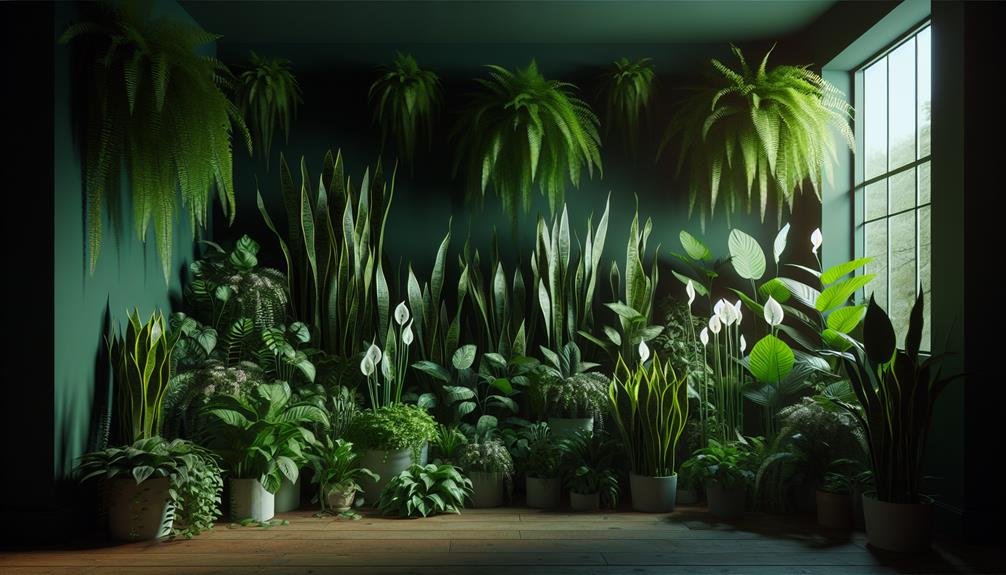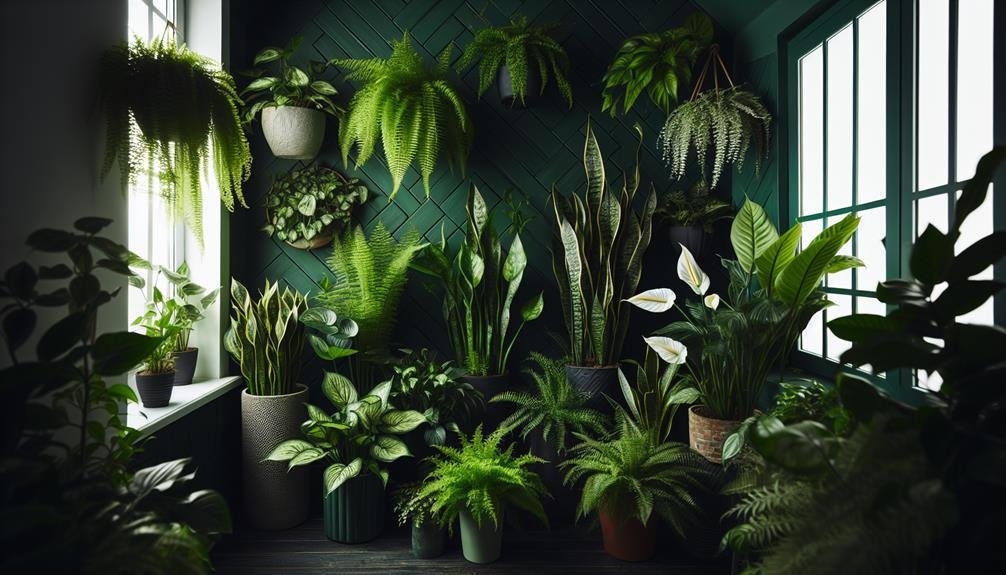
Did you know that over 70% of houseplants struggle to thrive in dimly lit areas? If you're looking to add some greenery to your low-light space, you'll be relieved to discover that there are easy-care plants that can brighten up even the darkest corners of your home.
From resilient snake plants to charming peace lilies, these plant picks not only survive but also thrive with minimal effort. So, if you're eager to bring a touch of nature indoors without the hassle of constant attention, stay tuned for our top recommendations and care tips.
Benefits of Low Light Plants
When choosing plants for dimly lit spaces, you'll find that low light plants offer numerous benefits beyond just surviving in lower light conditions. These plants aren't only resilient but also versatile, making them perfect for various indoor environments. Low light plants are excellent air purifiers, helping to improve the air quality in your home or office by removing toxins and releasing oxygen. Additionally, they can thrive in areas where other plants might struggle, adding a touch of greenery to spaces that receive minimal natural light.
One of the significant advantages of low light plants is their low maintenance requirements. They typically need less frequent watering and can tolerate occasional neglect, making them ideal for busy individuals or those new to plant care. These plants are also known for their ability to adapt to different light conditions, allowing them to survive and even thrive in dimly lit areas where other plants would wither. Overall, low light plants are a great choice for anyone looking to add some greenery to their space without the hassle of high maintenance plants.
Top 5 Easy-Care Plant Picks
Explore these top 5 easy-care plant picks that thrive in dimly lit spaces, offering both beauty and low maintenance benefits.
- Snake Plant: Known for its air-purifying qualities, the Snake Plant can thrive in low light conditions with minimal watering needs. Its striking vertical leaves add a modern touch to any room.
- ZZ Plant: The ZZ Plant is virtually indestructible, making it perfect for beginners. It can survive with infrequent watering and low light, while its glossy green leaves bring a pop of color to darker corners.
- Pothos: Pothos is a versatile plant that can thrive in various light conditions, including low light. With its trailing vines and heart-shaped leaves, Pothos is an excellent choice for adding a touch of nature to shelves or hanging baskets.
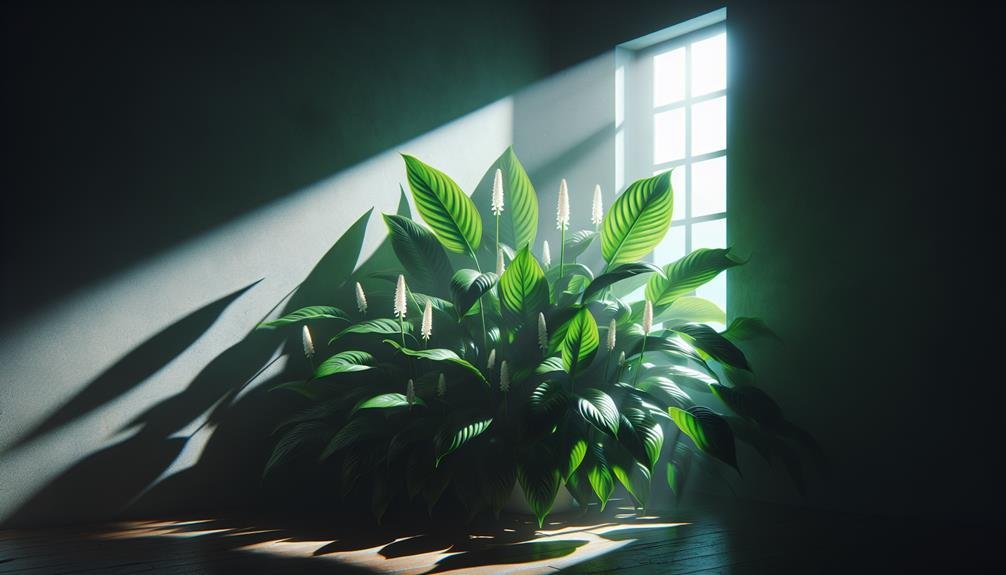
- Peace Lily: Peace Lilies are known for their elegant white blooms and can bloom in low light. They require watering when the soil is dry and are excellent at purifying the air.
- Spider Plant: Spider Plants are resilient and can adapt to different light conditions, including low light. With their arching leaves and air-purifying qualities, they're a great addition to any dimly lit space.
Tips for Plant Care in Low Light
Maximizing the natural light available and choosing the right plants are essential for successful care of plants in low light conditions. When caring for plants in low light, it's crucial to place them near windows or areas where they can receive whatever little light is available. Rotate your plants occasionally to ensure all parts receive some light, promoting even growth.
Select plants that thrive in low light, such as snake plants, pothos, or peace lilies. These plants are more adaptable to dim environments and require less sunlight to survive. Overwatering can be a common issue in low light conditions, as plants may not dry out as quickly. Ensure proper drainage in your pots to prevent waterlogging, which can lead to root rot.
Regularly dust the leaves of your low-light plants to allow maximum light absorption. Consider supplementing natural light with grow lights specifically designed for low light environments. By following these tips, you can successfully care for your plants in dimly lit spaces.
Creative Plant Display Ideas
Consider various innovative ways to showcase your plants in your living space. Hanging planters can add a touch of greenery to your room without taking up floor space. Macramé hangers or simple hooks attached to the ceiling can create a stylish display for your low-light plants. Another idea is to use wall-mounted shelves to create a vertical garden. This not only saves space but also adds a unique focal point to your room.
For a more artistic display, consider grouping different plants together based on their colors and textures. Mix and match plant sizes and shapes to create visual interest. You can also place plants in decorative pots or containers that complement your room's decor. Terrariums are another creative way to showcase your plants while adding a touch of whimsy to your space.

To make a statement, try using a ladder shelf to display your plants at varying heights. This not only looks visually appealing but also allows each plant to receive adequate light. Get creative with your plant displays to bring life and personality to your dimly lit living spaces.
Troubleshooting Common Plant Issues
If you notice your plants wilting or yellowing, it may be a sign of common issues that can be easily resolved with proper care. Wilting often indicates underwatering, so check the soil moisture and adjust your watering schedule accordingly. Overwatering can lead to root rot, causing wilting and yellowing leaves. Ensure proper drainage and allow the soil to dry out between waterings.
Yellowing leaves may also result from nutrient deficiencies. Consider using a balanced fertilizer or repotting your plant with fresh soil. Pests like spider mites and aphids can also cause plant discoloration. Regularly inspect your plants for any signs of infestation and treat them promptly.
If your plant is leggy or not growing well, it might need more light. Consider moving it to a brighter spot or supplementing with artificial lighting. By addressing these common issues promptly, you can keep your plants healthy and thriving in dimly lit spaces.
Frequently Asked Questions
Can Low Light Plants Survive in Rooms Without Any Windows?
Low light plants can survive in rooms without windows, but they may not thrive. While they can adapt to low light conditions, they still need some natural light to photosynthesize and grow properly.
Consider adding artificial grow lights to provide the necessary light for their survival and health. Remember, even low light plants need a little bit of light to keep them happy and thriving.
How Often Should I Water Low Light Plants?
When caring for low light plants, remember to water them consistently but avoid overwatering. Check the soil moisture by sticking your finger in the soil; if it feels dry, it's time to water. Typically, watering every 1-2 weeks is sufficient, but adjust based on your plant's specific needs.
Ensure proper drainage to prevent root rot. By monitoring closely and adjusting as needed, you'll keep your low light plants thriving.
Are There Any Low Light Plants That Are Safe for Pets?
When you're looking for low light plants that are safe for pets, consider options like spider plants, Boston ferns, and parlor palms. These plants are non-toxic to cats and dogs, making them a great choice for pet-friendly homes.
Remember to keep your furry friends in mind when selecting greenery for your space, as some plants can be harmful if ingested. Keep your pets safe while enjoying the beauty of indoor plants!
Can Low Light Plants Help Improve Indoor Air Quality?
Low light plants can help improve indoor air quality by absorbing toxins and releasing oxygen. They work well in spaces with limited sunlight, making them a great addition to your home.
Consider adding them to your decor for a breath of fresh air without the need for much maintenance. These plants not only brighten up your space but also contribute to a healthier environment.
What Are Some Common Pests That Can Affect Low Light Plants and How Can They Be Treated?
When dealing with common pests that affect low light plants, it's essential to be vigilant. Look out for issues like spider mites, aphids, and mealybugs.
Treat them promptly by wiping leaves with soapy water, using neem oil, or spraying insecticidal soap. Keep an eye on your plants regularly to catch any infestations early and prevent them from spreading.
Conclusion
Overall, low light plants are a great option for adding greenery to dimly lit spaces with minimal effort.
With the right choices and care tips, you can enjoy the benefits of plants even in areas with limited sunlight.
Remember to choose easy-care plants like pothos or snake plants, keep them watered but not soaked, and get creative with how you display them in your home.
Happy planting!