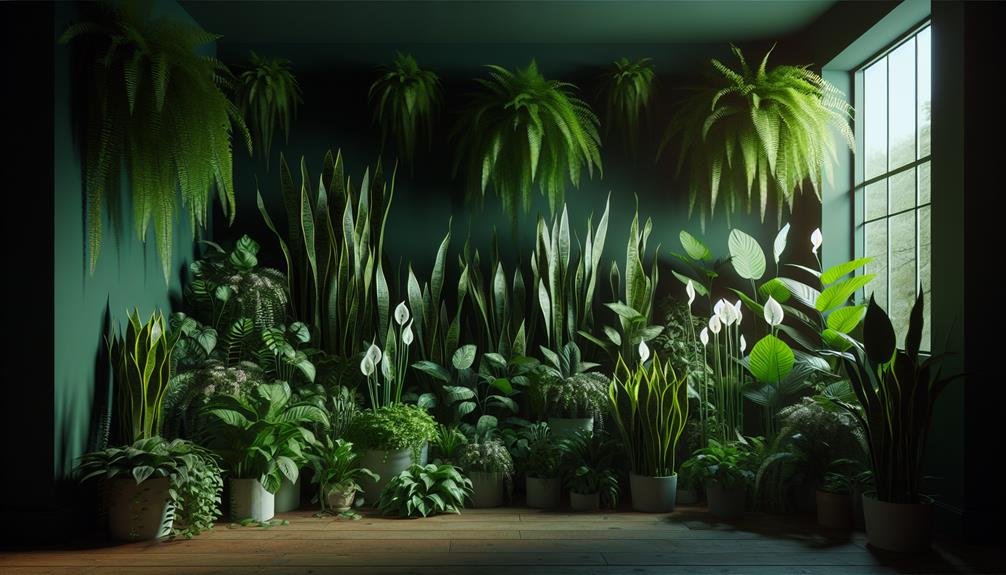
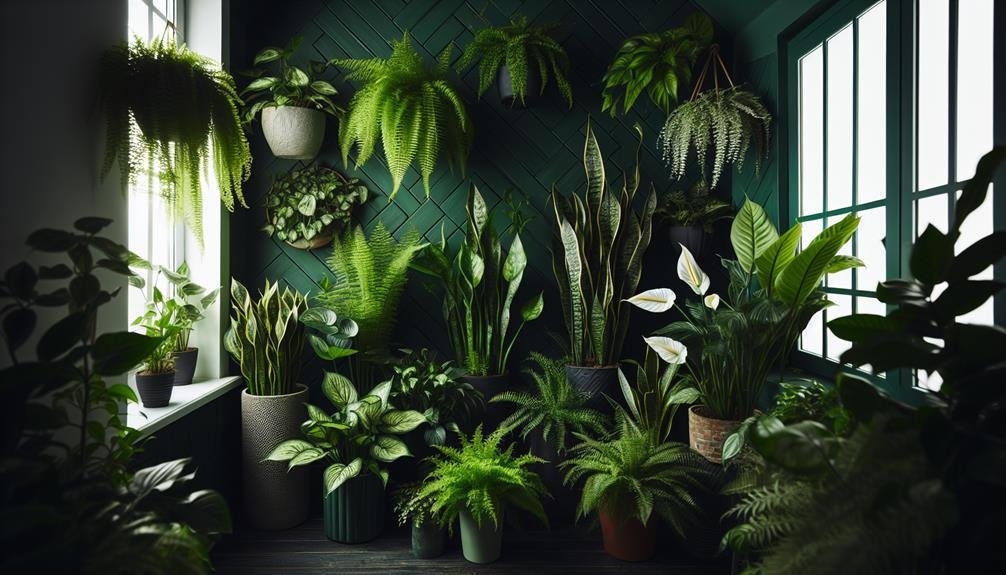
In the midst of dimly lit spaces, have you ever considered bringing vibrant green companions into your home that not only thrive but also add a touch of nature to your surroundings?
These green companions not only survive but can truly thrive in low-light conditions, transforming your living space into a lush oasis.
With a variety of plant options and care techniques specifically tailored for dim environments, discovering the perfect greenery for your home is just the beginning of the journey to creating a tranquil and inviting atmosphere.
Types of Low-Light Greenery
When selecting green plants for dimly lit homes, opt for varieties that thrive in low-light conditions. Peace lilies are a fantastic choice, with their elegant white blooms and ability to purify the air. These resilient plants require minimal maintenance and can even bloom in low light.
Another great option is the snake plant, known for its striking vertical leaves that add a modern touch to any space. Snake plants are excellent air purifiers and can tolerate low-light environments with ease.
If you're looking for a pop of color, consider the parlor palm. This vibrant green plant can brighten up any dim corner and is relatively low maintenance.
Spider plants are also a popular choice for low-light areas, thanks to their adaptability and charming cascading leaves. These plants aren't only visually appealing but also help improve indoor air quality.
When it comes to choosing greenery for your dimly lit home, these varieties are sure to thrive and bring a touch of nature indoors.
Care Tips for Dim Spaces
For optimal growth in dim spaces, ensure your green plants receive regular but indirect sunlight. While they thrive in low-light conditions, they still need some light to photosynthesize and stay healthy. Place them near a window with sheer curtains or in a well-lit room away from direct sunlight.
When watering your plants, make sure not to overwater them. Dimly lit areas may retain more moisture, so it's essential to let the soil dry out slightly between waterings to prevent root rot. Use pots with drainage holes to ensure excess water can escape.

Regularly dust the leaves of your plants to allow them to absorb more light efficiently. Wiping them gently with a damp cloth will also help prevent dust buildup, which can hinder photosynthesis.
Consider rotating your plants occasionally to ensure all sides receive equal light exposure. This simple step can promote even growth and prevent your plants from leaning towards the light source.
Hanging Plant Recommendations
To enhance the visual appeal of your dimly lit home, consider incorporating hanging plants that can thrive in lower light conditions. Hanging plants are a fantastic way to bring greenery into your space without taking up precious floor space. For areas with limited natural light, there are several plant options that can still flourish.
One excellent choice is the Pothos (Epipremnum aureum), a low-maintenance trailing plant with heart-shaped leaves that can tolerate low light levels. Another great option is the Spider Plant (Chlorophytum comosum), known for its air-purifying qualities and adaptability to various light conditions, including low light. The Boston Fern (Nephrolepis exaltata) is a classic choice for hanging baskets, adding a touch of lush greenery to your home while thriving in indirect light.
Benefits of Indoor Greenery
Enhancing your indoor space with greenery provides numerous benefits beyond just aesthetics. Not only do plants add a touch of nature to your home, but they also offer tangible advantages for your well-being. Indoor greenery can help improve air quality by absorbing toxins and releasing oxygen, creating a healthier environment for you to breathe in. Additionally, plants have been shown to reduce stress, boost mood, and increase productivity. Their presence can enhance concentration and cognitive function, making them great companions for workspaces or study areas within your home.
Moreover, indoor plants can help regulate humidity levels, preventing the air from becoming too dry, especially during winter months when heating systems are in use. Some plants even have natural air-cleaning properties, filtering out pollutants and allergens. By caring for indoor greenery, you can develop a nurturing routine that promotes mindfulness and relaxation. Overall, incorporating plants into your indoor spaces can have a positive impact on both your physical health and mental well-being.
Propagation Techniques for Success
Considering various propagation techniques can significantly increase your success in growing healthy indoor plants.
When propagating plants, one popular method is water propagation. Simply place your plant cutting in a container of water, ensuring the nodes are submerged. Change the water regularly to prevent rot and watch for roots to develop before transferring to soil.
Another effective technique is soil propagation. Take a cutting and insert it directly into moist soil, keeping it well-watered to encourage root growth.
For plants like succulents, leaf propagation works well. Gently twist off a healthy leaf, let it dry for a day or two, then lay it on well-draining soil. Spritz with water occasionally and roots will start to form.
Frequently Asked Questions
Can Low-Light Greenery Survive in Rooms With No Windows?
In rooms with no windows, low-light greenery can still survive. Choose plants like snake plants, pothos, or ZZ plants that thrive in low-light conditions.
These plants require minimal sunlight and can add a touch of nature to your space. Remember to water them appropriately and provide occasional fertilization to keep them healthy.
With proper care, your green companions can brighten up even the dimmest of rooms.
Are There Any Low-Light Greenery Options That Are Safe for Pets?
If you're looking for low-light greenery safe for pets, consider options like spider plants, Boston ferns, or parlor palms. These plants not only thrive in dimly lit spaces but are also non-toxic to your furry friends.
Remember to keep these plants out of reach of curious pets to prevent any unwanted snacking. With these choices, you can enjoy a touch of greenery in your home without worrying about your pet's safety.
How Often Should I Water Low-Light Plants in Dimly Lit Spaces?
In dimly lit spaces, you should water low-light plants less frequently than those in brighter areas. Overwatering can harm them. Check the soil moisture by sticking your finger in; if it feels dry, it's time to water.
Generally, a schedule of watering every 1-2 weeks should suffice, but always adjust based on the plant's specific needs. Remember, it's better to underwater than overwater when caring for low-light plants.
Are There Any Hanging Plant Recommendations for Rooms With High Humidity?
In rooms with high humidity, consider plants like pothos, spider plants, or ferns for hanging plant options.
These varieties thrive in moisture-rich environments and can add a touch of greenery to your space.
Remember to place them in well-draining pots and ensure they receive adequate light for optimal growth.
With proper care, these plants can bring a lively and refreshing element to your home's atmosphere.
Can Indoor Greenery Help Improve Air Quality in Dimly Lit Homes?
Indoor greenery can indeed help improve air quality in dimly lit homes. Plants like snake plants, pothos, and peace lilies are great choices for low-light conditions and can help purify the air by removing toxins.
Their ability to photosynthesize even in low light levels allows them to thrive and contribute positively to your indoor air quality. Consider adding these green companions to your space for a breath of fresh air.
Conclusion
Overall, adding vibrant green companions to your dimly lit home can brighten up your space and bring a sense of freshness and life to any room.
With the right types of low-light greenery, proper care, and strategic placement, you can enjoy the benefits of indoor plants even in areas with limited natural light.
Consider incorporating hanging plants for added visual interest and use propagation techniques to keep your green companions thriving for years to come.