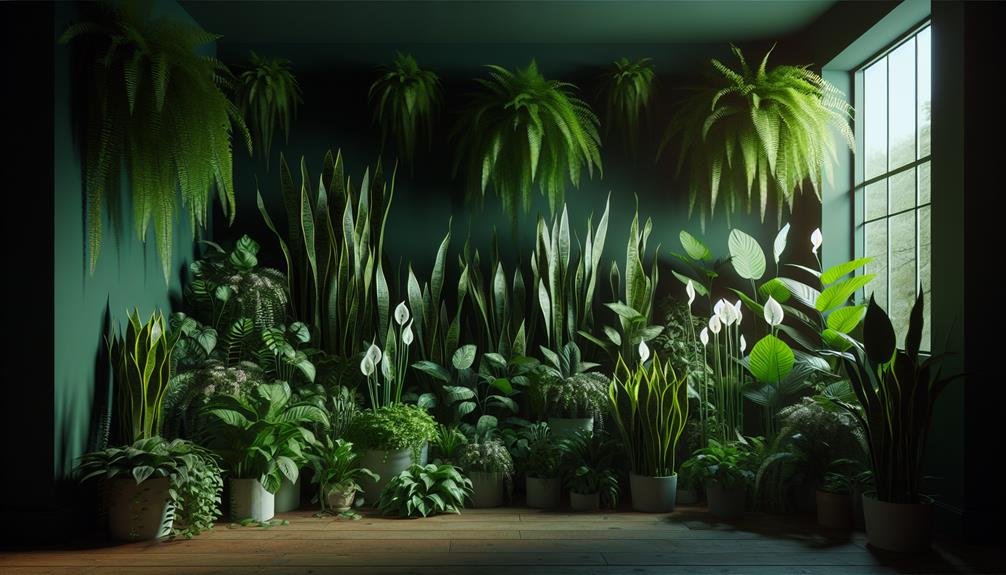
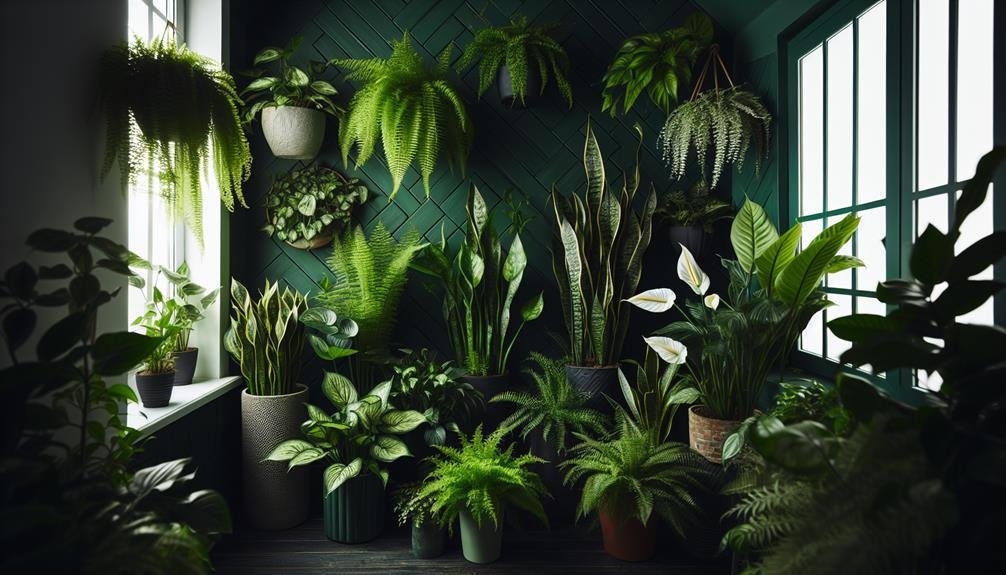
Did you know that according to a recent survey, over 70% of households struggle with low light conditions for their houseplants?
If you're looking to bring some greenery into your home but face this common issue, fear not. There are five popular houseplants that thrive in low light settings and can add a touch of nature to your space.
From the resilient Snake Plant to the graceful Peace Lily, these plants not only survive but also flourish in dimmer environments.
Stay tuned to discover which green companions can brighten up your home effortlessly.
Snake Plant
If you're looking for a low-maintenance houseplant that thrives in low light, consider the Snake Plant. This resilient plant, also known as Sansevieria or Mother-in-Law's Tongue, is perfect for those who may not have a green thumb. With its striking upright leaves that come in various shades of green and yellow, the Snake Plant adds a touch of elegance to any room.
One of the Snake Plant's most appealing features is its ability to purify the air by removing toxins like formaldehyde and benzene, making it not only aesthetically pleasing but also beneficial for your health. This plant can survive in various light conditions, from low light to indirect sunlight, making it a versatile choice for different spaces in your home.
Additionally, the Snake Plant requires minimal watering, making it ideal for busy individuals or those prone to forgetting plant care routines. Simply water occasionally when the soil is dry, and this hardy plant will continue to thrive with little effort on your part.
Peace Lily
The Peace Lily, another excellent choice for low light environments, is a beautiful and adaptable houseplant that can brighten up any room with its elegant white blooms. This plant not only adds a touch of sophistication to your space but also helps purify the air by removing common indoor toxins.
Peace Lilies are relatively low-maintenance and can thrive in areas with indirect sunlight, making them perfect for rooms with limited natural light. These plants require watering when the soil is dry to the touch, and their leaves will droop slightly when they need water, making it easy to know when it's time for a drink.
Additionally, Peace Lilies are known for their ability to bounce back quickly if they're underwatered, making them forgiving for those new to plant care. With its graceful appearance and air-purifying qualities, the Peace Lily is an excellent choice for bringing life to dimly lit spaces.

ZZ Plant
Thriving in low light conditions, the ZZ Plant is a popular choice for indoor spaces due to its hardy nature and attractive glossy green foliage. If you're looking for a plant that can thrive with minimal effort, the ZZ Plant is a great option. It requires infrequent watering and can tolerate a variety of light conditions, making it perfect for those low light areas in your home or office.
The ZZ Plant, also known as Zamioculcas Zamiifolia, is native to eastern Africa and is well-suited to indoor environments. Its waxy, dark green leaves add a touch of elegance to any room, and its upright growth habit makes it a versatile plant for different decor styles.
One of the key benefits of the ZZ Plant is its air-purifying qualities, helping to improve the air quality in your living or working space. Additionally, this plant is relatively pest-resistant, further adding to its appeal for indoor gardeners looking for low-maintenance options. Consider adding a ZZ Plant to your indoor plant collection for a touch of greenery that thrives in low light settings.
Pothos
With its versatility and easy care requirements, Pothos is another excellent choice for indoor spaces with low light conditions. Pothos, also known as Devil's Ivy, thrives in various light conditions, making it a perfect addition to your home or office. This plant features heart-shaped leaves that come in different shades of green, adding a touch of natural beauty to any room.
One of the best qualities of Pothos is its ability to purify the air by removing toxins like formaldehyde and benzene, promoting a healthier environment for you. Its trailing vines also make it a great option for hanging baskets or to cascade over shelves, adding a decorative element to your space.
When caring for Pothos, ensure the soil is well-draining and water the plant when the top inch of soil feels dry. Pothos can tolerate low light conditions but will thrive in medium to bright indirect light. Regular pruning will help maintain its bushy appearance and encourage new growth. Consider adding Pothos to your indoor plant collection for a low-maintenance, visually appealing addition to your space.
Cast Iron Plant
Consider incorporating the hardy Cast Iron Plant into your indoor garden for a resilient and low-maintenance addition. This robust plant, known scientifically as Aspidistra elatior, thrives in low light conditions, making it ideal for spaces where other plants may struggle. With its dark green, glossy leaves that can reach up to 2 feet in length, the Cast Iron Plant adds a touch of elegance to any room.
One of the key features of the Cast Iron Plant is its ability to withstand neglect. It can tolerate infrequent watering and is resistant to pests and diseases, making it perfect for busy plant owners or those new to gardening. Simply place it in a shady corner, and it will continue to flourish without much intervention.
This plant is also versatile in its uses, as it can be grown in containers or as a ground cover in outdoor shady areas in warmer climates. Whether you place it in a dimly lit living room or a bathroom with low light, the Cast Iron Plant will thrive, bringing a touch of nature to your space with minimal effort.
Frequently Asked Questions
Can These Houseplants Survive in a Completely Dark Room With No Natural Light at All?
In a completely dark room with no natural light at all, most houseplants will struggle to survive. Light is essential for their photosynthesis process, which provides them with energy. Without any light, they won't be able to thrive and may eventually die.
It's crucial to place houseplants in environments where they can receive at least some light to keep them healthy and flourishing.
Are There Any Specific Temperature or Humidity Requirements for These Low Light Houseplants?
Specific low light houseplants generally prefer consistent temperatures between 65-75°F and moderate humidity levels. Avoid placing them near drafty areas or heating vents. Aim to keep the humidity around 30-40%.
Remember to water them appropriately based on their individual needs, as overwatering in low light conditions can lead to root rot. Consider misting the plants occasionally to help maintain the humidity levels they require for healthy growth.
How Often Should I Water These Houseplants if They Are in a Low Light Setting?
When your houseplants are in a low light setting, you should water them less frequently compared to plants in brighter spots. Overwatering can harm them, so it's best to let the soil dry out a bit between waterings. Stick your finger in the soil about an inch deep—if it feels dry, then it's time to water.
Are There Any Common Pests or Diseases That These Houseplants Are Susceptible to in Low Light Conditions?
In low light conditions, common pests like spider mites and mealybugs can be a nuisance for your houseplants. These pests thrive in environments with less light and can quickly infest your plants if not addressed promptly.
Regularly inspect your plants for any signs of pests or diseases and take action promptly to prevent them from spreading. Consider using natural remedies or insecticidal soap to keep these unwanted visitors at bay.
Can These Houseplants Be Grown Hydroponically or Do They Require Soil to Thrive in Low Light Settings?
In low light settings, some houseplants can thrive in hydroponic systems, while others may require soil for optimal growth. Factors like root aeration and nutrient absorption play a role in deciding if a plant can be grown hydroponically.
Research the specific plant's needs to determine if it can flourish without soil. Experiment with different methods to find what works best for your houseplant in low light conditions.
Conclusion
So there you have it, five popular houseplants that thrive in low light settings.
Whether you choose the Snake Plant for its air-purifying properties or the Peace Lily for its elegant blooms, these plants are sure to brighten up your space even in the darkest corners.
With minimal care and attention, you can enjoy the beauty and benefits of these low light-loving plants in your home.