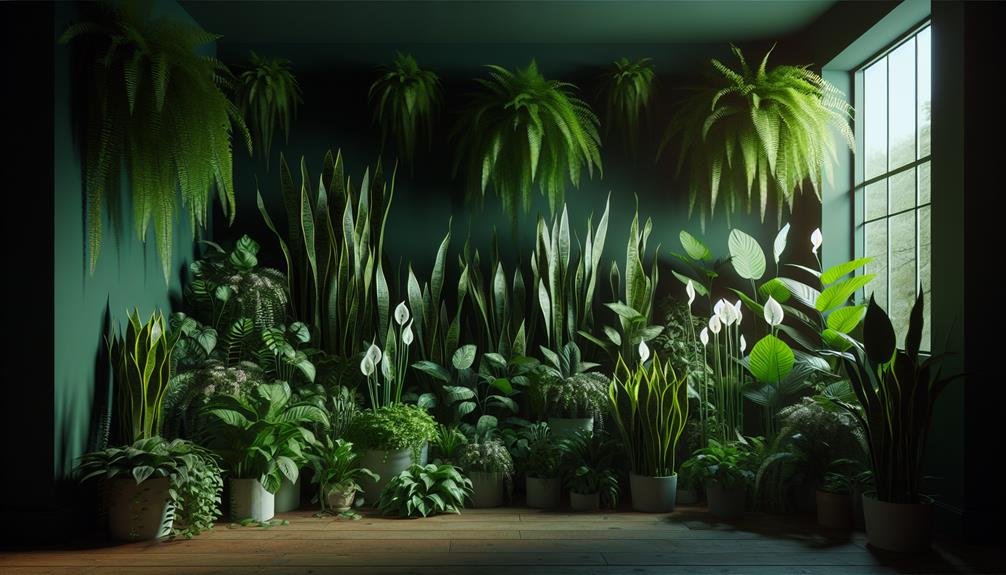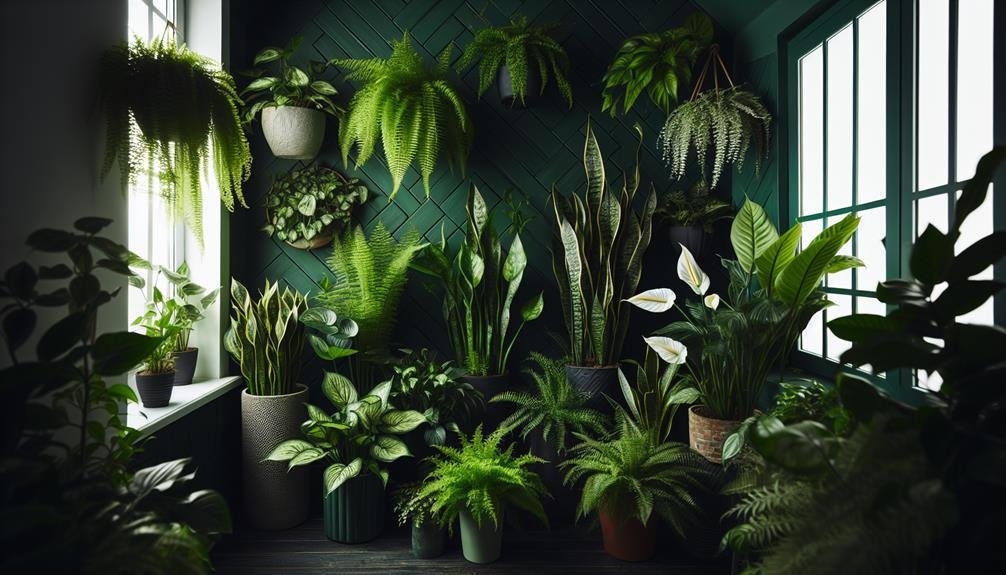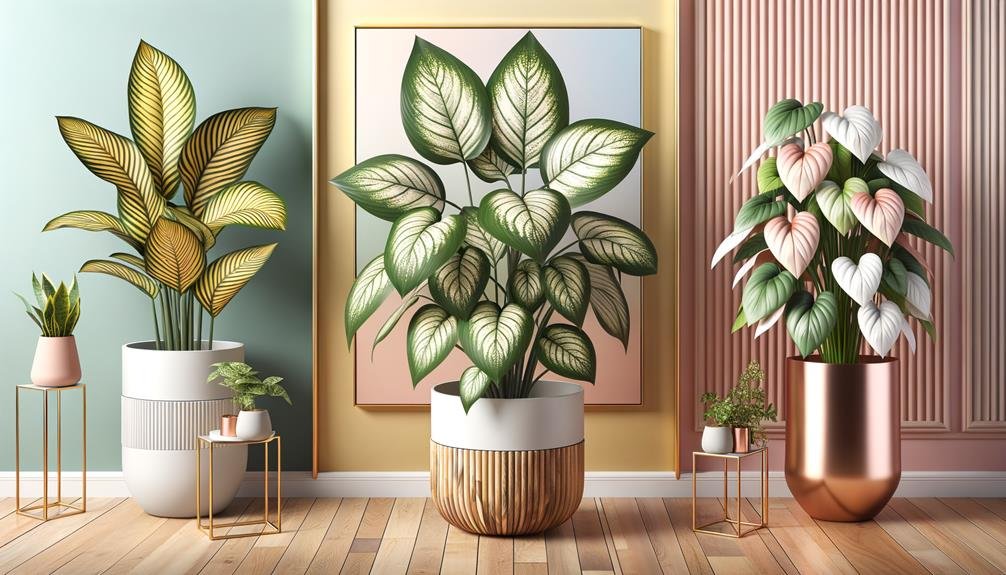
Looking to add vibrant plants to your indoor garden? Pothos is versatile and low-maintenance, perfect for various light conditions. Calathea offers stunning patterns, thriving in indirect light with regular watering. Spider Plant is popular for its air-purifying qualities and variegated beauty, thriving in indirect sunlight. Pothos, also known as Devil's Ivy, features cascading vines and heart-shaped leaves, purifying the air. Calathea requires well-draining soil and misting for its intricate foliage. Spider Plant removes toxins and produces spiderettes for propagation. Enhance your indoor oasis with these top variegated plants.
Pothos: Versatile and Easy to Grow
When looking to add a versatile and easy-to-grow plant to your indoor garden, consider the Pothos. This plant, also known as Devil's Ivy, is an excellent choice for those who are new to gardening or have limited time for plant care. Pothos is a low-maintenance plant that thrives in various light conditions, making it a perfect addition to any room in your home.
One of the best features of Pothos is its ability to purify the air by removing toxins like formaldehyde and benzene. This not only adds a touch of greenery to your space but also contributes to a healthier indoor environment. With its cascading vines and heart-shaped leaves, Pothos can be displayed in hanging baskets or placed on shelves to add a pop of color and texture to your décor.
In terms of care, Pothos is forgiving and can survive even if you forget to water it occasionally. Simply water it when the top inch of the soil feels dry and watch it thrive. Pothos is truly a plant that gives back, requiring minimal effort while providing maximum beauty and benefits for your indoor garden.
Calathea: Stunning Patterns and Low Maintenance
Calathea plants provide stunning patterns and require minimal maintenance for your indoor garden. With their vibrant foliage featuring intricate designs, Calatheas are sure to add an elegant touch to your living space.
These plants thrive in indirect light and prefer consistently moist soil, making them a great choice for those seeking plants that are easy to care for. To keep your Calathea looking its best, make sure the soil is well-draining and water it regularly to maintain the right level of moisture. Additionally, misting the leaves can help create the humid environment these plants love.
Remember to avoid direct sunlight, as it can cause the beautiful patterns on the leaves to fade. By following these simple care tips, you can enjoy the beauty of Calathea plants with minimal effort, making them a perfect addition to your indoor garden.
Spider Plant: Air-Purifying and Variegated Beauty
The Spider Plant, known for its air-purifying qualities and variegated beauty, is a popular choice for indoor gardens. This easy-to-care-for plant not only adds a touch of elegance to your space with its striking green and white striped leaves but also works tirelessly to cleanse the air you breathe. Spider Plants are excellent at removing harmful toxins like formaldehyde and xylene, making your indoor environment healthier and more pleasant.
Caring for a Spider Plant is a breeze, making it a perfect option for busy plant enthusiasts. Simply place it in indirect sunlight, water it regularly but allow the soil to dry out between waterings, and watch it thrive. Spider Plants are also known for their ability to produce baby plantlets, or spiderettes, which you can propagate to expand your green family or share with friends to spread the joy of gardening.
With its air-purifying benefits and stunning variegated foliage, the Spider Plant is a wonderful addition to any indoor garden, serving both aesthetic and practical purposes effortlessly.

Frequently Asked Questions
Can Variegated Plants Be Grown Outdoors as Well as Indoors?
Variegated plants can be grown both outdoors and indoors, depending on the specific plant's needs. Some variegated plants may thrive better in outdoor environments due to more sunlight and space, while others can do well in controlled indoor conditions.
Understanding the plant's requirements for light, temperature, and humidity will help you determine the best growing environment. Research each plant's preferences to guarantee successful growth whether indoors or outdoors.
What Are Some Common Pests That Can Affect Variegated Plants and How Can They Be Treated?
When it comes to variegated plants, common pests like aphids, spider mites, and mealybugs can be troublesome. Treat these critters by using insecticidal soap or neem oil.
Regularly inspect your plants for early signs of infestation, like yellowing leaves or webbing. Wiping down leaves with a damp cloth can also help keep pests at bay.
Are There Any Special Care Instructions for Variegated Plants Compared to Non-Variegated Plants?
When tending to variegated plants compared to non-variegated ones, make sure they receive adequate light, as their variegation can sometimes make them more sensitive to low light conditions. Watch for any signs of stress such as browning of the leaves, which may indicate they need more light.
Also, be mindful of watering, as variegated plants with less green pigment may have reduced chlorophyll production, making them more susceptible to overwatering.
Can Variegated Plants Be Propagated Easily, and if So, What Is the Best Method?
Variegated plants can be easily propagated through methods like stem cuttings or division.
For stem cuttings, choose a healthy part of the plant, trim it, and place it in water or soil to root.
Division involves separating the plant into smaller sections, each with roots, and replanting them.
Both methods are effective for expanding your variegated plant collection.
Just guarantee proper care and conditions for successful propagation.
Do Variegated Plants Require Different Levels of Sunlight Compared to Non-Variegated Plants?
Variegated plants often need more sunlight due to their color patterns, which can impact their ability to photosynthesize efficiently. They may require bright, indirect light to maintain their vibrant variegation.
It's crucial to bear in mind this when situating them in your indoor garden. Regularly monitor their light exposure to make certain they thrive. Adjusting their position to receive adequate light can make a noticeable difference in their growth and overall health.
Conclusion
To sum up, incorporating variegated plants like Pothos, Calathea, and Spider Plants into your indoor garden can add a touch of beauty and elegance while also providing air-purifying benefits.
These plants are low-maintenance and versatile, making them suitable for beginners and experienced gardeners alike.
With their stunning patterns and ease of care, these variegated plants are sure to enhance the ambiance of your indoor space while promoting a healthier living environment. Consider adding them to your collection today.